
Seat Ibiza (6F) 2017-2026 Owner's Manual: Tyre pressure monitor system
Tyre pressure monitor indicator
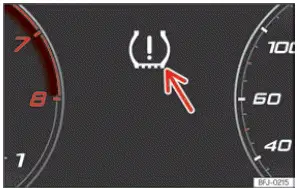
Fig. 190 Instrument cluster: warning indicator signalling a possible loss of tyre pressure.
The tyre pressure monitoring system in the Seat Ibiza uses information from the anti-lock braking system (ABS) sensors to monitor changes in wheel rotation. Rather than measuring the air pressure inside each tyre directly, the system compares the rotational speeds of the individual wheels and evaluates differences in their effective rolling radii. These measurements allow it to identify changes that may indicate a reduction in tyre pressure.
When a tyre loses pressure, its effective rolling circumference may change, causing the affected wheel to rotate differently from the others under comparable driving conditions. The tyre pressure monitor indicator evaluates these differences and warns the driver when it detects a significant change in a wheel's rolling characteristics, as illustrated in ››› Fig. 190. The warning should be treated as a possible indication of incorrect tyre pressure or another condition affecting the wheel.
Change in wheel diameter
The effective rolling diameter of a tyre is influenced by its inflation pressure, structural condition and the load acting on the wheel. Consequently, the Seat Ibiza tyre pressure monitoring system may detect changes not only when a tyre loses air, but also when the vehicle's wheels or operating conditions are altered. The following circumstances can affect the rolling diameter or rotational behaviour of one or more wheels:
- Manual adjustment of tyre pressure. Increasing or reducing the inflation pressure changes the tyre's shape and effective rolling circumference. Even when the adjustment is intentional and the new pressure is correct, the monitoring system may detect a difference from its previously stored reference values.
- Insufficient tyre pressure. A tyre that is underinflated can deform more under the vehicle's weight, changing its effective rolling radius. This is one of the main conditions the monitoring system is designed to identify, as driving with insufficient pressure can adversely affect handling, tyre wear and road safety.
- Damage to the tyre structure. Internal or external damage may alter the tyre's shape and rolling characteristics. A damaged tyre can therefore produce rotational differences even when an obvious loss of inflation pressure is not immediately apparent. Any suspected tyre damage requires careful inspection.
- Uneven vehicle loading. If the Seat Ibiza is not level because the load is distributed unevenly, the tyres may be subjected to different forces. The resulting changes in tyre deformation can affect the rolling characteristics measured by the ABS sensors.
- Increased load on one axle. Carrying heavy luggage, additional passengers or other substantial loads can place greater weight on the tyres of a particular axle. This additional load may change their effective rolling radii, particularly when the inflation pressures have not been adjusted to suit the vehicle's loading condition.
- Installation of snow chains. Snow chains alter the way the tyres interact with the road surface and can affect wheel rotation measurements. Their use may influence the monitoring system's ability to distinguish normal wheel behaviour from changes associated with tyre pressure loss.
- Use of a temporary spare wheel. A temporary spare wheel may have different dimensions or rolling characteristics from the standard wheels. Fitting one can therefore affect the comparisons performed by the tyre pressure monitoring system.
- Replacement of a wheel on one axle. Installing a different wheel or tyre can change the rolling circumference relative to the wheel on the opposite side of the same axle. Differences in tyre condition, dimensions or tread wear may influence the measurements used by the monitoring system.
The tyre pressure monitoring indicator does not necessarily respond immediately to every change in tyre condition. Depending on the circumstances, a warning may be delayed or may not appear at all. This can occur during sporty driving, when travelling over snow-covered or unpaved roads, or while using snow chains. Such conditions can produce variations in wheel speed that make it more difficult for the system to recognise changes caused specifically by tyre pressure loss.
For this reason, the monitoring system should be regarded as an additional safety aid rather than a replacement for regular tyre pressure checks. Drivers should continue to inspect the tyres and check their inflation pressures using a suitable pressure gauge, particularly before long journeys or when carrying heavy loads. The absence of a warning does not guarantee that every tyre is correctly inflated or free from damage.
Calibrate the tyre pressure monitoring indicator
The Seat Ibiza tyre pressure monitoring indicator must be recalibrated whenever the inflation pressure is adjusted or one or more wheels are replaced. Calibration allows the system to establish new reference values based on the current condition and rolling characteristics of the tyres. Without this procedure, the system may continue comparing wheel rotation data against values recorded before the change.
Recalibration is also required after changing the positions of the wheels, such as when exchanging the front and rear tyres. Even when the tyres are of the same specified size, differences in tread wear, loading and operating conditions can affect their rolling behaviour. Storing updated reference values helps the monitoring system evaluate the wheels according to their new positions and correctly adjusted inflation pressures.
For the most accurate calibration, the Seat Ibiza should be stationary and the tyres should be cold. Tyre pressure rises as the tyres warm up during driving, so measurements taken immediately after a journey may differ from the recommended cold inflation pressures. Before beginning calibration, check all tyres and adjust their pressures to the specified values for the vehicle's current loading condition.
If the tyre pressures have been checked and the monitoring indicator calibrated while the tyres are still warm, repeat both the pressure check and calibration procedure once the tyres have cooled, before the next journey. This ensures that the stored reference values correspond to the correct cold inflation pressures rather than pressures temporarily increased by heat generated during driving.
- Switch on the ignition. The vehicle should remain stationary while the tyre pressure monitoring settings are accessed. Make sure the inflation pressures have already been checked and adjusted before storing the new reference values.
- Store the tyre pressure settings through the Infotainment system. Open the relevant function button and navigate through the following menu sequence: Vehicle > Settings > Tyres > SET. Select SET to save the current tyre conditions as the new reference for the monitoring system.
- Alternatively, use the vehicle status menu. Depending on the Infotainment system configuration, the same calibration function may be accessed through: Vehicle > Selection > Vehicle status > Tyre pressure control > SET. Follow the displayed instructions to confirm and store the updated settings.
After the new tyre pressure reference values have been stored successfully, the Infotainment display will show a confirmation message. The tyre pressure warning indicator in the instrument cluster will briefly flash, and an audible driver notification will sound. These signals confirm that the calibration request has been accepted and the system has begun using the newly stored settings.
The tyre pressure loss indicator operates by analysing information supplied by the ABS wheel speed sensors. Among other factors, it compares the number of revolutions made by each wheel and the corresponding effective rolling circumferences. Because the system relies on the relationship between wheel rotation and driving conditions, it does not establish its complete monitoring reference from a single stationary measurement.
Following calibration, the system gathers and evaluates wheel rotation data as the Seat Ibiza is driven. The reference values are progressively established during an extended journey involving different vehicle speeds and operating conditions. This learning process allows the system to recognise the normal rotational behaviour of the tyres and subsequently identify deviations that may indicate a change in inflation pressure.
When the vehicle is carrying a particularly heavy load, the tyre pressures must be adjusted to the recommended values for a fully loaded vehicle before calibration is performed. Additional weight increases the forces acting on the tyres and can alter their effective rolling circumferences. Using the correct inflation pressures for the load ensures that the monitoring system establishes its reference values under the appropriate conditions.
For example, if the Seat Ibiza is being used with several passengers and substantial luggage, check the recommended tyre pressures for that loading condition and inflate the tyres accordingly before selecting SET in the Infotainment system. The tyre pressure monitoring indicator can then learn the wheel rotation characteristics associated with the adjusted pressures. The relevant tyre pressure information and warning indication are referenced in ››› Fig. 190.
 Removing and installing a wheel
Once the wheel nuts have been loosened and the Seat Ibiza has been safely raised using the jack, the wheel can be
removed and replaced. Before proceeding, make sure the vehicle is stable, the jack i ...
 Wheel nut caps
Fig. 184 Wheel: wheel nuts with caps.
Removal
Take the plastic extraction clip from the Seat Ibiza vehicle tool kit, as shown in Fig. 148. Position the
clip directly over the prot ...
See also:
Honda Civic Owners Manual. Menu Customize
You can change menu icons on the right side of Audio, Phone, and Info screen.
1. Select and hold menu icon.
2. Select or
icon, then Audio, Phone,
or Info from Menu Customize.
3. Select and hold the menu icon you want to
change, then drag and drop the icon to the
bottom.
4. Sele ...
