
Seat Ibiza (6F) 2017-2026 Owner's Manual: Head-on collisions and the laws of physics
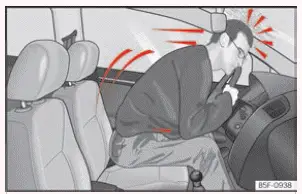
Fig. 19 A driver not wearing a seat belt may be
thrown forward violently.
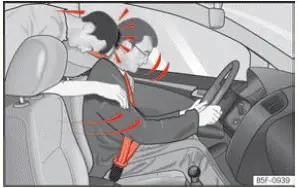
Fig. 20 Any rear seat occupants not wearing
a seat belt may be thrown forward violently,
hitting the driver who is wearing the seat belt.
The consequences of a head-on collision can be understood by considering the basic laws of physics. As soon as a vehicle begins moving, both the vehicle and everyone inside it possess energy associated with their motion. This is known as kinetic energy. During normal driving, the occupants travel at approximately the same speed as the vehicle. If the vehicle is suddenly brought to a stop by a collision, that motion does not disappear instantly. The occupants' bodies tend to continue moving forwards unless they are restrained by a properly fastened seat belt.
The amount of kinetic energy depends on the speed of the vehicle and the mass of the vehicle and its occupants. A heavier moving object carries more kinetic energy than a lighter one travelling at the same speed. Similarly, increasing the speed increases the energy that must be managed when the vehicle slows down or stops abruptly. During an accident, this energy is absorbed or transferred through the vehicle structure, restraint systems and the objects or surfaces involved in the impact. The greater the kinetic energy before the collision, the more demanding the forces and movements that the safety systems must manage.
Vehicle speed has a particularly important influence because kinetic energy increases with the square of speed. For example, if the Seat Ibiza is travelling at 50 km/h (30 mph) instead of 25 km/h (15 mph), its speed has doubled, but the kinetic energy associated with that motion has increased fourfold. This relationship explains why even a relatively modest increase in speed can produce a much more severe collision. Reducing speed therefore plays an important role in limiting the energy involved in an accident and the potential consequences for the occupants.
Even in collisions occurring at speeds between approximately 30 km/h (19 mph) and 50 km/h (30 mph), the forces acting on an occupant's body can be extremely high. Under certain collision conditions, they may reach levels equivalent to the weight force of more than one tonne (1,000 kg). These figures illustrate the magnitude of the loads that can develop when a moving body is brought to a stop over a very short distance or period of time. At higher speeds, the energy involved increases further, and the resulting forces can become considerably greater.
Occupants who are not wearing seat belts are not securely restrained to the vehicle. In a head-on collision, the Seat Ibiza may decelerate rapidly when its front structure strikes an obstacle, but an unbelted occupant continues moving forwards at approximately the speed the vehicle had immediately before the impact. The body will continue along this path until it is stopped by contact with an interior component, another occupant or another obstruction. Without the controlled restraint provided by a seat belt, this movement can result in severe injuries.
The same physical principles apply to other types of accidents, not only direct frontal impacts. Sudden deceleration, changes in direction and the transfer of collision forces can cause unrestrained occupants to move violently within the passenger compartment. The direction of movement and the parts of the body exposed to impact depend on the circumstances of the accident, but the need for effective occupant restraint remains the same. This is why seat belts must be worn during every journey, regardless of the anticipated driving conditions.
At even relatively low speeds, the forces generated during a collision can be far greater than a person can resist using their arms or hands. Attempting to brace against the steering wheel, dashboard or another interior surface cannot provide reliable protection. In a frontal collision, an unbelted driver or passenger may be thrown forwards uncontrollably and strike the steering wheel, instrument panel or windscreen, as illustrated in Fig. 19. Such impacts can cause serious injuries to the head, chest and other parts of the body. A correctly fastened seat belt helps limit this uncontrolled movement and allows the vehicle's restraint systems to manage the occupant's deceleration more effectively.
Rear seat passengers must also wear their seat belts correctly because an unrestrained occupant can become a serious danger to everyone inside the Seat Ibiza. During a collision, a rear passenger who is not wearing a belt may be thrown forwards with considerable force, striking the front seat backrest or a person seated in front. As illustrated in Fig. 20, this can injure a front occupant even when that person is wearing their own seat belt correctly. The unbelted rear passenger is also exposed to a high risk of severe injury. Proper restraint of every occupant is therefore essential not only for individual protection but also for the safety of the other people travelling in the vehicle.
 Seat belt buckled indication
Lights up red
The red seat belt warning indicator illuminates when the driver or front passenger has not fastened their seat
belt. This warning draws attention to an occupant who is not proper ...
 Fastening and unfastening the seat
belt
Fig. 21 Insert the latch plate of the seat belt
into the buckle.
Fig. 22 Release the seat belt's latch plate.
A correctly fastened seat belt helps keep the driver and passengers in th ...
See also:
Honda Civic Service Manual. Under-Dash Fuse/Relay Box Removal and Installation (KA KX models without Keyless
Access System)
7471A0
SRS components are located in this area. Review the SRS component locations
and the precautions and procedures before doing repairs or service.
1.
Battery Terminal - Disconnection
1.
...
