
Seat Ibiza (6F) 2017-2026 Owner's Manual: Fastening and unfastening the seat belt
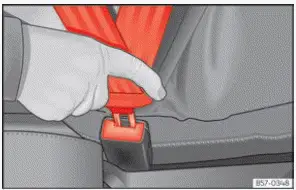
Fig. 21 Insert the latch plate of the seat belt
into the buckle.
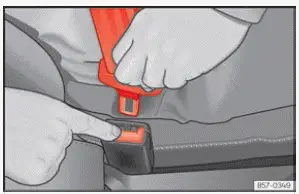
Fig. 22 Release the seat belt's latch plate.
A correctly fastened seat belt helps keep the driver and passengers in the proper seating position during sudden braking, abrupt manoeuvres and collisions. By restraining the body and limiting uncontrolled movement, the belt reduces the risk of occupants striking the vehicle interior or being thrown from their seats. The protective effectiveness of the seat belt depends on both the way it is fastened and the position of the webbing across the body. Every occupant of the Seat Ibiza must therefore wear the appropriate seat belt correctly throughout the journey.
Fastening the seat belt
Fasten your seat belt before every journey, regardless of the distance to be travelled or the expected driving conditions. Make all necessary seat and head restraint adjustments before securing the belt, and check that the webbing follows the correct path across your shoulder, chest and pelvis. A seat belt that is fastened but incorrectly positioned may not provide the intended level of protection in an accident.
- Adjust the front seat and head restraint to suit your height and body position. Sit upright with your back properly supported by the backrest, and ensure that the head restraint is positioned correctly. The driver's seat must also allow comfortable operation of the steering wheel and pedals while maintaining the recommended distance from the airbag.
- Make sure the rear seat backrest is returned to its upright position and securely engaged in its locking mechanism. A backrest that has not been properly locked may move unexpectedly during sudden braking or a collision, affecting the support provided to the occupant and the operation of the restraint system.
- Take hold of the seat belt latch plate and pull the webbing smoothly across your body. Position the shoulder section diagonally across your chest and the lap section low over your pelvis. Make sure the belt lies flat against your clothing without twists, folds or unnecessary slack. Avoid pulling the belt across your neck or abdomen.
- Insert the latch plate into the buckle assigned to your seating position until it engages securely, as illustrated in Fig. 21. Always use the correct buckle for the seat you are occupying. Do not attempt to fasten the belt into an adjacent seat's buckle, as this may prevent the restraint from functioning as intended.
- Gently pull on the belt near the buckle to confirm that the latch plate has locked into place. Check that the buckle remains engaged and that the webbing is correctly positioned across your body. If the latch plate does not lock securely or the buckle does not operate normally, the affected seat belt must be inspected before that seating position is used.
Releasing the seat belt
Only unfasten your seat belt after the Seat Ibiza has come to a complete stop. Keep the belt securely fastened while the vehicle is moving, including during slow manoeuvres and short journeys. Releasing the restraint prematurely leaves the occupant exposed to uncontrolled movement if the vehicle brakes suddenly or is involved in a collision.
- Press the red release button on the seat belt buckle, as shown in Fig. 22. The locking mechanism releases
the latch plate, allowing it to be withdrawn from the buckle.
Once the latch plate has been released, hold it securely rather than allowing the belt to retract suddenly. This helps prevent the metal plate from striking the occupant or surrounding interior components.
- Guide the seat belt back towards its retractor by hand, allowing the webbing to roll up smoothly and without twisting. Make sure the latch plate does not strike or scratch the interior trim and that the belt does not become trapped in the door or seat mechanism. Proper retraction helps keep the belt ready for its next use and reduces unnecessary wear.
WARNING The seat belt can provide effective protection only when it is correctly fastened, properly positioned and used together with an appropriate sitting position. Incorrect use can significantly increase the risk of serious or fatal injuries during sudden braking or an accident.
- A seat belt cannot provide its intended level of protection if the seat backrest is excessively reclined or the occupant is sitting incorrectly. Keep the backrest in an almost upright position and adjust the seat belt to suit your body size. The shoulder and lap sections must follow the correct path across the body so that the forces generated during a collision are distributed as intended.
- Never unfasten your seat belt while the vehicle is moving. If sudden braking, an evasive manoeuvre or a collision occurs while the belt is released, the occupant may be thrown forwards or sideways without effective restraint. This can result in severe or fatal injuries, even when travelling at relatively low speeds.
- A loose or incorrectly positioned seat belt can cause serious injuries if the webbing moves away from the stronger areas of the body and presses against more vulnerable regions, such as the abdomen. Make sure the lap section remains low across the pelvis and the shoulder section rests correctly against the chest. Remove unnecessary slack and never deliberately hold the belt away from your body.
 Head-on collisions and the laws of
physics
Fig. 19 A driver not wearing a seat belt may be
thrown forward violently.
Fig. 20 Any rear seat occupants not wearing
a seat belt may be thrown forward violently,
hitting the driver ...
 Correct position of the seat belt
Fig. 23 Correct seat belt and headrest
positions, viewed from front and the sid
Fig. 24 Position of seat belt during pregnancy.
Seat belts provide their greatest protective benefit wh ...
See also:
Honda Civic Owners Manual. Installing a Child Seat with a Lap/Shoulder Seat Belt
1. Place the child seat on the vehicle seat.
2. Route the seat belt through the child seat
according to the seat manufacturer’s
instructions, and insert the latch plate into
the buckle.
Insert the latch plate fully until it clicks.
3. Slowly pull the shoulder part of the belt ...
