
Seat Ibiza (6F) 2017-2026 Owner's Manual: Manual air conditioning controls / Heating and fresh air system
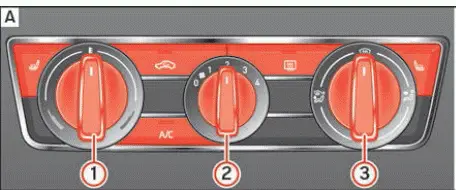
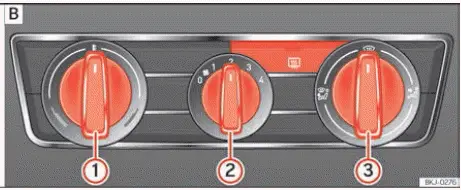
Fig. 81 In the centre console: A — manual air conditioning controls; B — heating and fresh air system
controls.
The Seat Ibiza may be equipped with a manually operated air conditioning system or a simpler heating and fresh air system, depending on the vehicle specification. Both systems use rotary controls on the centre console to regulate temperature, fan speed and airflow direction. The manual air conditioning version additionally provides active cooling and dehumidification, while the heating and fresh air version is limited to heating and ventilation. The controls shown in Fig. 81 illustrate the different arrangements.
Cooling mode 
Manual air conditioning: Press the cooling button to switch the air conditioning cooling system on or off. When activated, the system can cool the air entering the passenger compartment and remove moisture from it. This provides additional comfort during warm weather and helps reduce window condensation when humidity is high. Press the button again to deactivate cooling when it is no longer required. The heating and fresh air system does not provide this active cooling function.
Temperature 1
Turn temperature regulator 1 to adjust the temperature of the air supplied through the ventilation system. The control allows the driver to select warmer or cooler airflow according to the prevailing conditions and the desired passenger compartment temperature. Make adjustments gradually until the supplied air provides a comfortable environment for the occupants.
Heating and fresh air system: This system can warm incoming air but cannot actively cool or dehumidify it. Consequently, the temperature of the air supplied to the passenger compartment cannot be reduced below the outside air temperature by the heating and ventilation system itself. When the control is set to its coolest position, the system supplies air without the additional cooling effect available from an air conditioning compressor.
Fan 
Turn rotary regulator 2 to select the desired fan speed. The fan determines how much air is delivered through the Seat Ibiza ventilation outlets, allowing the driver to adjust the intensity of heating, cooling or fresh air circulation. Lower settings provide a gentler airflow, while higher settings increase the volume of air entering the passenger compartment and can help change the interior conditions more quickly.
At setting 0, the fan is switched off and the manual air conditioning system is also deactivated. No powered ventilation is provided at this setting. Position 4 is the highest fan speed and produces the maximum available airflow. Select an intermediate position when less ventilation is needed or when a quieter, less forceful airflow is preferred.
Air distribution  /
 /
 /

Turn air distribution regulator 3 to direct the ventilation airflow towards the required area of the passenger compartment. The selected position determines which outlets receive the main supply of air. This allows the driver to concentrate ventilation on the upper body, footwell or windscreen, depending on whether the priority is occupant comfort or maintaining clear windows.
Airflow towards the chest. In this position, the ventilation air is directed primarily towards the upper body through the dashboard air outlets. This setting provides a direct flow of fresh, heated or cooled air towards the occupants and is suitable when upper-body ventilation is preferred.
 Airflow towards the
footwell. Selecting this position directs the main airflow towards the lower part of the passenger
compartment. It is particularly useful when occupants want warm air around their feet and legs, although the
setting can also be used whenever footwell ventilation is required.
 Airflow towards the windscreen and footwell. This setting divides the supplied air between the
front windscreen and the lower passenger compartment. It allows air to reach the glass while also providing
ventilation or heating around the occupants' feet. This combination can be useful when both windscreen
visibility and footwell comfort need attention.
Defrost/demist function 
Manual air conditioning: Turn air distribution regulator 3 to the windscreen defrosting position
 to direct the
airflow towards the front windscreen. In this mode, air recirculation is automatically switched off or prevented
from activating, allowing the system to use outside air for demisting. Increase the fan speed to deliver a
stronger airflow across the glass and remove condensation as quickly as possible. The cooling system also
switches on automatically to dehumidify the supplied air, helping clear moisture from the windscreen more
effectively. Use this setting whenever misting restricts forward visibility.
Rear window heating 
The heated rear window operates only when the engine is running. Activating the function heats the rear glass to help remove condensation and frost, improving visibility through the rear window and allowing the driver to observe traffic behind the Seat Ibiza more clearly. The heating switches off automatically after a maximum of 10 minutes, limiting the duration of electrical consumption.
Switch off the rear window heating as soon as the glass has been sufficiently demisted. Continuing to use the function after the rear window is clear consumes electrical energy unnecessarily. Reducing this additional demand on the vehicle's electrical system can have a beneficial effect on fuel consumption, so the heating should be used only for as long as required.
To help prevent possible damage to the battery, the Seat Ibiza may temporarily disconnect the heated rear window automatically when operating conditions require it. This protective function reduces electrical demand until normal conditions have been restored. Once the electrical system is operating within its normal conditions again, rear window heating can resume. The temporary interruption is therefore part of the vehicle's electrical load management rather than necessarily indicating a malfunction of the heating system.
 Climatronic controls and functions
Fig. 80 On the centre console: Climatronic controls.
Temperature 1 / 2
The Climatronic system in the Seat Ibiza allows the driver and front passenger to adjust the temperature on their
...
 Air recirculation
 mode prevents
outside air from entering the passenger compartment through the ventilation system. Instead, the system
recirculates air already present inside the vehicle. This f ...
See also:
Seat Ibiza (6F) 2017-2026 Owner's Manual. Operating Park Assist Plus
Fig. 121 Centre console: parking aid button
(depending on the version).
Switching on and off manually
Press the
button once to switch Park Assist Plus on or off manually. Depending on the vehicle's equipment, this
control is located on the centre console, as illustrated in F ...
