
Seat Ibiza (6F) 2017-2026 Owner's Manual: Introduction
Travel Assist is a driver assistance system that combines the functions of Adaptive Cruise Control (ACC) with adaptive lane guidance. By coordinating longitudinal and lateral assistance, it helps the driver maintain a selected travelling speed, regulate the distance to vehicles ahead and keep the Seat Ibiza in a suitable position within its lane. These functions work together to provide assistance during driving, but they do not replace the driver's responsibility for controlling the vehicle.
Within its operating limits, Travel Assist can maintain the following distance selected by the driver while helping the vehicle remain in its preferred position between the detected lane boundaries. Adaptive Cruise Control manages acceleration and braking in response to traffic ahead, while adaptive lane guidance provides steering assistance based on the recognised lane markings. The availability and effectiveness of both functions depend on the prevailing driving conditions and the system's ability to detect the surrounding environment correctly.
Travel Assist relies on the same sensors used by Adaptive Cruise Control (ACC) and Lane Assist. It therefore shares the detection capabilities and technical restrictions of those systems. If the radar sensor or the camera cannot obtain reliable information, the corresponding assistance functions may become limited, temporarily unavailable or unable to respond appropriately to a developing traffic situation.
Before using Travel Assist in the Seat Ibiza, carefully read the sections describing Adaptive Cruise Control and Lane Assist. Pay particular attention to their operating requirements, warning messages and system limitations. The restrictions affecting either of these assistance functions also influence the operation of Travel Assist, so the driver must understand when manual steering, acceleration or braking may be necessary.
How to know if the vehicle is fitted with Travel Assist
A Seat Ibiza equipped with Travel Assist can be identified by the dedicated  button on the
multifunction steering wheel. The presence of this control indicates that the vehicle has the Travel Assist
function. The button provides access to the combined driving assistance system, subject to the operating
conditions and equipment installed in the vehicle.
Speed range
Depending on the vehicle's equipment, Travel Assist can regulate the Seat Ibiza's movement from a speed of 0 km/h (0 mph), allowing the system to provide assistance even when the vehicle is stationary in suitable traffic conditions. The desired cruising speed can be set from 30 km/h (20 mph). The available regulation range and the ability to operate at very low speeds depend on the particular equipment configuration and the requirements for the associated assistance functions.
Driving with Travel Assist
When Travel Assist is operating, it automatically assists with acceleration, braking and steering. The system coordinates these functions to regulate the vehicle's speed and following distance while helping maintain its position within the detected lane boundaries. Within its technical limitations, Travel Assist may also slow the Seat Ibiza to a complete standstill behind another vehicle that stops and subsequently allow it to move off automatically when the traffic ahead starts moving again. This behaviour depends on the system's operating conditions and must not be treated as a guarantee that the vehicle will stop or restart safely in every situation.
The driver can override the assistance provided by Travel Assist at any time. Steering, braking or acceleration can be controlled directly whenever the traffic situation requires intervention. The system is intended to support the driver rather than take over the driving task, so the driver must continuously observe the road, remain attentive to surrounding traffic and be ready to assume full control without delay.
Status display
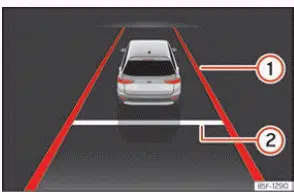
Fig. 114 On the instrument cluster display:
display of active regulation (schematic
representation).
The instrument cluster provides information about the current operating status of Travel Assist and its associated assistance functions. The display shown in Fig. 114 illustrates how the system communicates lane guidance availability and the selected following distance. These indications help the driver distinguish between active steering assistance and situations in which part of the system is temporarily passive.
- Lane marking colours: The colour of the displayed lane boundaries indicates the current
status of the adaptive lane guidance function. The markings show whether the system is actively providing
lane guidance or whether this part of Travel Assist is temporarily passive.
- Yellow: The adaptive lane guidance function is active. Travel Assist is providing steering assistance based on the detected lane boundaries, within the limits of the system. The driver must nevertheless keep their hands on the steering wheel and remain responsible for maintaining the vehicle's position in the lane.
- Grey: The adaptive lane guidance function is passive. Although the lane markings may still be represented on the instrument cluster, the system is not currently providing active lane guidance. The driver must steer the Seat Ibiza independently until the conditions for active assistance are satisfied again.
- Selected following distance: The display indicates the distance setting chosen by the driver for regulation relative to the vehicle ahead. This setting is used by the adaptive cruise control function when maintaining the desired separation from detected traffic. The driver must select a distance appropriate for the current speed, road conditions and surrounding traffic.
Depending on the equipment fitted to the Seat Ibiza, the instrument cluster may display additional information relating to Travel Assist operation. This can include representations of vehicles detected ahead and road markings shown as dashed lines. The precise appearance and amount of information available may vary between instrument cluster configurations. These visual elements are intended to communicate the system's current assessment of the driving situation and should not be interpreted as a complete representation of every vehicle or obstacle on the road.
Control lamps on the instrument cluster provide a further indication of whether Travel Assist is active, partially available or switched off. Their appearance reflects the operating status of Adaptive Cruise Control and adaptive lane guidance, allowing the driver to recognise which assistance functions are currently contributing to vehicle control.
 Green indicator lamp: Travel Assist is active, and both Adaptive Cruise Control and adaptive
lane guidance are operating. The system is assisting with speed and distance regulation while also providing
steering guidance within the detected lane boundaries. The driver must continue monitoring the road and remain
prepared to intervene whenever necessary.
 Partially green indicator lamp: Travel Assist remains active, and Adaptive Cruise Control
continues to regulate speed and following distance, but the adaptive lane guidance function is passive. In this
condition, the driver must control the steering independently because active lane guidance is not currently
available. The status of the two assistance functions can differ depending on the road conditions and the
system's ability to detect lane markings.
 Grey indicator lamp: Travel Assist is deactivated and is not providing combined driving
regulation. The system is not controlling the vehicle through its Travel Assist function, so the driver must
manage speed, following distance and steering without relying on this assistance. A grey indication should not
be mistaken for confirmation that automatic regulation is available.
WARNING Travel Assist uses advanced driver assistance technology, but it cannot overcome the physical limits of vehicle handling, braking performance or road grip. Its operation is restricted by the technical capabilities of the sensors and the conditions in which the system is designed to function. Careless, inappropriate or unintended use of Travel Assist can result in serious accidents and injuries. Even when the system is actively regulating speed and providing steering assistance, the driver must remain attentive and retain responsibility for the safe operation of the Seat Ibiza. Travel Assist is not a substitute for driver awareness, judgement or immediate intervention when required.
- Observe the limitations of Adaptive Cruise Control and Lane Assist. Travel Assist combines these two functions and is therefore subject to their respective operating restrictions. Read and follow the instructions concerning ACC speed and distance regulation, lane detection, steering assistance and the circumstances in which either system may become unavailable or respond incorrectly.
- Always adapt your speed and following distance to the prevailing conditions. Consider visibility, weather, road surface quality and surrounding traffic when selecting the cruising speed and distance to the vehicle ahead. Travel Assist cannot guarantee a safe stopping distance in every situation, particularly when road grip is reduced or traffic conditions change unexpectedly. The driver must adjust the settings or intervene manually whenever necessary.
- Do not use Travel Assist when visibility or road conditions are unsuitable. The function should not be used in poor visibility, on steep roads, on winding routes or on slippery surfaces affected by snow, ice, rain or loose gravel. It must also not be used on flooded roads. These conditions can reduce sensor reliability, affect steering and braking performance, or prevent the system from responding appropriately to the road ahead.
- Do not use Travel Assist off-road or on unstable road surfaces. The system is designed for use on paved roads and is not intended to provide assistance on unpaved tracks, loose terrain or surfaces that do not offer a firm and predictable driving foundation. On such routes, the driver must control acceleration, braking and steering directly according to the condition of the terrain.
- Travel Assist does not react to people, animals or certain vehicles crossing the vehicle's path. It also does not respond to vehicles approaching head-on in the same lane. The driver must identify these hazards independently and take appropriate action to prevent a collision. Never assume that the system will automatically brake for every object or road user appearing ahead.
- Brake immediately if Travel Assist does not reduce speed sufficiently. If the Seat Ibiza approaches another vehicle or an obstacle too quickly, apply the brake pedal without waiting for further automatic intervention. The system may not recognise the hazard in time or may be unable to provide the deceleration required to avoid a collision.
- Respond immediately to braking instructions on the instrument cluster. If the display requests that the driver brake, take control of the braking system at once. The same applies whenever Travel Assist fails to slow the vehicle adequately, even if no warning has appeared. Driver intervention must take priority when the available automatic deceleration is insufficient for the traffic situation.
- Apply the brakes if the vehicle continues moving forwards after a braking request. Travel Assist may not be able to keep the Seat Ibiza stationary or prevent further movement in every circumstance. If the vehicle begins or continues moving when this is not intended, press the brake pedal immediately and maintain control until the vehicle is safely stopped.
- Avoid wearing gloves while driving whenever possible. Depending on the circumstances,
gloves may interfere with the system's ability to recognise the driver's steering activity. Travel
Assist could consequently interpret the situation as a lack of driver involvement, even when the driver
is holding the steering wheel.
Keep your hands in contact with the steering wheel and respond promptly to any request for driver intervention. Do not rely on the system to recognise steering activity correctly under all conditions.
- Take control immediately when the instrument cluster requests driver intervention. A request to intervene indicates that the system requires the driver to resume direct control of the vehicle. Respond without delay by taking responsibility for steering, speed and braking as appropriate. Ignoring such a request may leave the vehicle without the assistance previously being provided by Travel Assist.
- Keep your hands on the steering wheel throughout the journey. The driver must always be able to steer the Seat Ibiza immediately, regardless of whether adaptive lane guidance is active. Travel Assist does not remove the driver's responsibility for maintaining the correct lane position, avoiding obstacles or carrying out necessary steering manoeuvres. Never treat the system as a hands-free driving function.
- Remain prepared to adjust the vehicle's speed manually. Changes in traffic flow, road conditions or the behaviour of other road users may require acceleration or braking beyond what Travel Assist can provide. Continuously assess the driving situation and be ready to override automatic regulation whenever the selected speed or the system's response is no longer appropriate.
 Travel Assist
...
 Operating Travel Assist
Fig. 115 Left side of the multifunction steering
wheel
Switch on and start regulation
1. While driving with Adaptive Cruise Control (ACC) activated, press the button on the
multifunc ...
See also:
Honda Civic Service Manual. Front Impact Sensor Removal and Installation ('12, '13: except KA KC models)
7521A4 LEFT FRONT
7521A8 RIGHT FRONT
Removal
NOTE: SRS components are located in this area. Review the SRS component
locations and the precautions and procedures before doing repairs or service.
1.
Battery Terminal (SRS) - Disconnection
...
