
Seat Ibiza (6F) 2017-2026 Owner's Manual: Front airbags
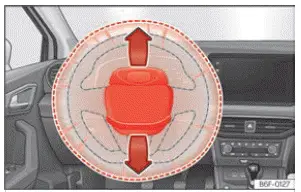
Fig. 25 Driver’s airbag in the steering wheel.
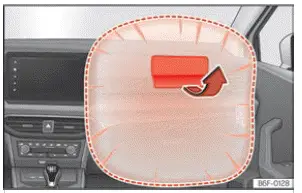
Fig. 26 Front passenger airbag located in the
dash panel.
The Seat Ibiza is equipped with front airbags designed to provide supplementary protection for the driver and front passenger during certain severe frontal collisions. The driver's airbag is integrated into the centre of the steering wheel, while the front passenger airbag is housed within the dashboard on the passenger side. Both airbag locations are identified by the inscription "AIRBAG", allowing occupants to recognise the areas containing these safety devices. The airbags form part of the vehicle's passive restraint system and are intended to operate together with correctly fastened seat belts.
When the front airbags are activated, the specially designed covers open to allow the airbags to inflate rapidly. The driver's airbag cover remains attached to the steering wheel, while the passenger airbag cover remains connected to the dashboard, as illustrated in Fig. 25 and Fig. 26. These covers are designed to open in a controlled manner during deployment. For this reason, the surfaces covering the airbag modules must remain unobstructed and must not be altered or used to support accessories.
In combination with the seat belts, the front airbag system provides additional protection for the head and chest of the driver and front passenger during a sufficiently severe frontal impact. The seat belts help restrain the occupants and limit their forward movement, while the inflated airbags provide supplementary cushioning as the upper body moves forwards during the collision. The effectiveness of this protection depends on the occupants sitting correctly, maintaining an appropriate distance from the steering wheel or dashboard, and wearing their seat belts properly. Front airbags cannot replace seat belts and are not designed to deploy in every type of accident.
During certain frontal collisions, the curtain airbags, also referred to as head airbags, may additionally be activated on both sides of the vehicle. Their deployment depends on the characteristics of the impact and the activation criteria evaluated by the airbag control unit. When triggered, these airbags supplement the protection provided by the front restraint systems. The combination of airbags activated during an accident is determined by the conditions detected by the vehicle rather than by the extent of visible damage.
The front airbags are designed to inflate rapidly and then release their inflation gas in a controlled manner when the occupant presses against them. This controlled release helps the airbag absorb part of the occupant's movement and manage the forces acting on the head and chest during the collision. As the gas escapes, the airbag gradually loses pressure rather than remaining fully inflated. Following deployment, the airbag deflates sufficiently to restore visibility through the windscreen and allow the occupants to see their surroundings. This inflation and deflation process takes place very quickly as part of the airbag's intended protective operation.
WARNING Front airbags inflate with considerable force and require sufficient unobstructed space to deploy correctly. Objects, animals or occupants positioned within the deployment area can interfere with airbag operation and may be struck violently when the system activates. The front airbags provide their intended protection only when the seating positions are used correctly and the deployment areas remain clear.
- Never allow another passenger, a child, a pet or any object to occupy the space between a front seat occupant and the corresponding airbag. This includes the area between the driver and the steering wheel and the space between the front passenger and the dashboard. If an airbag deploys while this space is obstructed, the object or occupant may be propelled with considerable force, potentially causing severe or fatal injuries. Always maintain a correct sitting position and keep the airbag deployment areas completely clear.
- Airbags are designed to provide protection during a single deployment. Once an airbag has been activated, it cannot be reused and must be replaced. The affected airbag module and any associated components requiring replacement must be inspected and renewed by a qualified specialist workshop. Do not assume that the restraint system remains fully operational after an accident in which an airbag has deployed. A previously activated airbag cannot provide protection in another collision.
- Do not attach cup holders, mobile phone mounts, decorative accessories or any other objects to the steering wheel airbag cover or the dashboard surface covering the front passenger airbag. These accessories may obstruct the opening of the airbag cover or become dangerous projectiles during deployment. The surfaces surrounding the airbag modules must remain free from attachments and modifications so that the airbags can inflate as intended.
Activate and deactivate front passenger airbag
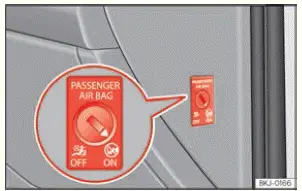
Fig. 27 Switch for activating and deactivating
the front passenger airbag.
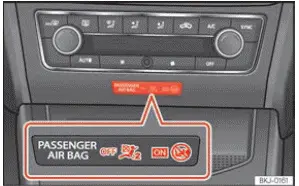
Fig. 28 Centre of the instrument cluster:
control lamp for deactivated front passenger
airbag in centre console.
The front passenger airbag should be deactivated only when it is necessary to install a rear-facing child restraint system on the front passenger seat. An active front passenger airbag presents a serious danger to a child travelling in a rear-facing seat because the airbag deploys towards the back of the child restraint with considerable force. If a rear-facing child seat must be used in the front passenger position, the passenger airbag must be switched off correctly before the child restraint is installed. The deactivation procedure must be followed carefully, and the corresponding status indicator must be checked to confirm the selected setting.
SEAT recommends installing child restraint systems on the rear seats whenever possible. Using a suitable rear seating position avoids the need to deactivate the front passenger airbag and allows the vehicle's front restraint system to remain available for an adult passenger. The child seat must always be appropriate for the child's height and weight and must be installed in accordance with the instructions provided by its manufacturer and the vehicle's applicable safety requirements.
Switching off the front passenger airbag affects only that particular airbag. The other airbags fitted to the Seat Ibiza remain enabled and continue to operate according to their normal activation criteria. Deactivating the passenger front airbag does not switch off the driver's front airbag, side airbags or curtain airbags. The front passenger airbag must be reactivated when its deactivation is no longer necessary so that it can provide supplementary protection to a passenger occupying that seat.
Deactivate and activate the front passenger airbag
- Switch off the ignition. Before operating the front passenger airbag switch, make sure the ignition is completely off. Do not attempt to change the airbag setting while the ignition is switched on, as this may cause a malfunction in the airbag deactivation system.
- Open the front passenger door. Opening the passenger-side door provides access to the airbag activation and deactivation switch. Locate the switch before proceeding and make sure the vehicle remains stationary throughout the operation.
- Remove the key blade from the vehicle key. The mechanical key blade is used to operate the passenger airbag switch. Prepare the key blade before inserting it into the switch, taking care not to force or damage the key mechanism.
- Insert the key blade into the switch. Place the key blade into the slot of the front passenger airbag disconnection switch, as shown in Fig. 27. Approximately three-quarters of the key blade should enter the slot, which is the intended insertion depth. Insert the blade carefully until it reaches its natural stop without applying excessive force.
- Select the required airbag setting. Turn the key gently to the
 position to deactivate
the front passenger airbag, or to the
 position to reactivate
it. If the key is difficult to turn, check that the blade has been inserted as far as intended. Do not force
the switch, as excessive pressure may damage the mechanism. Make sure the selected position corresponds to
whether the passenger airbag needs to be enabled or disabled.
- Close the front passenger door. Once the required setting has been selected and the key has been removed from the switch, close the passenger door. The airbag status must then be verified using the corresponding dashboard indicators before the front passenger seat is occupied.
- Verify that the airbag has been deactivated. After selecting the deactivated position,
switch on the ignition and check that the
 control lamp remains illuminated, as illustrated in Fig. 28. This persistent warning reminds the driver that
the front passenger airbag is switched off. If the expected indicator does not remain illuminated, do not
assume that the airbag has been successfully deactivated. Have the system checked by a specialised workshop.
- Verify that the airbag has been reactivated. After turning the switch to the activated
position, switch on the ignition and check that the
 control lamp does not illuminate. At the same time, the
 indicator should illuminate for approximately 60 seconds before switching off automatically. This sequence
confirms the expected indication for an enabled front passenger airbag. If the warning lamps do not behave
as described, the system must be inspected before relying on its activation status.
DANGER Always switch off the ignition before operating the front passenger airbag activation or deactivation switch. Changing the switch position while the ignition is on may cause a fault in the airbag deactivation system. Such a malfunction can make the passenger airbag status uncertain and may compromise occupant safety, particularly when a rear-facing child restraint system is installed. Follow the prescribed procedure and verify the relevant dashboard indicator after changing the setting.
WARNING The front passenger airbag must be enabled or disabled only when the vehicle is stationary and the ignition is switched off. An incorrect setting can expose occupants to serious danger during an accident. The driver must ensure that the airbag status is appropriate for the person or child restraint system occupying the front passenger seat.
- The driver is responsible for ensuring that the front passenger airbag is correctly activated or deactivated. Before allowing anyone to occupy the front passenger seat, check that the selected airbag setting is suitable for that occupant. Particular care is required when a rear-facing child restraint system is installed, since an active front passenger airbag can cause severe or fatal injuries to the child if it deploys.
- Never leave the vehicle key inserted in the passenger airbag switch. A key left in the switch may become damaged or may accidentally change the airbag setting while the vehicle is being driven. After selecting the required position, remove the key blade and verify the airbag status using the corresponding indicator. The switch must not be operated during a journey.
- If the front passenger airbag has been deactivated, reactivate it as soon as the reason for deactivation no longer applies. Leaving the airbag switched off unnecessarily means that it cannot provide its intended supplementary protection to a front passenger during a qualifying collision. Before the seat is used again by an occupant requiring normal airbag protection, restore the activated setting and confirm that the dashboard indicators show the expected status.
 Activation factors
The circumstances that cause the airbag system to activate cannot be described by a single rule that applies to
every accident. Each collision develops differently, and the response of the restraint ...
 Side airbags
Fig. 29 Side airbag in driver's seat.
Fig. 30 Illustration of completely inflated side
airbag on the left side of the vehicle
The side airbags in the Seat Ibiza are integrated into th ...
See also:
Honda Civic Service Manual. Moonroof Frame/Drain Channel Slider and Cable Assembly Removal and Installation
(4-door)
Removal
1.
Battery Terminal (SRS) - Disconnection
1.
Make sure the ignition switch is in LOCK (0).
2.
Disconnect and isolate the negative cab ...
