
Seat Ibiza (6F) 2017-2026 Owner's Manual: Side airbags
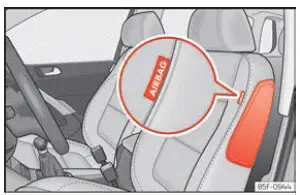
Fig. 29 Side airbag in driver's seat.
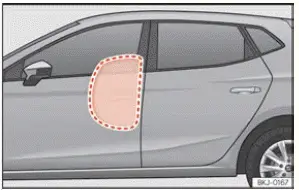
Fig. 30 Illustration of completely inflated side
airbag on the left side of the vehicle
The side airbags in the Seat Ibiza are integrated into the backrests of the front seats, as illustrated in Fig. 29 and Fig. 30. Their positioning allows them to deploy from the outer side of the seat backrest during certain severe side impacts, providing supplementary protection for the occupant seated next to the affected side of the vehicle. Unlike the front airbags, which are designed primarily for frontal collisions, the side airbags are intended to help protect occupants against forces acting from the side. Their operation is coordinated with the vehicle's other restraint systems, including the seat belts.
The locations of the side airbag modules are identified by the word "AIRBAG". Depending on the seat design, this marking appears on the upper outer section of the seat backrest or is embossed into the lower covering. These markings indicate the areas from which the airbags deploy and must remain unobstructed. Particular care is required when fitting seat covers, placing objects beside the seats or carrying out repairs to the upholstery, since interference with the marked areas can prevent the airbags from opening and inflating correctly.
Working together with the seat belts, the side airbag system provides additional protection for the upper body during a sufficiently severe side collision. When the relevant activation conditions are met, the airbag inflates rapidly between the occupant and the side of the passenger compartment. This supplementary cushioning is intended to help reduce the forces transmitted to the upper body during the impact. However, the side airbags cannot replace the restraint provided by seat belts, and their effectiveness depends on the occupant remaining in the correct seating position.
During a side impact, the occupants on the affected side of the Seat Ibiza may be exposed to considerable forces as the vehicle's structure is struck or deformed. The side airbags are designed to reduce the risk of injury to the parts of the body facing the collision. At the same time, the seat belts help restrain occupants and limit uncontrolled movement away from their normal seating positions. By keeping passengers properly positioned, the belts allow the side airbags to deploy into the intended space and provide their designed protective effect. This combined operation is particularly important because a side collision can develop extremely quickly, leaving little time for an occupant to react or change position.
WARNING Side airbags inflate rapidly and with considerable force. Their protective function can be seriously compromised if occupants are incorrectly seated, if the deployment areas are obstructed or if components of the airbag system have been damaged or modified. Always observe the following precautions to reduce the risk of severe or fatal injuries during a side collision.
- Always wear your seat belt correctly while travelling in the Seat Ibiza. If you are not wearing a seat belt, are leaning forwards or are sitting in an unsuitable position, the side airbag may not provide its intended protection during an accident. An occupant who has moved out of the normal seating position may be struck by the inflating airbag in an unintended manner, increasing the risk of injury. Keep your back against the seat backrest and avoid leaning towards the door or other areas in which the side airbag may deploy.
- To obtain the maximum protection available from the side airbag system, maintain the prescribed sitting position throughout the journey and keep your seat belt securely fastened. The seat backrest should support the upper body, and the seat belt should lie correctly across the shoulder, chest and pelvis. Do not adopt positions that bring your head or upper body unnecessarily close to the side airbag deployment area. Correct seating and restraint are essential for the side airbag and seat belt to work together effectively during a collision.
- During a side collision, the side airbags may fail to operate correctly if the sensors cannot accurately detect the pressure increase inside the doors. This can occur when air escapes through holes, openings or incorrectly fitted sections of the interior door trim, preventing the expected pressure change from being measured. The condition and proper installation of the door panels are therefore important for the correct operation of the side impact detection system. Do not modify the door structure or interior trim in ways that could interfere with the system's ability to detect a collision.
- Never drive the vehicle with the interior door panels removed, partially installed or incorrectly secured. Missing or improperly fitted trim panels can affect the conditions inside the doors and interfere with the pressure measurements used by the side airbag system. If a door panel has been removed for maintenance or repair, ensure that it is refitted correctly before the vehicle is driven. Any damaged or incorrectly installed components should be inspected and repaired by a qualified specialist workshop.
- Occupants sitting in the outer seating positions must never place or carry objects, pets or other items in the space between their bodies and the side airbags. Children and other passengers must not be allowed to occupy this deployment area or lean into it while the vehicle is moving. If a side airbag inflates, anything positioned in its path may obstruct deployment or be propelled towards an occupant with considerable force. Do not attach cup holders or other accessories to the doors, as these may interfere with the airbags or create an additional injury hazard during an accident. Keep the space required for side airbag deployment clear at all times.
- Make sure children are seated correctly and secured in suitable child restraint systems. Their heads must not be positioned within the deployment area of the side airbags, as illustrated in Fig. 30. A rapidly inflating airbag can strike a child who is leaning towards the door or sitting outside the intended position, potentially causing serious injuries. The child restraint system must be appropriate for the child's size and installed according to the manufacturer's instructions. Check that the child remains correctly positioned throughout the journey and cannot lean into the side airbag deployment zone.
- Use the vehicle's built-in coat hooks only for lightweight garments. Do not hang heavy items or clothing containing hard, sharp or pointed objects in the pockets. During a collision, such objects may become dangerous if they are displaced or come into contact with an inflating airbag. Keep the area around the side windows, doors and airbag deployment zones free from items that could interfere with occupant protection or cause additional injuries.
- Do not strike, kick or apply excessive force to the side bolsters of the front seat backrests. The side
airbag modules are installed within these areas, and strong impacts can damage the components or
interfere with their operation.
If the side airbag system is damaged, the affected airbag may fail to deploy when required during an accident. Damage to the internal components may not always be visible from the outside of the seat. If a seat backrest has been subjected to a significant impact or there is reason to suspect damage to the airbag installation, have it inspected by a specialised workshop. Do not attempt to open the upholstery or examine the airbag module yourself.
- Never fit ordinary protective seat covers over seats equipped with side airbags unless the covers have been specifically approved for use with the Seat Ibiza and its side airbag system. Because the airbag deploys through the outer section of the seat backrest, an unsuitable cover may prevent the upholstery from opening as intended or obstruct the airbag during inflation. Conventional covers that have not been designed for this purpose can substantially reduce the effectiveness of the side airbag and increase the risk of injury. Only use seat covers confirmed to be compatible with the vehicle's airbag-equipped seats, and install them according to the relevant instructions.
- Any damage to the original seat upholstery, particularly around the seams and areas containing the side airbag modules, must be repaired immediately by a specialised workshop. Tears, damaged stitching, incorrectly repaired seams or alterations to the upholstery may affect the way the airbag emerges from the seat backrest during deployment. Even damage that appears to be purely cosmetic can interfere with the intended operation of the restraint system. Do not sew, glue or otherwise repair these areas yourself, and do not allow unqualified personnel to modify the seat coverings.
- Side airbags are designed to provide protection during a single deployment. Once an airbag has been activated, it cannot be reused and must be replaced. Following an accident in which a side airbag has deployed, have the affected restraint system inspected by a qualified specialist workshop and ensure that the necessary components are renewed. An airbag that has already inflated cannot provide its intended supplementary protection in another collision, even if the seat or surrounding trim appears to remain in acceptable condition.
- All work involving the side airbag system must be carried out by a specialised workshop. This includes inspection, removal, installation and replacement of airbag components, as well as other repairs that require the front seats to be removed or dismantled. Incorrect handling during unrelated maintenance work can damage the airbag system, disturb its connections or cause faults that may prevent correct operation during an accident. Qualified technicians have the necessary equipment, technical information and experience to work safely with these components. Never attempt to dismantle, modify or repair a side airbag module or its associated components yourself.
 Front airbags
Fig. 25 Driver’s airbag in the steering wheel.
Fig. 26 Front passenger airbag located in the
dash panel.
The Seat Ibiza is equipped with front airbags designed to provide supplement ...
 Head-protection airbags
Fig. 31 Location and deployment area of the
head-protection airbag.
The head-protection airbags in the Seat Ibiza are installed along both sides of the passenger compartment, above
the do ...
See also:
Honda Civic Owners Manual. Tire Identification Number (TIN)
The tire identification number (TIN) is a group of numbers and letters that
look like
the example in the side column. TIN is located on the sidewall of the tire.
Tire Identification Number (TIN)
DOT B97R FW6X 2209
DOT: This indicates that the tire meets all
requirements of th ...
