
Seat Ibiza (6F) 2017-2026 Owner's Manual: Fitting and using child seats
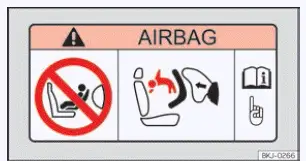
Fig. 33 Airbag sticker: on the passenger side
sunshade blind.
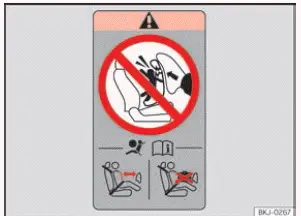
Fig. 34 Airbag sticker: at the bottom of the
passenger door frame.
Warnings about fitting a child seat
Correct installation of a child restraint system is essential for protecting young passengers in the Seat Ibiza. Before fitting a child seat, carefully consider the following safety precautions, which apply regardless of whether the restraint is secured using the vehicle's seat belt, ISOFIX anchorages or another approved attachment arrangement. The child seat must be suitable for the child's height and weight, compatible with the selected seating position and installed exactly as specified by its manufacturer. Even an approved restraint may not provide its intended protection if it is incorrectly positioned or secured.
- Read the child seat manufacturer's operating and installation instructions thoroughly before attempting to fit the restraint. Follow the specified procedure for securing the seat, adjusting its position and fastening the child. Pay particular attention to the approved installation direction, the permitted vehicle seating positions and any additional securing components required by the manufacturer. Do not substitute a different attachment method or make modifications to the child seat to accommodate the vehicle.
- Whenever possible, install the child restraint on the rear seat behind the front passenger. This position is recommended because it can allow the child to enter and leave the vehicle from the pavement side, away from passing traffic, when the vehicle is parked appropriately. Before opening the door or allowing the child to get out, check the surrounding traffic conditions and make sure the child can leave the vehicle safely. The chosen rear seating position must also be approved for the particular child restraint system.
- Adjust the height of the vehicle's seat belt so that the webbing follows the intended path through the child
restraint without twisting, rubbing against unsuitable surfaces or being pulled at an awkward angle. The
belt should lie naturally within the guides provided by the child seat manufacturer and must be tightened as
instructed. Incorrect belt routing can prevent the restraint from being held securely during sudden braking
or a collision.
When installing a rear-facing child seat that uses the vehicle's seat belt, set the seat belt height adjuster to its lowest position. This helps achieve the belt routing specified for this installation arrangement. After adjusting the belt, check that the webbing is not twisted and that the child seat is correctly secured according to the manufacturer's instructions.
- When fitting a rear-facing child restraint on a rear seat, adjust the corresponding front seat backrest so that it does not touch the child seat. Contact between the front backrest and the child restraint can interfere with its intended positioning or installation. Check that the rear-facing restraint remains correctly installed after making any adjustments to the front seat. For a forward-facing child restraint, position the front seat backrest so that it does not come into contact with the child's feet. This provides the necessary clearance and helps prevent the child's legs from being pressed against the front seat during normal travel.
- Before installing a child restraint on a rear seat, check whether the vehicle's head restraint interferes with the child seat backrest or prevents it from sitting in the correct position. If necessary, adjust or remove the head restraint as permitted by the vehicle and child seat instructions. The child restraint must be able to rest against the vehicle seat in the manner prescribed by its manufacturer, without being pushed forwards or held at an unsuitable angle by the head restraint. Any removed head restraint should be stored securely so that it cannot move freely inside the passenger compartment.
- Do not install a semi-universal child restraint that uses the vehicle's seat belt together with a support leg or support bracket in the centre rear seating position. The available clearance between the seat and the vehicle floor is lower in this position than at the outer rear seats, which can prevent the support component from providing the necessary stability. If the support leg cannot be positioned and adjusted correctly, the child seat may not remain securely supported during a collision. Use only a seating position specifically approved for the restraint and its support arrangement, and verify compatibility using the child seat manufacturer's vehicle application information.
Important information about the front passenger airbag
The Seat Ibiza carries warning labels containing important safety information about the front passenger airbag and the use of child restraint systems. Depending on the vehicle version, these labels are located on the passenger-side sun visor and/or at the lower section of the front passenger door frame, as illustrated in Fig. 33 and Fig. 34. The warnings draw attention to the danger posed by an active front passenger airbag when a rear-facing child seat is installed in front of it. Read these labels carefully and ensure that anyone installing a child restraint in the vehicle understands the relevant restrictions.
Before placing a child restraint on the front passenger seat, read and observe the safety information relating to the passenger airbag, correct seating positions and the space required for airbag deployment. The following subjects are particularly important because incorrect installation or positioning can expose the child to serious danger during an accident.
Safety distance from the front passenger airbag. The front passenger airbag requires sufficient unobstructed space to inflate correctly. A passenger sitting too close to the dashboard may be injured by the force of deployment. The danger is especially serious for a child travelling in a rear-facing restraint because the back of the child seat may be positioned directly in the path of the inflating airbag. Never assume that moving the passenger seat backwards is an adequate substitute for deactivating the airbag when a rear-facing child restraint must be installed in that position.
Objects between the passenger and the front passenger airbag. The area between the dashboard and the front passenger must remain free from objects that could obstruct airbag deployment or be propelled towards the occupant. This precaution also applies to child restraint systems and their associated equipment. Observe the restrictions described in the section on front airbags, and never place an object or restraint within the deployment area of an active airbag if doing so could interfere with its operation.
An enabled front passenger airbag presents an extremely serious danger to a child travelling in a rear-facing restraint. During a collision that triggers the airbag, the inflating cushion can strike the back of the child seat with considerable force, potentially causing severe or fatal injuries. The speed of airbag deployment leaves no opportunity to prevent this contact once activation has begun. For this reason, a rear-facing child restraint must never be used on the front passenger seat while the passenger airbag is active. Children under the age of 12 should preferably travel in the rear seats, secured in restraint systems appropriate for their height, weight and age.
SEAT strongly recommends transporting children in the rear seating positions, where they can be properly restrained without the danger associated with an active front passenger airbag immediately in front of a rear-facing child seat. The rear seats are the preferred location for child passengers, provided that the chosen child restraint is approved for the seating position and installed correctly. If circumstances make it necessary to use a rear-facing child restraint on the front passenger seat, the front passenger airbag must first be deactivated using the designated key-operated switch, where fitted. After switching it off, verify that the appropriate dashboard indicator confirms deactivation. Always select a child restraint suitable for the child's physical size and follow the manufacturer's installation and operating instructions.
DANGER
- Installing a child restraint system on the front passenger seat can increase the risk of critical or fatal injuries to the child during an accident, particularly if the passenger airbag is active or the restraint is positioned incorrectly. The front passenger seating position is subject to specific airbag-related restrictions that must be observed before a child seat is installed. Whenever possible, use a suitable rear seating position instead. Never rely on the child seat alone to protect a child from the force of an inflating front passenger airbag.
- If the front passenger airbag deploys while a child restraint is positioned in its path, the rapidly inflating airbag may strike the restraint with tremendous force. The child seat can be pushed violently towards the passenger door, roof or seat backrest, exposing the child to potentially fatal injuries. This danger is particularly pronounced with rear-facing restraints because the back of the child seat faces the dashboard and may be directly exposed to the deploying airbag. Correct installation of the restraint does not eliminate this danger when the front passenger airbag remains active.
- Never install a rear-facing child restraint on the front passenger seat unless the front passenger airbag has been completely deactivated. An active airbag can cause fatal injuries to a child travelling in this position. If using the front passenger seat for a rear-facing child restraint is unavoidable, switch off the airbag using the prescribed procedure before installing the seat. Check that the passenger airbag deactivation indicator remains illuminated as required. If the airbag cannot be deactivated or its status cannot be confirmed, do not install the rear-facing child restraint in that seating position.
- If the Seat Ibiza is not equipped with a key-operated switch for deactivating the front passenger airbag, contact a qualified technical service before attempting to install a rear-facing child restraint on the front passenger seat. Do not try to disconnect the airbag or modify its electrical connections yourself. Any necessary deactivation must be performed using the approved procedure. When the child restraint is no longer required in the front passenger position and an adult is to occupy that seat, remember to reactivate the passenger airbag and verify its status so that the restraint system can provide its intended protection.
- Never allow a child to travel in the vehicle without being properly secured in an appropriate child
restraint system or, when suitable for their size, with the correctly positioned vehicle seat belt.
Children must not stand on a seat, kneel on the seat cushion, move around the passenger compartment or
adopt any other unsafe position while the Seat Ibiza is moving. A child who is not restrained can be
thrown forwards or sideways during sudden braking or a collision, even if the journey is short.
In an accident, an unrestrained child may be propelled through the passenger compartment with considerable force. This can result in severe or fatal injuries to the child and may also endanger other occupants who are struck by the child's body. Ensure that every child is correctly secured before setting off and remains restrained throughout the entire journey. Never permit a child to release their restraint or leave the proper seating position while the vehicle is moving.
- Never leave a child unattended in a child restraint system or anywhere inside the vehicle. A child may be unable to leave the vehicle independently or respond appropriately if a dangerous situation develops. The passenger compartment can also become unsuitable for a child when the vehicle is parked, particularly as interior temperatures change. Always take children with you when leaving the Seat Ibiza, even if you expect to be away for only a short time. Do not assume that securing a child in a safety seat makes it acceptable to leave them alone in the vehicle.
- Children shorter than 1.50 m must not use the vehicle's adult seat belts without a suitable child restraint system. An adult seat belt may not fit a smaller child correctly, causing the lap section to lie across the abdomen or the shoulder section to pass too close to the neck. During sudden braking or an accident, this incorrect belt position can produce serious abdominal or neck injuries. Use an approved child seat or booster appropriate for the child's height and weight so that the belt follows the intended path across the shoulder and pelvis. Continue using the restraint until the child can be secured correctly in accordance with the applicable requirements.
- When a child restraint is installed on a rear seat, activate the child safety lock on the corresponding rear door. This helps prevent the child from opening the door from inside the vehicle while travelling. Check that the child lock is engaged correctly before starting the journey, particularly if the child can reach the interior door handle. The child safety lock is an additional precaution and does not replace the need to secure the child properly in an approved restraint system or to supervise children when entering and leaving the vehicle.
 Classification of child seats
Fig. 32 Examples of child seats.
Only officially approved child restraint systems that are suitable for the child's size and the intended vehicle
seating position should be used in the Seat ...
 Attachment systems
Several attachment systems are available for securing child restraint seats in a vehicle, and the systems
commonly used may differ depending on the country and applicable safety regulations. In the ...
See also:
Honda Civic Service Manual. Dashboard/Steering Hanger Beam Disassembly and Reassembly (Without Navigation)
SRS components are located in this area. Review the SRS component locations
and the precautions and procedures before doing repairs or service.
1.
Dashboard Subdisplay Visor
1.
...
