
Seat Ibiza (6F) 2017-2026 Owner's Manual: Correct position of the seat belt
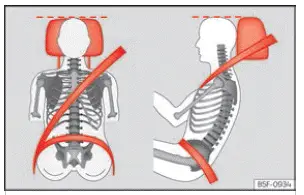
Fig. 23 Correct seat belt and headrest
positions, viewed from front and the sid
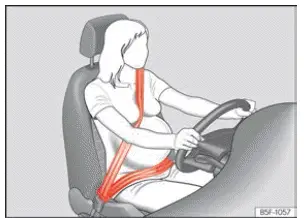
Fig. 24 Position of seat belt during pregnancy.
Seat belts provide their greatest protective benefit when the webbing is positioned correctly across the occupant's body. During a collision, a properly fitted belt helps restrain the occupant and distribute the forces of deceleration across areas better able to withstand them, reducing the likelihood of serious or fatal injuries. Correct belt positioning also helps maintain the occupant's intended relationship to the airbag system, allowing the airbag to provide supplementary protection when deployment conditions are met. For these reasons, everyone travelling in the Seat Ibiza must wear a seat belt and ensure that both the shoulder and lap sections are adjusted correctly before the vehicle begins moving.
Incorrectly positioned seat belts can cause severe or potentially fatal injuries, even when the latch plate is securely engaged in the buckle. The effectiveness of the restraint system also depends on the occupant maintaining the correct sitting position, with the back supported by the seat and the body facing forwards. Reclining excessively, sitting sideways or allowing the belt to pass over unsuitable parts of the body can substantially reduce the protection available during an accident. The recommended belt arrangement is illustrated in Fig. 23 and should be maintained throughout the journey.
- The shoulder section of the seat belt must pass across the centre of the shoulder and diagonally over the chest. It must never rest against the neck, slip off the shoulder onto the upper arm, pass beneath the arm or be routed behind the back. These incorrect positions can leave the upper body inadequately restrained and concentrate collision forces on vulnerable areas.
- The lap section must lie low across the pelvis, rather than over the stomach or soft abdominal area. Positioning the belt over the pelvic bones helps distribute restraint forces more appropriately during sudden deceleration. A lap belt that rides too high can place excessive pressure on the abdomen and increase the risk of internal injuries.
- The seat belt must lie flat against the body and fit snugly without causing unnecessary discomfort. Check
that the webbing is not twisted, folded or caught beneath clothing.
If the belt is loose, pull the webbing gently to remove the slack and ensure that it follows the correct path across the shoulder, chest and pelvis. A close fit allows the restraint to begin controlling the occupant's movement without unnecessary delay during sudden braking or a collision.
Pregnant occupants must also wear a seat belt correctly throughout the entire pregnancy. The shoulder section should pass diagonally across the chest, while the lap section must be positioned as low as possible over the pelvic area, beneath the abdomen. The webbing should remain flat and should not press directly against the stomach, as illustrated in Fig. 24. This arrangement helps provide restraint while avoiding unnecessary pressure on the abdomen. As the pregnancy progresses, the belt position should be checked regularly to ensure that it continues to fit correctly and comfortably. The seat belt must never be omitted or positioned across the abdomen for convenience.
Adapting the position of the belt webbing to your size
The position of the seat belt can be adapted to the occupant's body size by adjusting the height of the front seat. A suitable seating height helps the shoulder section follow the correct path across the centre of the shoulder and chest, rather than resting against the neck or slipping towards the arm. When adjusting the front seat, also check that the backrest remains appropriately upright and that the lap section of the belt lies low across the pelvis. For the driver, the final seating position must still allow safe operation of the steering wheel and pedals while maintaining the recommended distance from the airbag. After making any adjustment, check the belt's position again before driving.
WARNING Incorrectly positioned seat belt webbing can cause severe or fatal injuries during an accident. A belt that is twisted, loose or routed across the wrong part of the body may fail to restrain the occupant effectively and can transmit excessive forces to vulnerable areas. Always check the position of the shoulder and lap sections before setting off and maintain the correct arrangement throughout the journey.
- The shoulder section must lie across the centre of the shoulder and diagonally over the chest. Never position it beneath the arm or against the neck. Incorrect routing can prevent the upper body from being restrained properly and may increase the risk of injury to the chest, neck or other areas during a collision.
- The seat belt must lie flat and fit comfortably against the upper body. Make sure the shoulder section is not twisted, folded or held away from the chest by loose clothing or other objects. The belt should follow the body's contours closely enough to provide effective restraint without unnecessary slack.
- The lap section must always pass low across the pelvis and never over the stomach. Ensure that the webbing lies flat and fits securely against the pelvic area. If necessary, gently tighten the belt to remove any slack. A loose or excessively high lap belt may move onto the abdomen during a collision and increase the likelihood of serious internal injuries.
- During pregnancy, the lap section of the seat belt must be positioned as low as possible across the pelvis, beneath the abdomen. The webbing should lie flat and follow the contour below the stomach without pressing directly against it, as shown in Fig. 24. The shoulder section must remain correctly positioned across the chest. Continue using the seat belt throughout pregnancy, checking its fit as the body changes.
- Never twist the seat belt while it is fastened. Twisted webbing cannot distribute restraint forces as evenly as a flat belt and may concentrate pressure on a smaller area of the body during a collision. Straighten the belt before fastening it and check that it remains flat across the shoulder, chest and pelvis.
- Once the seat belt is correctly positioned, do not pull the webbing away from your body with your hand. Holding the belt forwards or creating additional slack reduces its ability to restrain your movement promptly during sudden deceleration. Allow the belt to remain close to the body and follow its intended path throughout the journey.
- Never allow the seat belt to pass over hard, pointed or fragile objects such as spectacles, pens or keys. In an accident, the pressure exerted by the belt can force these objects against the body and cause serious injuries. Remove such items from pockets or other areas beneath the webbing before fastening the restraint.
- Do not use seat belt clips, retaining rings, fastening devices or similar accessories to alter the position or tension of the webbing. Such devices can interfere with the intended operation of the restraint system and may prevent the belt from protecting the occupant correctly. Adjust the seating position using the vehicle's provided controls rather than modifying the belt arrangement with additional accessories.
Note If a physical condition, restricted mobility or another individual circumstance prevents you from maintaining the correct seat belt position, consult a specialised workshop about suitable adaptations or approved equipment. Proper belt positioning is essential for effective restraint and for allowing the airbag system to provide its intended supplementary protection. Any necessary modifications should be assessed by qualified personnel rather than carried out without professional guidance.
SEAT recommends having the vehicle inspected by a qualified technical service provider to determine whether suitable adaptations are required. Professional assessment can help ensure that the seat belt and airbag systems continue to operate correctly and provide the greatest possible protection for the occupant's individual needs.
 Fastening and unfastening the seat
belt
Fig. 21 Insert the latch plate of the seat belt
into the buckle.
Fig. 22 Release the seat belt's latch plate.
A correctly fastened seat belt helps keep the driver and passengers in th ...
 Automatic retractor, tensioner and
belt force limiter
The seat belts fitted to the Seat Ibiza are essential components of the vehicle's occupant restraint system. In
addition to holding passengers in their correct seating positions, they incorporate me ...
See also:
Honda Civic Owners Manual. How to Select a Song from the Music Search List with the Selector Knob
1. Press to display the
music search list.
2. Rotate to select a category.
3. Press to display a list
of items in the
category.
4. Rotate to select an item,
then press .
Press and rotate
repeatedly until a
desired item you want to listen ...
