
Seat Ibiza (6F) 2017-2026 Owner's Manual: Warning levels and brake assist
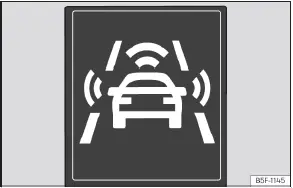
Fig. 110 On the instrument panel display:
advance warning indications.
The Front Assist emergency braking system operates at vehicle speeds of approximately 5 km/h (3 mph) and above. It monitors the traffic situation ahead and, when a potential collision risk is detected, can warn the driver or intervene through the braking system. The type and timing of the response depend on several factors, including the Seat Ibiza's speed, the relative speed of the detected object, the nature of that object and the urgency of the situation. Front Assist does not necessarily follow every warning and braking stage in a fixed sequence. Depending on the circumstances, the system may omit certain stages to provide a more appropriate response to an immediate hazard.
Safety distance warning
When Front Assist determines that the Seat Ibiza is travelling too close to the vehicle ahead, it can display a
safety distance warning  on the instrument cluster. This indication alerts the driver that the current separation may be insufficient for
the driving conditions. The warning is intended to encourage the driver to increase the following distance
before the situation develops into a more immediate collision risk. It does not mean that the system has taken
over responsibility for maintaining a safe distance.
The point at which the warning appears depends on the driver's behaviour, the vehicle's travelling speed and the difference in speed between the Seat Ibiza and the vehicle ahead. For example, a rapidly decreasing gap may require an earlier warning than a situation in which both vehicles are travelling at similar speeds. The driver must assess the actual traffic conditions and adjust speed or following distance as necessary, regardless of whether a warning is displayed.
Advance warning
If Front Assist identifies a possible collision with a vehicle travelling ahead, it can issue an advance warning
to draw the driver's attention to the developing danger. The warning consists of an audible signal and a
corresponding visual indication  on the
instrument cluster display, as illustrated in Fig. 110. This warning gives the driver an opportunity to respond
by braking or taking other appropriate action before the risk becomes more serious.
The timing of the advance warning varies according to the traffic situation and the driver's actions. Factors such as the speed of the vehicles involved, the rate at which the distance between them is decreasing and the driver's response can influence when the warning is triggered. At the same time, Front Assist prepares the vehicle for possible emergency braking so that the braking system can respond if further intervention becomes necessary. The driver should react promptly rather than waiting for the system to begin braking automatically.
When Front Assist is active, its warning indications may temporarily take priority over information from other vehicle functions shown on the instrument cluster. Consequently, some existing display indications may be hidden while the Front Assist warning is presented. This allows the driver to see information relating to the detected collision risk without unnecessary interference from other on-screen messages.
Critical warning
If the driver does not respond adequately to the advance warning and the danger of a collision continues to increase, Front Assist may progress to a critical warning. At this stage, the system can briefly apply the brakes to produce a noticeable jolt. This short braking intervention is intended to attract the driver's immediate attention and emphasise that a collision may be imminent. The driver must respond without delay by applying the brakes or taking an appropriate avoidance action, depending on the surrounding traffic and available space.
Automatic braking
If the driver still fails to react to the critical warning, Front Assist may initiate emergency braking independently. The system can progressively increase the braking force according to the severity of the detected collision risk and the conditions under which it is operating. This intervention is intended to reduce the Seat Ibiza's speed before a possible impact and, where circumstances permit, help avoid the collision altogether. However, the available braking force and the distance remaining before an obstacle may not be sufficient to prevent an accident. The driver must remain prepared to intervene even while automatic braking is taking place.
Driver emergency braking assistance system
Front Assist can also support the driver when emergency braking has already begun. If the driver responds to a critical warning by pressing the brake pedal but the system determines that the applied braking force is insufficient for the detected danger, it may increase the braking intensity. This assistance is intended to make the braking response more effective in a critical situation, particularly when the driver has recognised the hazard but has not pressed the pedal firmly enough. The system's intervention remains subject to the available tyre grip, road conditions and physical limits of the braking system.
WARNING
- Front Assist cannot guarantee that a collision will be prevented. Although the system may substantially reduce the consequences of an accident by lowering the vehicle's speed and the force of impact, it cannot overcome the limits imposed by braking distance, road conditions or the available time to react. The driver must continue monitoring the road and must not rely on automatic emergency braking as a substitute for safe driving.
- The brake pedal may feel harder during automatic Front Assist braking. When the system intervenes through the braking system, the driver may notice increased resistance or a firmer sensation when pressing the brake pedal. This change can occur as part of the automatic braking intervention. Continue applying the braking force required by the situation rather than reducing pedal pressure because the pedal feels different.
- Automatic braking interventions can be interrupted by driver actions. Pressing the clutch pedal, operating the accelerator or turning the steering wheel may cancel an ongoing Front Assist braking intervention. Such actions can affect the system's ability to continue reducing the vehicle's speed. Only intervene in this way when the action is appropriate for the actual traffic situation, and remain responsible for avoiding the hazard.
- Front Assist may brake the Seat Ibiza until it comes to a complete standstill. However,
the automatic emergency braking function does not hold the vehicle stationary indefinitely after
stopping.
The driver must apply and maintain pressure on the foot brake to keep the vehicle securely stopped. Failure to do so may allow the vehicle to move again, particularly where the road is not level. Do not assume that an automatic stop means the vehicle will remain stationary without driver intervention.
 Introduction
The emergency braking assistance system, known as Front Assist, is designed to help reduce the risk of frontal
collisions involving objects or road users in the Seat Ibiza's direction of travel. Its ...
 System limitations
Fig. 111 On the instrument cluster display:
indication of the system’s initial self-calibration.
Front Assist has technical and operational limitations that affect its ability to detec ...
See also:
Honda Civic Service Manual. Center Console Beverage Holder Removal and Installation
044100
Removal
1.
M/T Shift Lever Knob
Except K24Z7 engine
1.
Except K24Z7 engine: Lower the shift lever boot (A) to release
the hooks from the boot.
...
