
Seat Ibiza (6F) 2017-2026 Owner's Manual: System limitations
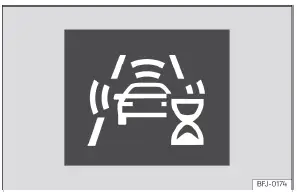
Fig. 111 On the instrument cluster display:
indication of the system’s initial self-calibration.
Front Assist has technical and operational limitations that affect its ability to detect hazards and respond appropriately in every driving situation. Although the system is designed to assist the driver when a potential frontal collision is identified, its reactions depend on the information available from the front radar sensor and the prevailing conditions. In some circumstances, Front Assist may fail to recognise an object, respond later than expected or issue a warning or braking intervention that appears unnecessary to the driver. Continuous attention to the road remains essential, and the driver must be ready to take control whenever the system's response does not correspond to the actual traffic situation.
The following conditions may cause Front
Assist not to react or to do so too late:
- Initial self-calibration after switching on the ignition. During the first moments of driving after the ignition has been switched on, Front Assist may still be completing its automatic calibration procedure. While this process is taking place, the system's detection and intervention capabilities may be temporarily limited. A corresponding status symbol appears on the instrument cluster display, as shown in Fig. 111. The driver must remain particularly attentive during this period and should not assume that all Front Assist functions are immediately available.
Unrecognised objects
The front radar sensor cannot reliably identify every object or road user that may appear in the Seat Ibiza's path. Certain shapes, positions and directions of movement can make detection difficult or prevent the system from responding as expected. The following examples describe objects and traffic situations that may not be recognised correctly by Front Assist:
- Protruding loads and accessories on other vehicles. Cargo or equipment extending beyond the sides, rear or roof of another vehicle may not be detected accurately. Front Assist may recognise the vehicle itself without correctly identifying the full dimensions of its load. The driver must maintain adequate clearance from vehicles carrying oversized or projecting objects.
- Metal objects such as guardrails or roadwork panels. Metal structures beside or within the roadway can affect the radar sensor's interpretation of its surroundings. Guardrails, temporary metal barriers and sheets used during road construction may create conditions in which the system cannot reliably distinguish relevant hazards or respond appropriately.
- Vehicles crossing the Seat Ibiza's path. Traffic moving across the vehicle's intended direction of travel may not be detected or assessed correctly by Front Assist. The driver must remain alert at intersections, junctions and other locations where vehicles can cross the road ahead.
- Vehicles that are not correctly aligned with the driving lane. A vehicle travelling at an unusual angle or positioned partly outside the expected path may be difficult for the radar sensor to identify. Front Assist may therefore fail to respond or may react too late when approaching a vehicle that is not aligned with the direction of travel.
- Narrow vehicles, including motorcycles. Motorcycles and other narrow vehicles may be harder to detect, particularly when they are travelling near the edge of a lane or are not positioned directly ahead of the Seat Ibiza. The driver must observe these road users carefully and maintain a safe following distance without depending on automatic collision warnings.
- Vehicles approaching from the opposite direction. Front Assist is not designed to respond reliably to oncoming vehicles. The driver must assess the position and movement of approaching traffic independently and take appropriate action whenever there is a risk of a head-on collision.
Operating limitations
In addition to the restrictions associated with object detection, certain vehicle conditions, driver inputs and environmental factors can limit or interrupt Front Assist operation. Some of these circumstances may prevent the system from intervening, while others may cause warnings or braking responses that do not accurately reflect the driver's assessment of the situation.
- The radar sensor is disabled or defective. If the front radar sensor is switched off, unavailable or affected by a malfunction, Front Assist may be unable to monitor the road ahead correctly. The system's warning and braking functions may consequently be restricted or unavailable until the problem has been resolved.
- The radar sensor is dirty or covered. Dirt, mud, snow, ice or other material obstructing the sensor can reduce its ability to detect vehicles and road users. Keep the relevant sensor area in suitable condition and follow the cleaning and maintenance instructions provided for the Seat Ibiza's front radar equipment.
- Driving through tight bends or along complex routes. Sharp curves, successive changes in direction and unusual road layouts can cause objects to move outside the radar sensor's effective detection area. The system may also have difficulty determining which detected objects are relevant to the vehicle's intended path. Reduce speed when necessary and maintain direct control on demanding road sections.
- The accelerator pedal is pressed firmly or fully depressed. Strong acceleration or full-throttle operation can affect Front Assist intervention. The system may interpret the driver's accelerator input as an intention to control the vehicle directly, which can limit or interrupt automatic braking assistance. Do not assume that Front Assist will intervene while accelerating aggressively towards a potential hazard.
- The Traction Control System (TCS) has been switched off. Deactivating TCS can restrict the operating conditions required for Front Assist. The availability of automatic braking assistance may be affected when the vehicle's traction control function is disabled.
- Electronic Stability Control (ESC) is intervening or has a fault. When ESC is actively correcting vehicle stability, or when the stability control system is malfunctioning, Front Assist operation may be limited. The driver must remain responsible for controlling the vehicle and should not rely on automatic emergency braking under these conditions.
- Several brake lights on the vehicle or an electrically connected trailer are defective. Faults affecting multiple brake lights can interfere with the conditions required for normal Front Assist operation. Check the lighting equipment and have defective brake lights repaired promptly, as they are also essential for warning other road users when the vehicle slows down.
- The vehicle is reversing. Front Assist is intended to assist with potential frontal collisions during forward driving and does not provide its normal emergency braking function while the Seat Ibiza is moving backwards. The driver must control reversing manoeuvres independently and observe the surrounding area carefully.
- Snowfall or heavy rain. Severe weather can interfere with radar detection and reduce the system's ability to identify vehicles or other relevant objects. Snow and heavy rain can also reduce visibility and road grip, making it more difficult to avoid a collision. Adapt speed and following distance to the conditions rather than relying on Front Assist to compensate for reduced visibility or traction.
- Complex traffic layouts and unusual driving situations. Areas containing traffic islands, cut-through roundabouts, irregular junctions or other complicated road arrangements can make it difficult for Front Assist to interpret the position and movement of surrounding objects. In such situations, the system may generate warnings or initiate braking even when the driver does not consider an immediate collision likely. Remain attentive, anticipate possible interventions and maintain control of the Seat Ibiza so that you can respond appropriately to the actual road conditions.
 Warning levels and brake assist
Fig. 110 On the instrument panel display:
advance warning indications.
The Front Assist emergency braking system operates at vehicle speeds of approximately 5 km/h (3 mph) and above.
I ...
 Manual activation and deactivation
of the function
Fig. 112 On the screen of the instrument panel
Front Assist switched off message.
Front Assist is activated automatically whenever the ignition is switched on. This means that the emerge ...
See also:
Honda Civic Owners Manual. Manual transmission models
Shift Lever Operation
Fully depress the clutch pedal to operate the shift lever and change gears,
then
slowly release the pedal.
Depress the clutch pedal, and pause for a few seconds before shifting into R, or
shift into one of the forward gears for a moment. This stops the gears so they
d ...
