
Seat Ibiza (6F) 2017-2026 Owner's Manual: Introduction
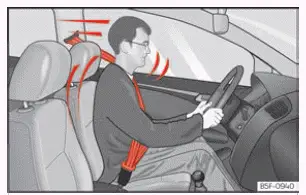
Fig. 17 Drivers with properly worn seat belts
will not be thrown forward in the event of
sudden braking.
Correctly fastened seat belts are among the most important safety features in the Seat Ibiza. They help keep the driver and passengers in their intended seating positions during sudden braking, abrupt steering manoeuvres and collisions. By restraining the body and limiting excessive forward or sideways movement, seat belts reduce the likelihood of occupants striking the steering wheel, dashboard, windscreen or other interior components. They also considerably reduce the risk of being thrown from the vehicle during an accident, when the forces acting on an unrestrained occupant can be extremely severe.
Occupants who wear their seat belts correctly benefit from the belts' ability to manage and absorb part of the kinetic energy generated during a collision. When a moving vehicle suddenly slows down or comes to a stop, the bodies of its occupants tend to continue moving at their previous speed. A properly positioned seat belt restrains this movement and helps distribute the resulting forces across stronger areas of the body. At the same time, the front structure of the Seat Ibiza and its passive safety systems, including the airbags, are designed to absorb or manage collision energy under the conditions for which they were developed. These protective measures work together to reduce the forces acting on occupants and limit the risk of serious injury. For this reason, every seat belt must be fastened before the journey begins, even if the destination is only a short distance away or the vehicle will be travelling at relatively low speed.
Make sure that all passengers fasten their seat belts correctly before setting off and keep them fastened throughout the journey. Accident statistics consistently demonstrate that seat belt use substantially reduces the risk of serious injury and improves the chances of surviving a severe collision. A properly worn belt also helps maintain the occupant's position relative to the airbags, allowing these supplementary restraint systems to provide their intended protection when they deploy. Without a seat belt, an occupant may move too far forwards or sideways before an airbag can provide effective support. Because of their proven importance in reducing injuries, seat belts are legally required for vehicle occupants in most countries. The driver should ensure that children are secured in suitable child restraint systems and that every other passenger uses the belt assigned to their seating position.
Although the Seat Ibiza is equipped with an airbag system, airbags are not a substitute for seat belts and do not provide protection in every accident. The front airbags, for example, are designed to deploy only when the collision conditions meet the criteria established for their activation. They may operate in certain frontal impacts, but they are not triggered in minor frontal collisions, side impacts, rear-end collisions, rollovers or other accidents in which the deployment threshold programmed into the airbag control unit is not reached. Consequently, occupants cannot rely on the airbags alone to restrain their bodies during a collision. Seat belts provide essential protection in a much wider range of driving situations, including sudden braking and impacts that do not activate the airbags. Always wear the seat belt correctly, regardless of whether the vehicle has airbags or other advanced safety equipment.
Important safety instructions for the use of seat belts
- Always fasten and wear your seat belt in accordance with the instructions provided in this section. The belt must follow the correct path across the body, lie flat without twists and remain securely fastened whenever the Seat Ibiza is moving. Make sure the shoulder section passes across the shoulder and chest, while the lap section sits low across the pelvis rather than the abdomen. Correct positioning is essential because the belt is designed to restrain the body in a specific way during sudden deceleration or a collision.
- Check that every seat belt can be pulled out, fastened, adjusted and released correctly, and that none of its components is damaged. The belt webbing, buckle, latch plate, retractor and anchorage points must be in proper working condition. A seat belt that is difficult to fasten, does not retract normally or shows signs of deterioration may not provide the expected protection in an accident. Any defect should be inspected and corrected by a specialised workshop before the affected seating position is used.
WARNING Seat belts can provide their intended level of protection only when they are in good condition, correctly fastened and properly positioned on the occupant's body. Incorrect use, damaged components or failure to wear a seat belt can substantially increase the risk of severe or fatal injuries during an accident. Observe the following precautions whenever travelling in the Seat Ibiza.
- Failing to wear a seat belt, or wearing it incorrectly, greatly increases the risk of serious or fatal
injury. An improperly positioned belt may not restrain the occupant effectively and can concentrate
collision forces on vulnerable parts of the body.
Maximum protection is achieved only when the seat belt is worn correctly, the occupant maintains a suitable sitting position and the belt remains securely fastened throughout the journey. Never assume that airbags or other vehicle safety systems can compensate for an incorrectly worn or unfastened seat belt.
- Never allow two people to use the same seat belt, even if one or both occupants are children. Each approved seating position has its own restraint system, designed to protect one person. Sharing a belt prevents it from fitting either occupant correctly and can cause the passengers to strike one another during sudden braking or a collision. Every child must be secured using an appropriate child restraint system or seat belt according to their size and the applicable requirements.
- Never release your seat belt while the vehicle is moving. Even a brief period without restraint can expose you to a potentially fatal injury if the driver brakes suddenly or an accident occurs. Keep the belt securely fastened until the Seat Ibiza has come to a complete stop and it is safe to leave your seat. Do not unbuckle the belt to reach objects or change your seating position during the journey.
- Do not position the seat belt over hard, pointed or fragile objects carried in your clothing, such as spectacles, pens or similar items. During a collision, the belt may press these objects forcefully against the body, potentially causing serious injuries. Remove such objects from pockets or other areas beneath the belt before fastening it, and ensure that the webbing lies directly against suitable clothing without anything that could interfere with its protective function.
- Protect the seat belt webbing from damage, trapping and contact with sharp edges. Make sure the belt is not caught in a door, seat mechanism or other moving component, and do not allow it to rub repeatedly against surfaces that could cut or weaken the material. Damaged webbing may not withstand the forces generated during an accident, even if the belt appears to fasten and retract normally.
- Never route the shoulder section of the seat belt beneath your arm, behind your back or across another unsuitable part of the body. Such positions prevent the belt from distributing restraint forces as intended and may leave the upper body inadequately supported. The shoulder belt must pass correctly across the shoulder and chest, while the lap belt remains low over the pelvis. Do not alter this arrangement for comfort or convenience.
- Avoid wearing bulky, loose or unfastened outer clothing that prevents the seat belt from fitting closely against your body. Thick coats, loose overcoats worn over other garments and similar clothing can create unnecessary space between the belt and the occupant. This may reduce the belt's ability to restrain the body promptly during sudden deceleration. Adjust clothing as necessary so that the belt lies snugly and follows the correct path across the chest and pelvis.
- Keep the opening of every seat belt buckle free from paper, dirt and other foreign objects. An obstruction inside the buckle may prevent the latch plate from engaging fully, even if it appears to have been inserted. When fastening the belt, make sure the latch plate locks securely into the correct buckle. If the buckle does not operate properly or its locking action is uncertain, have it inspected before using that seating position.
- Never use seat belt clips, retaining rings, adjustment accessories or similar devices to change the position or tension of the belt webbing. Such accessories can interfere with the restraint system's intended operation and may prevent the belt from holding the occupant correctly during an accident. Use only the adjustment features provided for the vehicle and wear the belt in the position specified by the manufacturer.
- Frayed, torn or otherwise damaged seat belt webbing can fail under the forces generated during a collision. Damage to the belt anchorages, retractors, buckle mechanisms or connecting components can be equally dangerous, even when the webbing itself appears undamaged. Inspect the condition of all seat belts at regular intervals, paying attention to visible wear, cuts, loose components and unusual operation. If any defect is found, arrange for the affected restraint system to be checked by a specialised workshop without delay.
- Seat belts that have restrained occupants during an accident and have consequently been subjected to substantial loads or stretching must be replaced by a specialised workshop. The forces involved may weaken the belt or damage internal components without leaving obvious visible marks. Replacement may therefore be necessary even when the restraint appears to be in good condition. The workshop must also inspect the relevant belt anchorages and associated components to ensure that the complete restraint system remains safe to use.
- Do not attempt to repair a damaged seat belt yourself. Seat belt assemblies contain safety-critical components that must function correctly under considerable loads, and an unsuitable repair could seriously compromise their performance. Never remove, dismantle, modify or alter the seat belts, retractors, buckles or anchorages. Inspection, repair and replacement work must be entrusted to a specialised workshop with the appropriate technical knowledge and equipment.
- Keep seat belts clean and free from substances that could interfere with their operation. Dirt and contamination can affect the movement of the webbing through the guides and may prevent the retractors from functioning correctly. A belt that does not retract properly can remain loose or become twisted, reducing its effectiveness. Maintain the belts in accordance with the vehicle's cleaning instructions and have any persistent retraction problems checked by a specialised workshop.
 Seat belts
...
 Seat belt buckled indication
Lights up red
The red seat belt warning indicator illuminates when the driver or front passenger has not fastened their seat
belt. This warning draws attention to an occupant who is not proper ...
See also:
Honda Civic Owners Manual. Cleaning the Window
Wipe using a glass cleaner.
Cleaning the Window
Wires are mounted to the inside of the rear window.
Wipe along the same direction as the wires with a
soft cloth so as not to damage them.
Models with Front Sensor Camera
Be careful not to spill fluids, such as water or glass ...
