
Seat Ibiza (6F) 2017-2026 Owner's Manual: Fuses in the engine compartment
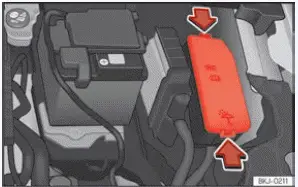
Fig. 160 In the engine compartment: lid of the
fuse box.
To open the engine compartment fuse box
- Open and raise the bonnet of the Seat Ibiza, following the procedure described on page 262. Make sure the bonnet is securely supported before working in the engine compartment. Locate the fuse box and its protective cover, taking care to avoid contact with hot or moving engine components.
- Identify the locking tabs that secure the fuse box cover and press them to release the retaining mechanism, as illustrated in Fig. 160. Apply pressure only where necessary to disengage the tabs, avoiding excessive force that could damage the plastic clips or the cover.
- Once the locking tabs have been released, carefully lift the cover away from the fuse box. Keep the removed cover in a clean, dry location while inspecting the fuses. Do not allow dirt, moisture or loose objects to enter the exposed electrical compartment.
- To close the fuse box, position the protective cover correctly over its housing and press it into place. Push the locking tabs down until they engage with an audible click. Check that the cover is securely fastened around its edges so that the fuse box remains protected against contamination and moisture.
Replace a blown fuse
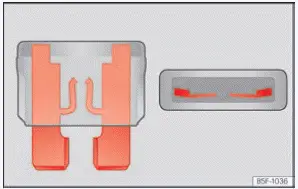
Fig. 161 Image of a blown fuse.
Preparations
- Before checking or replacing a fuse, switch off the Seat Ibiza ignition, all exterior and interior lights, and every electrical device that can be switched off. This reduces the possibility of unintended electrical current flowing through the circuit while the fuse is being removed. Do not begin the replacement procedure with the affected electrical equipment operating.
- Locate and open the fuse box containing the fuse to be inspected. Depending on the electrical component involved, the relevant fuse may be located beneath the driver's side dashboard or in the engine compartment. Follow the appropriate opening procedure and protect the exposed fuse box from dirt and moisture.
Recognise a blown fuse
A blown fuse can usually be identified by examining the metal conductor visible inside its body. Under normal conditions, this conductor forms a continuous electrical connection between the fuse terminals. When excessive current causes the fuse to operate, the metal strip melts and breaks the circuit. A visibly interrupted or melted conductor, as illustrated in Fig. 161, indicates that the fuse has blown and requires replacement. However, some damaged fuses may be difficult to identify by visual inspection alone.
- Use a torch or another suitable light source to illuminate the fuse and inspect its internal metal strip. Look for a visible break, melted section or other indication that the conductor is no longer intact. If the fuse cannot be examined clearly while installed, remove it carefully before checking its condition. Do not touch or bridge the electrical contacts with conductive objects during inspection.
To replace a fuse
- Carefully remove the defective fuse from its holder. Grip the fuse securely and pull it out without twisting or applying excessive force to the surrounding electrical contacts. If the fuse is difficult to reach or cannot be removed safely, seek assistance rather than risking damage to the fuse box.
- Install a new fuse with exactly the same amperage rating, colour identification, markings and physical dimensions as the original. Make sure the replacement is correctly positioned and fully seated in its holder. Never install a fuse with a higher rating or attempt to repair the damaged fuse, as doing so can compromise the circuit's electrical protection.
- After replacing the fuse, refit the fuse box cover or close its protective lid. Ensure that all retaining clips are properly engaged and that the cover is securely fastened. Once the fuse box has been closed, the relevant electrical component can be checked for correct operation. If the replacement fuse blows again, the electrical fault must be investigated by a qualified specialist workshop.
Fuse placement
When replacing any fuse in the Seat Ibiza, always use a replacement with the same specified amperage rating and physical size as the original. The fuse colour and printed markings provide important identification information and must match the requirements of the circuit. A fuse with a higher current rating may fail to protect the wiring and connected components against excessive current, while an incorrectly sized fuse may not fit or make reliable electrical contact. Consult the fuse assignment information to identify the relevant circuit before carrying out replacement work.
Fuses in the vehicle interior
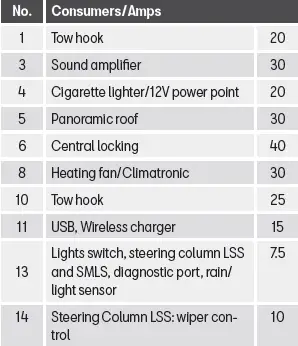
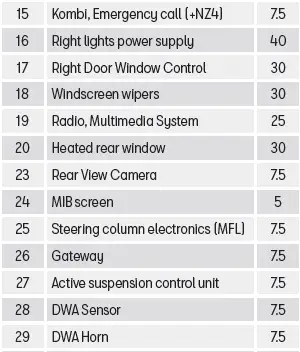
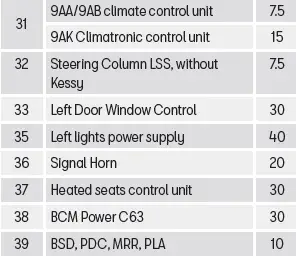
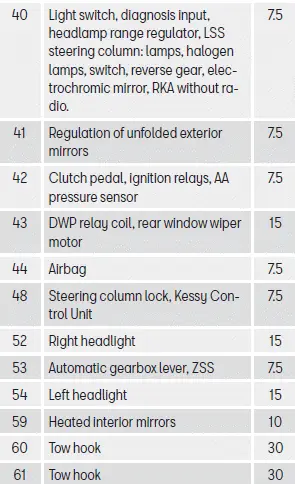
The interior fuse assignment charts identify the fuses associated with the electrical systems and equipment installed in the vehicle. Use the relevant fuse number, circuit description and amperage rating to locate the correct fuse before removing it. The actual arrangement may vary according to the Seat Ibiza model version and optional equipment, so not every position or electrical function shown will necessarily be present in an individual vehicle.
Fuse arrangement in engine compar
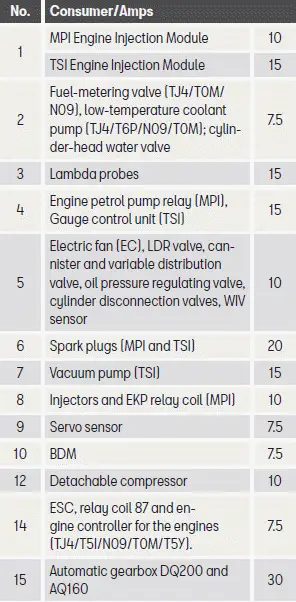
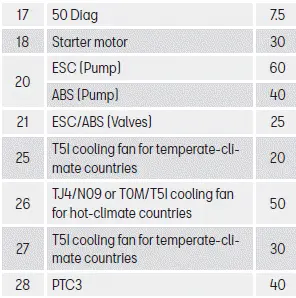
The engine compartment fuse arrangement provides information about the fuses protecting electrical circuits located in or connected to the engine compartment. Before replacing a fuse, identify its assigned position and verify the required amperage using the relevant reference chart. Some fuse positions and protected systems may differ between vehicle versions. If a fuse or circuit cannot be identified confidently, have it checked by a qualified specialist workshop rather than replacing components by trial and error.
Note
- The Seat Ibiza contains additional fuses that are not included in the fuse assignment charts in this chapter. Some of these protect electrical systems that require specialist knowledge or access to other vehicle components. Fuses not covered by the owner's manual should only be inspected or replaced by a qualified specialist workshop.
- Fuse positions that are not fitted with a fuse are omitted from the assignment tables. An empty position does not necessarily indicate that a fuse is missing or that an electrical fault is present. Do not insert a fuse into an unused position unless the vehicle's technical information specifically requires one.
- Some electrical components and equipment listed in the fuse tables are fitted only to particular Seat Ibiza versions or are available as optional extras. As a result, the fuse arrangement in an individual vehicle may not include every circuit shown in the reference information. Differences in equipment should be taken into account when identifying a fuse.
- The fuse assignment information reflects the vehicle specifications available when the manual was published. Changes to equipment, electrical systems or production specifications may result in differences between the printed charts and the actual vehicle. If the fuse layout does not correspond to the reference information, consult a qualified specialist workshop for confirmation.
 Fuses inside the vehicle
Fig. 159 On the dash panel on the driver side:
fuse box cover.
Opening and closing the fuse box located
below the dash panel
Opening: Locate the interior fuse box cover beneath ...
 Changing bulbs
...
See also:
Honda Civic Service Manual. Rear Speaker Removal, Installation, and Test (2-door)
013100 LEFT REAR
0131A8 RIGHT REAR
Removal
NOTE: SRS components are located in this area. Review the SRS
component locations and the precautions and procedures before doing
repairs or service.
1.
Both Quarter Pi ...
