Seat Ibiza (6F) 2017-2026 Owner's Manual: Fuel types
Identification of fuels
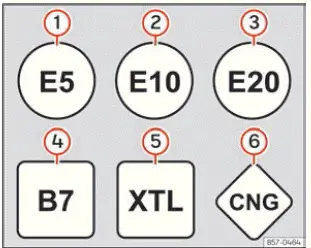
Fig. 147 Identification of fuels according to
European Union (EU) Directive 2014/94/
Fuel types are identified by standardised symbols displayed on filling station pumps and, depending on the country and vehicle specification, on the inside of the Seat Ibiza fuel tank flap. These markings help drivers distinguish between different fuels and select the correct product for their vehicle. By comparing the symbol on the pump with the information provided on the fuel flap, the driver can reduce the risk of accidentally filling the tank with an unsuitable fuel. The identification system uses different shapes, letters and numbers to indicate the fuel category and, where applicable, its composition.
- E5 petrol: Identifies petrol containing a maximum of 5% ethanol. The letter E refers to ethanol, while the number indicates the highest permitted ethanol percentage in the fuel. This designation is commonly used to distinguish petrol with a relatively low ethanol content from other petrol blends available at filling stations.
- E10 petrol: Indicates petrol that may contain up to 10% ethanol. The E10 marking identifies the maximum ethanol concentration rather than a guaranteed exact percentage. Before selecting this fuel, check that the Seat Ibiza engine is approved for the corresponding petrol specification.
- E20 petrol: Identifies petrol containing a maximum of 20% ethanol. This fuel has a higher permitted ethanol concentration than E5 or E10 and must only be used in vehicles specifically approved for it. The presence of an E20 symbol on a filling station pump does not mean that the fuel is suitable for every petrol engine.
- Diesel fuel: Identifies diesel meeting the EN 590 standard. The number following the letter B indicates the maximum proportion of biodiesel permitted in the mixture. For example, B7 means that the diesel may contain up to 7% biodiesel. This designation helps distinguish conventional diesel blends from other types of fuel.
- Synthetic diesel: Refers to paraffinic diesel fuel complying with the EN 15940 standard. This fuel category is identified separately from conventional diesel because its production and composition differ. It must only be used where the vehicle manufacturer has approved the relevant fuel specification.
- Natural gas: The marking CNG stands for Compressed Natural Gas. It identifies fuel supplied in compressed gaseous form for vehicles equipped with a compatible natural gas fuel system. CNG is distinct from petrol and diesel and cannot be used in vehicles that do not have the appropriate fuel system.
Type of petrol
The correct petrol grade for the Seat Ibiza is indicated on the label located inside the fuel tank flap. This information specifies the fuel requirements applicable to the particular engine version and should always be checked before refuelling. Different petrol engines may have different minimum octane requirements, so the fuel recommended for one vehicle configuration may not be the preferred grade for another.
The Seat Ibiza is equipped with a catalytic converter as part of its exhaust gas cleaning system and must therefore be operated exclusively with unleaded petrol. Leaded fuel can damage the catalytic converter and reduce its ability to treat harmful exhaust emissions. Always select unleaded petrol that meets the engine's specified requirements, even when travelling in countries where other fuel types may still be available.
Petrol used in the vehicle must comply with the EN 228 standard and be sulphur-free. The fuel must also satisfy the applicable regulations in the country where the vehicle is being driven. Petrol grades are distinguished by their resistance to engine knocking, expressed as the Research Octane Number (RON) or, in some markets, the Anti-Knock Index (AKI). These rating systems use different numerical scales, so the corresponding values should be considered when comparing fuel grades between countries. Always follow the minimum octane requirement specified for the Seat Ibiza engine.
Super unleaded petrol 95 octane petrol or normal 91 octane petrol at least
For engines with this fuel specification, SEAT recommends using 95 RON super unleaded petrol (91 AKI). This is the preferred grade for normal operation and provides the octane rating recommended for the engine. If 95 RON petrol is unavailable, 91 RON regular unleaded petrol (87 AKI) may also be used. However, the lower octane rating can result in a slight reduction in engine power. When choosing between these grades, use the recommended 95 RON petrol whenever it is available.
Super unleaded petrol, 95 octanes at least
Engines with this specification should normally be operated using super unleaded petrol with an octane rating of at least 95 RON (91 AKI). This minimum recommended grade is intended to provide the knock resistance required for proper engine operation. Refuelling with petrol that meets or exceeds this rating helps ensure that the engine is operated with fuel appropriate to its design.
If 95 RON super unleaded petrol cannot be obtained, 91 RON regular unleaded petrol (87 AKI) may be used temporarily when necessary. Under these circumstances, drive with particular restraint: avoid high engine speeds, apply the accelerator gently and do not place the engine under heavy load. The lower octane rating provides less resistance to knocking, so demanding driving conditions should be avoided. Refill the tank with the recommended super unleaded petrol as soon as it becomes available.
Unleaded super plus 98 octane petrol or super 95 octane petrol at least
For Seat Ibiza engines with this fuel recommendation, the preferred grade is 98 RON super plus unleaded petrol (93 AKI). This fuel provides the octane rating recommended for the engine and is the first choice when refuelling. If 98 RON petrol is unavailable, 95 RON super unleaded petrol (91 AKI) may be used instead. A slight reduction in engine power may occur when operating with the lower octane grade, but 95 RON remains an acceptable alternative under this specification.
If neither 98 RON nor 95 RON petrol is available, 91 RON regular unleaded petrol (87 AKI) may be used temporarily when absolutely necessary. While driving with this fuel, maintain moderate engine speeds, use only light accelerator inputs and avoid demanding acceleration or high engine loads. These precautions are important because the lower octane rating provides reduced resistance to engine knocking. Return to the recommended super or super plus petrol at the earliest opportunity rather than continuing to use the lower grade unnecessarily.
NOTICE
- Do not use fuels containing a high proportion of ethanol, such as E30 through E100, in Seat Ibiza engines that are not specifically approved for these blends. High-ethanol fuels can be incompatible with components of the fuel system and may cause damage to seals, fuel lines or other parts designed for conventional petrol. The separate provisions for vehicles equipped with Totalflex engines must be observed where applicable.
- Even a single tank of leaded petrol or fuel containing unsuitable metallic additives can permanently reduce the effectiveness of the catalytic converter. Metallic substances can contaminate the converter and interfere with its ability to clean exhaust gases. This deterioration may be irreversible, so never use leaded fuel or petrol containing prohibited metal additives.
- Use only petrol additives that have been approved by SEAT S.A. Some commercially available additives intended to increase the octane rating or reduce engine knocking contain metallic compounds that can damage both the engine and the catalytic converter. Products of this type must not be used unless they are expressly approved for the vehicle. Do not assume that an additive is suitable simply because it is marketed for petrol engines or promises improved performance.
- Do not refuel with petrol identified at the pump as containing metallic additives. This restriction also applies to LRP (lead replacement petrol), which can contain high concentrations of metal-based additives. Such fuels may damage engine components and the exhaust gas cleaning system. Always check the fuel identification information when refuelling in unfamiliar locations or countries where different petrol formulations are sold.
- Operating the engine at high speeds or using full throttle while running on petrol with an octane rating below the specified grade can cause engine damage. Lower-octane fuel has reduced resistance to knocking, particularly when the engine is under heavy load. If a lower grade has been used temporarily because the recommended petrol was unavailable, drive gently and avoid demanding operating conditions until the tank can be refilled with the appropriate fuel.
Note
- Petrol with an octane rating higher than the minimum required by the engine may be used. For example, an engine approved for 95 RON petrol can also be refuelled with a higher-octane unleaded grade, provided that the fuel meets the other applicable specifications. However, using a higher octane rating does not necessarily produce a noticeable improvement in performance or fuel consumption.
- In countries where sulphur-free petrol is not available, petrol with a low sulphur content may also be used. Select fuel with the lowest suitable sulphur content available and ensure that it otherwise meets the vehicle's fuel requirements. The normal recommendation remains to use sulphur-free petrol complying with the specified standard whenever possible.
Ethanol fuel
✓ Valid for: vehicles with Totalflex engines
Seat Ibiza vehicles equipped with a Totalflex engine can be identified by the marking "Petrol/ethanol" on a label inside the fuel tank flap. This identification indicates that the vehicle has an engine and fuel system designed to operate with the ethanol-containing fuels specified for the Totalflex version. The label should be checked before using a high-ethanol fuel, as ordinary petrol engines without this approval must not be treated as compatible with the same blends.
Vehicles fitted with Totalflex engines can operate on 95 RON unleaded petrol (91 AKI) complying with ANP Resolution No. 57, as well as fuels containing high proportions of ethanol, including blends with varying ethanol concentrations. This flexibility is specific to the Totalflex engine configuration and does not apply automatically to other Seat Ibiza petrol engines. Refuelling is carried out using the same general procedure as for petrol: open the fuel tank flap, remove the cap, fill the tank using the appropriate fuel and close the cap and flap securely when finished. The normal precautions for handling flammable fuels remain fully applicable.
The information provided under Type of petrol must also be taken into account when selecting fuel for a Totalflex-equipped Seat Ibiza. In particular, observe the relevant fuel identification markings, the specifications applicable to the engine and the general safety precautions for refuelling. The ability to operate on high-ethanol blends does not remove the need to use fuel that complies with the requirements established for the vehicle.
Note For Seat Ibiza vehicles with Totalflex engines, SEAT recommends filling the fuel tank exclusively with petrol every 10,000 km. This periodic use of petrol is intended to help reduce impurities or deposits that may remain in the engine after prolonged operation with E100 ethanol fuel. Follow this recommendation as part of normal vehicle use when frequently refuelling with high-ethanol blends.
 Refuelling
Safety warnings regarding fuel handling
WARNING
Vehicle fuel is highly flammable, and its vapours can ignite when exposed to sparks, open flames or other
ignition sources. Incorrect handling ...

See also:
Honda Civic Owners Manual. To Adjust the Vehicle Speed
Increase or decrease the vehicle speed using the RES/+ or -/SET buttons on
the
steering wheel.
Each time you press the button, the vehicle speed is increased or
decreased by
about 1 mph (1.6 km/h).
If you keep the button pressed, the vehicle speed increases or decreases
until yo ...
