
Seat Ibiza (6F) 2017-2026 Owner's Manual: Securing the crossbars and the roof carrier system
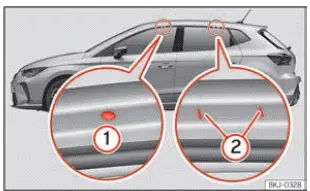
Fig. 141 Attachment points for the crossbars for the roof carrier
The crossbars provide the mounting foundation for a range of specialised roof carrier systems designed for the Seat Ibiza. Depending on the type of equipment being transported, suitable attachments are required to carry luggage, bicycles, skis, surfboards or boats safely on the roof. Each type of load requires a carrier or securing arrangement designed for its particular dimensions and characteristics. For safety reasons, objects must not simply be placed on the crossbars without the appropriate retaining equipment. Compatible crossbars, roof carriers and specialised accessories can be obtained from SEAT dealerships.
Always install and secure the crossbars and roof carrier system correctly before placing any load on the vehicle. The mounting components must be positioned at the designated attachment points and fastened in accordance with the instructions supplied by the equipment manufacturer. Different carrier systems may have specific installation requirements, so the assembly instructions provided with the particular crossbars and accessories must be followed carefully. Correct installation is essential to prevent the carrier from shifting or becoming detached while the Seat Ibiza is being driven.
Installing the bars
The designated attachment points for the roof carrier crossbars are located at the front and rear positions identified by 1 and 2 in Fig. 141. These mounting points are visible only when the vehicle doors are open. Before installing the crossbars, open the corresponding doors to locate the attachment points and identify their correct positions. Fit the mounting components according to the instructions supplied with the approved roof carrier system, ensuring that the front and rear bars are secured to their intended attachment locations.
WARNING Incorrect installation, unsuitable attachment methods or improper use of the crossbars and roof carrier system can cause the complete assembly to become detached from the roof while the vehicle is moving. A detached carrier or falling roof load presents a serious danger to the occupants of the Seat Ibiza and to other road users. Such incidents can result in accidents and severe injuries. The roof carrier must therefore be installed exactly as specified and checked regularly to ensure that all mounting components remain secure.
- Always follow the assembly and installation instructions supplied by the manufacturer of the crossbars and roof carrier system. Use the designated mounting points and the components intended for the particular equipment. Do not substitute an improvised attachment method for the manufacturer's specified installation procedure.
- Before setting off, inspect all threaded connections, fastening elements and attachment points to confirm
that they are correctly secured. After travelling a short distance, stop in a safe location and check
the connections again, tightening them if necessary in accordance with the manufacturer's instructions.
During longer journeys, repeat these inspections whenever you stop for a rest. Regular checks are particularly important after the carrier has been newly installed or loaded, as they help identify connections that may have loosened during travel. Do not continue driving if any mounting component is loose or incorrectly positioned.
- Never modify, alter or attempt to repair the crossbars or roof carrier system yourself. Changes to the original components or their fastening arrangements may affect the strength and reliability of the installation. Use the equipment in its approved configuration and follow the manufacturer's instructions if a component is damaged or no longer functions correctly.
Note Read the assembly instructions supplied with the crossbars and roof carrier system carefully before installation. These instructions contain the information needed to fit, secure and use the equipment correctly. Keep them inside the Seat Ibiza so that they remain available when the carrier is installed again, when attachments need to be checked or when the system is used to transport a different type of load.
Loading the roof carrier system
Objects may be placed and secured on the roof carrier only after the crossbars and the complete carrier system have been correctly installed. Before loading the Seat Ibiza roof, check that all mounting points are properly engaged, the fastening components are secure and the carrier is suitable for the intended cargo. The load must then be arranged and restrained according to the requirements of the carrier system. A correctly installed roof carrier provides the necessary mounting arrangement, but the transported objects must still be secured independently to prevent them from moving or falling during the journey.
Maximum authorised cargo on the roof
The maximum permissible roof load for the Seat Ibiza is 75 kg. This limit applies to the total weight supported by the roof and must not be exceeded, regardless of the type of luggage or equipment being transported. The permitted roof load is not the weight of the cargo alone; it includes all components installed on the roof for carrying that cargo.
The total roof load is calculated by adding together the weight of the crossbars, the roof carrier system and the objects being transported. For example, the weight of a roof box or bicycle carrier forms part of the permitted load, along with the weight of any luggage or equipment placed in or on it. The combined weight of these items must remain within the specified 75 kg maximum.
Before loading the roof, determine the weight of the complete carrying arrangement. Check the manufacturer's weight information for the crossbars and the roof carrier, including accessories such as roof boxes, bicycle carriers and ski racks. Add the weight of the cargo that will be transported and weigh individual items if their weight is uncertain. This calculation is necessary because the weight of the carrier equipment reduces the amount of additional cargo that can be carried. Never exceed the maximum authorised roof load, even if the equipment appears to be securely mounted.
Some crossbars and roof carrier systems have a lower permitted load capacity than the maximum roof load specified for the Seat Ibiza. When this is the case, the lower limit takes precedence. For example, if the carrier manufacturer specifies a maximum load below the vehicle's 75 kg roof limit, the carrier must not be loaded beyond its own permitted capacity. Consult the fitting and operating instructions supplied with the crossbars and carrier system to establish the applicable limit. The maximum authorised roof load of the vehicle does not override a lower weight restriction imposed by the carrying equipment.
Distributing a load
Arrange roof-mounted cargo so that its weight is distributed as evenly as possible across the carrying system. Avoid concentrating heavy objects on one side or in a small area of the carrier. The load should be positioned in accordance with the carrier manufacturer's instructions and secured firmly with suitable retaining equipment. Even weight distribution and correct fastening help reduce unwanted movement of the cargo and limit its effect on the vehicle's balance and handling. Before driving, make sure that no part of the load can slide, tip or become detached from the roof carrier.
Check attachments
After installing the crossbars and roof carrier system, inspect all bolted connections and attachment points before starting the journey. Repeat the inspection after driving a short distance to confirm that the mounting components remain correctly secured. During continued use, check the fastenings at regular intervals, approximately every 200 km. These inspections help identify any loosening of threaded connections or other attachment components. If necessary, tighten the fastenings according to the equipment manufacturer's instructions before continuing the journey.
WARNING Exceeding the permitted loading limits of the Seat Ibiza or its roof carrier equipment can adversely affect vehicle stability, steering response and braking performance. Excessive loads may also place more force on the roof carrier and its mounting points than they are designed to withstand. Always respect the weight limits specified for the vehicle, its axles and the installed carrying system, and distribute the load correctly to reduce the risk of accidents and injuries.
- Never exceed the maximum authorised roof load, the permitted axle loads or the maximum authorised weight of the vehicle. The weight of passengers, luggage and other cargo must be considered when determining whether the Seat Ibiza remains within its permitted loading limits. Compliance with the roof load limit alone does not guarantee that the vehicle's other weight restrictions have been met.
- Never exceed the maximum load capacity specified for the crossbars or roof carrier system, even when the total weight carried on the roof is below the vehicle's maximum authorised roof load. Each component of the carrying arrangement must be used within its own permitted limits. Where different weight ratings apply, observe the lowest relevant limit.
- Position heavy objects as far forwards as possible within the permitted loading area of the roof carrier and distribute the overall vehicle load evenly. Avoid unnecessary concentration of weight towards the rear or on one side of the vehicle. Secure all objects carefully so that their position cannot change during braking, acceleration or cornering.
WARNING Loose or inadequately secured cargo can shift on the roof carrier or fall from the vehicle while driving. Falling objects may strike other vehicles or road users, while sudden movement of the load can affect the handling of the Seat Ibiza. Both situations can lead to serious accidents and injuries. Every item transported on the roof must be restrained using equipment suitable for its weight, size and shape, and the load must remain securely attached throughout the journey.
- Always use suitable fastening belts or retaining straps that are in good condition. Check the restraints for wear, cuts, damaged fittings or other defects before use, and replace any equipment that cannot secure the load reliably. Fasten the cargo firmly to the roof carrier using the appropriate attachment points, making sure that the belts or straps cannot slip or loosen while the vehicle is moving.
 Introduction
The roof of the Seat Ibiza has been designed with particular attention to aerodynamic efficiency. Its shape helps
reduce resistance to airflow as the vehicle moves, contributing to the overall aerod ...
 Trailer mode
...
See also:
Honda Civic Owners Manual. Side Airbags
The side airbags help protect the torso and pelvis of the driver or a front
passenger
during a moderate-to-severe side impact.
Housing Locations
The side airbags are housed in the outside
edge of the driver’s and passenger’s seatbacks.
Both are marked SIDE AIRBAG.
Operation
When ...
