
Seat Ibiza (6F) 2017-2026 Owner's Manual: Materials and recycling information
Environmental compatibility
Environmental protection is an important consideration throughout the development and production of SEAT vehicles. From the initial design and selection of materials to manufacturing processes and eventual recycling, measures are taken to reduce environmental impact and encourage the responsible use of resources. The Seat Ibiza incorporates design principles intended to make components easier to separate, recover and recycle when they reach the end of their useful life. These measures also support more efficient manufacturing and help reduce the amount of waste generated during vehicle production.
Constructive measures to encourage recycling
- Connections designed for straightforward dismantling: Joints, fasteners and component connections are designed, wherever practical, to make disassembly easier. This helps facilitate the removal and separation of individual parts during repairs, component replacement and end-of-life vehicle processing, reducing the need for unnecessarily complicated dismantling procedures.
- Modular construction: The use of modular assemblies makes it easier to dismantle the vehicle and separate its individual components. This approach supports more efficient maintenance and allows suitable materials and parts to be identified and processed during recycling operations.
- Greater use of single-grade materials: Wherever technically appropriate, preference is given to components made from a single material or a more uniform material composition. Reducing the number of different materials combined within an individual component can simplify sorting and improve the efficiency of subsequent recycling processes.
- Identification of plastics and elastomers: Plastic components and elastomeric materials are marked in accordance with the relevant requirements of ISO 1043, ISO 11469 and ISO 1629. These identification standards help distinguish different material types, making it easier for recycling facilities to classify, separate and process them correctly.
Choice of materials
- Use of recycled materials: Recycled raw materials are incorporated into vehicle components wherever their properties meet the relevant technical and quality requirements. This helps reduce demand for newly produced materials and supports the reuse of resources already available within established recycling systems.
- Compatible plastics in combined components: Where a part contains several plastic elements that cannot easily be separated, compatible plastic materials are selected whenever possible. Using materials that can be processed together helps simplify recycling and reduces difficulties caused by incompatible material combinations.
- Materials from recycled and renewable sources: The selection of materials includes recycled substances and, where suitable, materials obtained from renewable sources. Their use is considered alongside the durability, safety and functional requirements of the individual vehicle components.
- Reduction of volatile substances: Efforts are made to limit volatile components in plastic materials, including substances that can contribute to noticeable odours. Careful material selection helps reduce emissions from interior and exterior plastic components while maintaining the properties required for their intended use.
- CFC-free cooling agents: Cooling systems use refrigerants that do not contain chlorofluorocarbons (CFCs). Avoiding these substances helps prevent the environmental harm associated with CFC emissions, particularly their damaging effects on the ozone layer.
The use of certain heavy metals is prohibited in vehicle materials and components, subject to the specific exemptions permitted by legislation. The restricted substances include cadmium, lead, mercury and hexavalent chromium. The applicable exceptions are established in Annex II of Directive 2000/53/EC on end-of-life vehicles. These restrictions are intended to reduce the presence of hazardous substances in vehicles and limit the environmental and health risks associated with their treatment and disposal. Material selection for the Seat Ibiza takes these regulatory requirements into account.
Manufacturing methods
- Reduced use of thinners in cavity protection: The quantity of thinner used in protective wax applied to enclosed body cavities is reduced. These wax treatments help protect internal body structures, while limiting thinner content contributes to reducing the use and release of volatile substances during production.
- Protective plastic film during transportation: Plastic film is used to protect appropriate vehicle surfaces while vehicles are being transported. This helps prevent damage and contamination during handling and delivery, reducing the need for additional cleaning or corrective work before the vehicle reaches its destination.
- Solvent-free adhesive labels: Stickers and adhesive labels that do not require solvents are used where appropriate. This reduces the need for solvent-containing materials during manufacturing and supports efforts to limit emissions associated with adhesive applications.
- CFC-free refrigerants in cooling systems: Cooling equipment used in manufacturing processes operates with refrigerants that do not contain chlorofluorocarbons. This measure helps reduce the environmental impact associated with substances known to damage the ozone layer.
- Waste recycling and energy recovery: Manufacturing waste is managed through recycling and, where appropriate, energy recovery processes. These include the use of refuse-derived fuel (RDF), which allows suitable waste materials that cannot be recycled through conventional methods to be used for energy recovery rather than simply discarded.
- Improved wastewater quality: Production processes incorporate measures intended to improve the quality of wastewater. Appropriate treatment and management help reduce the amount of contamination released from manufacturing activities and support more responsible use of water resources.
- Recovery of residual heat: Systems are used to capture and reuse heat that would otherwise be lost during manufacturing operations. Technologies such as thermal recovery equipment and enthalpy wheels can recover useful energy from process or ventilation systems, helping reduce the additional energy required for heating and related operations.
- Water-soluble paints: Water-soluble paint products are used in suitable manufacturing applications. Compared with conventional solvent-based alternatives, these coatings can reduce the amount of organic solvents required during painting while providing the protective and decorative properties needed for automotive finishes.
Recycling of electrical or electronic devices
Electrical and electronic devices (EED) that are not permanently installed in the Seat Ibiza must carry the appropriate waste collection symbol. This marking identifies products that require separate collection when they are no longer usable. Such equipment may contain electrical components, metals, plastics and other materials that should be recovered or treated through designated recycling processes rather than disposed of with ordinary household rubbish.

The symbol indicates that electrical and electronic equipment must not be disposed of with household waste. Instead, these devices must be taken to an appropriate collection point or handled through an authorised separate waste collection system. Separate collection allows recoverable materials to be processed correctly and helps ensure that substances requiring special treatment do not enter the general waste stream. When disposing of electrical or electronic accessories associated with your Seat Ibiza, follow the collection and recycling arrangements applicable in your country or region.
Product recycling
✓ Valid for market: France
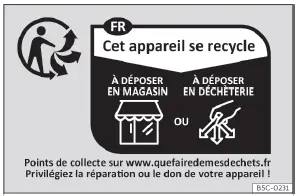
Fig. 192 Recycling notice for France.
For vehicles and accessories supplied in the French market, the recycling information shown in Fig. 192 must be observed when disposing of the products listed below. The notice provides guidance on the appropriate sorting and collection arrangements for these items once they have reached the end of their service life. Depending on the equipment fitted to the Seat Ibiza, the instructions may apply to the following products:
- Vehicle keys: Keys containing electronic components must be disposed of in accordance with the relevant collection instructions. Electronic keys should not automatically be treated as ordinary household waste, since their internal components and batteries may require separate handling.
- Remote control of auxiliary heating and ventilation: Where this equipment is supplied with the vehicle, its remote control must be handled according to the applicable recycling notice. The device contains electronic components that should be directed to an appropriate collection system when it is no longer usable.
- Compressor: A compressor supplied as part of the vehicle's equipment or accessories must be disposed of according to the designated recycling requirements. Follow the instructions applicable to the product rather than placing it in general household waste without checking the correct collection method.
- Charging cable: Where a charging cable is supplied as part of the relevant vehicle equipment, it must be directed to the appropriate collection or recycling system when it is no longer required. Its electrical conductors, insulation and associated components should be handled in accordance with the applicable recycling instructions.
- Mobile key card: If the vehicle is equipped with a mobile key card, follow the relevant French recycling guidance when disposing of it. The card should be collected and processed according to the instructions for its materials and electronic components.
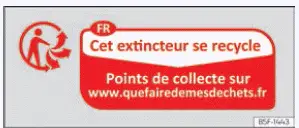
Fig. 193 Fire extinguisher recycling notice for
France.
For fire extinguishers supplied with the vehicle, follow the recycling and disposal instructions shown in ››› Fig. 193. These instructions apply to the French market and explain how the product should be handled when it reaches the end of its service life. Because fire extinguishers are pressurised safety equipment, they must be directed to an appropriate collection or treatment facility rather than discarded with ordinary household waste.
- Extinguishers: Fire extinguishers carried in the Seat Ibiza must be disposed of in accordance with the recycling information provided in Fig. 193. Follow the applicable local collection requirements and use a suitable disposal service capable of handling this type of equipment safely. Do not attempt to dismantle or empty a pressurised extinguisher simply to prepare it for recycling.
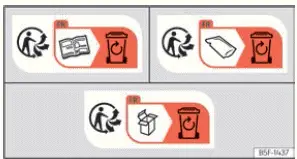
Fig. 194 Recycling notice for France.
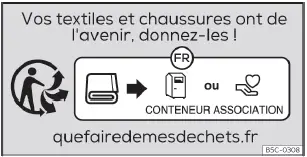
Fig. 195 Recycling notice for France.
The recycling instructions illustrated in ››› Fig. 194 and ››› Fig. 195 apply to the documentation, packaging materials and bags associated with the vehicle accessories listed below. These notices provide information about the appropriate sorting and collection of packaging waste in France. When disposing of these materials, identify the relevant packaging components and follow the indicated collection instructions rather than placing everything in the same waste container. The requirements concern the documentation and packaging or bags supplied with the products, which may have different disposal arrangements from the products themselves.
- Maintenance manual: Follow the applicable recycling instructions when disposing of printed maintenance documentation or its packaging. Paper materials should be separated and placed in the appropriate collection stream according to the French sorting information.
- First aid kit: Sort the packaging and any accompanying bags or documentation according to the relevant recycling notice. The disposal requirements for the first aid supplies themselves may differ from those for their packaging, particularly where used or contaminated materials are involved.
- Extinguishers: Observe the recycling instructions for the packaging, protective bags and documentation supplied with a fire extinguisher. These materials must be sorted separately from the extinguisher itself, which is subject to its own disposal requirements.
- Compressor: Dispose of the compressor's packaging, storage bag and accompanying documentation in accordance with the applicable sorting instructions. Where different packaging materials are present, separate them as indicated by the recycling labels.
- Charging cable: Follow the recycling notices when disposing of packaging, protective bags or printed information supplied with a charging cable. These instructions concern the associated materials and should not be confused with the requirements for recycling the electrical cable itself.
- Charging socket and watertight seal: Observe the appropriate sorting requirements for the packaging and documentation associated with these components. Different packaging materials may require separate collection depending on the information provided by the relevant recycling notice.
- Vehicle toolbox: Sort and dispose of any packaging, storage materials or documentation supplied with the vehicle toolbox according to the French recycling instructions. The toolbox and its contents may be subject to different disposal arrangements when they are no longer usable.
- Puncture repair spray: Follow the recycling instructions for the product's packaging and accompanying documentation. The puncture repair spray container and any remaining contents must be handled according to the applicable disposal requirements for that product, rather than automatically being treated as ordinary packaging waste.
- Jack: Dispose of the packaging, protective materials and documentation supplied with the vehicle jack in accordance with the indicated sorting instructions. The jack itself should be handled separately from its packaging if it eventually requires disposal.
- Warning triangle: Observe the relevant recycling notices for the warning triangle's packaging, storage bag and accompanying information. Separate the packaging materials as required by the applicable French collection system.
- High visibility jacket: Follow the indicated instructions when disposing of the jacket's packaging or protective bag. The jacket itself is a separate product and may require a different collection route from the materials in which it was supplied.
- Tool bag: Sort any packaging and accompanying documentation associated with the tool bag according to the recycling information shown in Fig. 194 and Fig. 195. Where the bag itself is no longer usable, check the appropriate local disposal arrangements for its material.
For the sake of the environment
The Triman logo and Info-tri sorting information provide important guidance to consumers in France about the correct disposal of products and packaging. The Triman marking identifies products or packaging covered by separate collection requirements, while the accompanying Info-tri instructions explain how the relevant materials should be sorted. Following these markings helps direct recyclable materials into the appropriate collection systems and reduces the amount of waste disposed of incorrectly. When disposing of documentation, packaging or accessories supplied with your Seat Ibiza, consult the markings provided and observe the collection arrangements applicable in your area.
Product recycling
✓ Valid for market: Italy
Environmental labelling
Italian Legislative Decree No. 116 of 3 September 2020, which implements the provisions of EU Directive 2018/851 on waste and EU Directive 2018/852 on packaging and packaging waste, establishes requirements for the environmental labelling of packaging. These provisions are intended to make packaging materials easier to identify and manage after use, while providing consumers with the information needed to dispose of them correctly.
Under these requirements, packaging must carry appropriate identification and disposal information to support separate collection, reuse, recovery and recycling. Clear labelling helps users recognise the materials involved and determine the correct destination for packaging waste. It also assists waste management operators by encouraging more consistent separation of materials before they enter collection and treatment systems.
For the Seat Ibiza and its associated equipment, the environmental labelling requirements apply to relevant packaging supplied in the Italian market. The information is intended to help vehicle owners identify how packaging materials should be handled once they are no longer needed. Correct sorting depends on the type of material and the applicable local collection arrangements, so users should follow both the product information and the requirements established by their municipality.
Information about the environmental labelling of packaging associated with the vehicle can be accessed by scanning the QR code shown below. The code provides a link to a website containing the packaging identification and disposal information required under the applicable Italian legislation. Use a compatible smartphone or another QR code reader to open the linked page and consult the instructions for the relevant packaging materials. This allows the information to be accessed without relying solely on markings printed directly on individual packaging items.

Third-party copyright information
https://www.seat.com/company/softwareinfo.html
Some electronic systems and products installed in the Seat Ibiza contain software components developed by third parties and distributed under Open Source licences. These licences establish the conditions under which the software may be used, distributed or modified. Depending on the individual component and its licence, the manufacturer may be required to provide copyright notices, licence texts or access to the corresponding source code.
SEAT makes the relevant third-party software information available through the website listed above. The published documentation includes a list of the Open Source software components used in applicable vehicle products, together with the associated copyright information, the terms of the respective Open Source licences and the full text of the corresponding licence agreements. This information allows users to identify the licensing conditions governing software incorporated into certain vehicle systems.
For some Open Source components, the applicable licence also provides the right to request the corresponding source code from the vehicle manufacturer. Where such an obligation exists, SEAT will make the source code available in accordance with the terms of the relevant licence. The availability of source code and the conditions under which it is supplied depend on the requirements established by each individual Open Source licence.
When source code is provided in response to a valid request, only the costs directly associated with making it available may be charged, as permitted by the applicable licence. These costs may include the price of a physical data storage medium, packaging and shipping. The charge is intended to cover the practical expenses of supplying the requested material rather than the development or licensing of the Open Source software itself.
Further details about the Open Source components used in relevant SEAT vehicle systems, the applicable copyright notices, licence conditions and procedures for requesting source code are available at https://www.seat.com/company/softwareinfo.html. Consult this resource for the specific legal and technical information associated with third-party software included in your Seat Ibiza.
 Fluids in the air conditioning system
Refrigerant in the air conditioning system
The air conditioning system in your Seat Ibiza uses a specific type and quantity of refrigerant determined by the
manufacturer. This information is prov ...
 Return and scrapping of end-of-life vehicles
End-of-life return
When your Seat Ibiza reaches the end of its useful life, it must be collected, dismantled and recycled in an
environmentally responsible manner. A vehicle contains numerous mat ...
See also:
Honda Civic Service Manual. Console Box Trim Removal and Installation ('13-'14)
1.
Console Box Trim
1.
Remove the mat (A).
2.
Remove the console box trim (A).
...
