
Seat Ibiza (6F) 2017-2026 Owner's Manual: Introduction
Towing a vehicle requires experience, careful coordination and an understanding of how both vehicles behave when connected. This is particularly important when using a tow cable, because the distance between the vehicles can change as the cable tightens or becomes slack. Both drivers must understand the towing procedure, the signals they will use to communicate and the precautions needed when accelerating, braking or changing direction. Before towing a Seat Ibiza, make sure that everyone involved is familiar with the special requirements of the operation.
Drivers who have little or no experience of towing another vehicle should not attempt the procedure. Incorrect coordination between the two drivers can cause sudden tension in the towing connection, unexpected vehicle movements or a loss of control. If the circumstances are difficult or either driver is uncertain about the procedure, professional recovery assistance is the safer option.
Throughout the towing operation, avoid excessive pulling forces, sudden jerks and abrupt changes in tension between the vehicles. Accelerate gently and maintain smooth, predictable movements so that the towing equipment is not subjected to unnecessary stress. Particular care is required on unpaved roads or surfaces that do not provide firm, consistent traction. Under these conditions, additional resistance or sudden wheel movements can overload the towing eye, tow bar or other attachment components. The towing connection must never be subjected to forces beyond those for which it is intended.
Always comply with the legal requirements governing tow-starting and towing in the country where the Seat Ibiza is being used. Regulations may specify permitted towing methods, speed limits, equipment requirements and other conditions. These legal provisions must be observed in addition to the vehicle manufacturer's instructions. If the applicable regulations or the vehicle's condition do not permit conventional towing, arrange for the vehicle to be transported by a suitable recovery truck.
Tow start
Tow-starting is a method of attempting to start a vehicle's engine by having another vehicle pull it into motion. Instead of using the starter motor in the normal way, the movement of the vehicle is used in an attempt to turn the engine. Although this method has traditionally been used with some vehicles, it is not permitted for the Seat Ibiza for technical reasons. If the engine cannot be started because the 12-volt battery is discharged, use the specified jump-starting procedure rather than attempting to start the vehicle by towing.
A tow bar or tow cable can be used to pull a vehicle during a tow-starting operation where that procedure is expressly permitted. However, the availability of either type of towing equipment does not make tow-starting suitable for every vehicle. The Seat Ibiza must not be tow-started, regardless of whether a rigid tow bar or a flexible towing cable is available. The restrictions specified for the vehicle take precedence over the general possibility of using these towing methods.
Towing
Towing refers to the movement of a vehicle that cannot be driven normally by using another vehicle to pull it. This may be necessary following a breakdown or another situation in which the vehicle is unable to continue under its own power. Unlike tow-starting, the purpose is to move the disabled vehicle rather than to start its engine. When towing a Seat Ibiza, the driver of the disabled vehicle must remain able to steer and brake safely, and the vehicle must meet the conditions required for the chosen towing method.
Where conventional towing is permitted, the Seat Ibiza may be pulled using a suitable rigid tow bar or towing cable. The equipment must be attached to the designated towing points, and the towing procedure must be carried out carefully to avoid damage to the vehicle. The following limits apply to towing under the conditions described in this section:
- Maximum towing speed: 50 km/h (30 mph). Do not exceed this speed while the vehicle is being towed. Driving at a lower speed may be necessary depending on road conditions, traffic, visibility and the behaviour of the towing combination. The driver of the towing vehicle must accelerate and brake smoothly, allowing the driver of the Seat Ibiza sufficient time to respond.
- Maximum towing distance: 50 km (30 miles). Conventional towing must not exceed this distance. If the vehicle needs to be transported farther, arrange for an appropriate recovery vehicle rather than continuing to tow it with a cable or tow bar. The maximum distance must also be considered together with any additional restrictions associated with the vehicle's transmission or mechanical condition.
Tow cable and tow bar
Using a rigid tow bar is generally safer and more suitable for towing a Seat Ibiza because it maintains a more consistent distance between the two vehicles. This reduces the likelihood of sudden changes in cable tension and helps avoid impacts caused by the vehicles moving too close together. A tow bar also provides a more controlled connection during changes in speed, reducing the risk of damage resulting from abrupt pulling forces. For these reasons, a tow bar is preferable whenever conventional towing is necessary and the equipment is suitable for both vehicles.
A tow cable should be used only when a suitable tow bar is unavailable. Unlike a rigid bar, a flexible cable can become slack and then tighten suddenly, producing a sharp pulling force on the towing attachments. To reduce this effect, the cable should have a degree of elasticity that helps absorb changes in tension. A towing rope made from synthetic fibres or another similarly elastic material is recommended. The rope must be suitable for towing the vehicle and must be attached securely to the designated towing points. Both drivers should maintain smooth, coordinated movements to keep the cable under controlled tension and avoid sudden jerks.
Towing with a tow truck
When professional recovery equipment is used, the method of transporting the Seat Ibiza must be appropriate for its transmission. Vehicles equipped with an automatic gearbox may only be towed by a recovery truck with their front wheels raised clear of the road, as illustrated in Fig. 154. This requirement prevents the front wheels from rotating on the road during recovery and avoids subjecting the automatic transmission to unsuitable operating conditions. The recovery operator must select the correct lifting arrangement and secure the vehicle properly before transport.
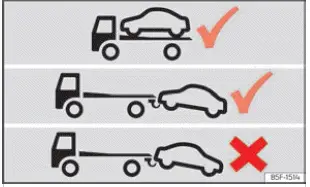
Fig. 154 Transport with a tow truck: vehicles with
an automatic gearbox.
WARNING The handling and braking characteristics of a vehicle change considerably when it is being towed. The driver of the Seat Ibiza may need to apply greater force to the brake pedal, particularly if the engine is not running and the normal brake assistance is unavailable. Steering may also require more effort, and the vehicle will not respond in the same way as it does during normal driving. Both drivers must allow for these differences, maintain an appropriate distance and avoid abrupt manoeuvres. Failure to adapt to the changed driving conditions can result in a collision, loss of control or serious injuries.
WARNING Never allow the Seat Ibiza to be towed if the vehicle has no electrical power and the steering system cannot be operated safely. Electrical power is required for certain vehicle functions, including the electronic steering column locking system. If the steering becomes locked during towing, the driver may be unable to control the vehicle's direction. This creates a serious risk of an accident and potentially fatal injuries. Before towing begins, ensure that the necessary electrical systems are functioning and that the steering remains fully operational.
- Never remove the ignition key while the Seat Ibiza is being towed. On vehicles equipped with an ignition and start button, do not switch off the ignition during the towing operation. Doing so could cause the electronic steering column lock to engage unexpectedly, making it impossible to steer the vehicle. If the steering locks while the vehicle is moving, the driver may lose control and be unable to avoid an obstacle or collision. Keep the ignition in the required operating state throughout the towing procedure.
- If the vehicle loses electrical power while being towed, stop the towing operation immediately as soon as it is safe to do so. Do not continue towing if the electrical failure could affect the steering or other essential vehicle functions. Arrange for assistance from qualified recovery personnel, who can determine a suitable method of transporting the Seat Ibiza without exposing the occupants or other road users to unnecessary danger.
NOTICE Towing the Seat Ibiza using a tow cable or rigid tow bar can cause damage to the vehicle if the procedure is carried out incorrectly or the mechanical conditions are unsuitable. The towing attachment points, transmission and other components may be subjected to forces that do not occur during normal driving. Sudden jerks, excessive tension or inappropriate towing arrangements can increase the risk of damage. Conventional towing should therefore be used only when the vehicle's condition and the applicable instructions permit it.
- If the Seat Ibiza must be towed using a cable or tow bar, proceed with particular care. Make sure the towing equipment is suitable, correctly attached and securely fastened. Avoid sudden acceleration, abrupt braking and unnecessary changes in tension. Both drivers must coordinate their actions throughout the operation to minimise stress on the vehicles and towing connections.
- Whenever possible, have the vehicle transported by a professional recovery truck rather than towing it along the road. Professional recovery equipment can provide a more controlled method of moving a disabled vehicle, particularly when the condition of the transmission, steering or other mechanical components is uncertain. This is especially important when conventional towing could cause additional damage.
NOTICE Pushing the Seat Ibiza by hand can damage exterior body components if force is applied in unsuitable areas. The rear light units, side spoilers around the rear window and large sheet-metal body panels are not intended to withstand concentrated pushing forces. Pressing against these components may cause cracks, deformation, scratches or damage to their mounting points.
The rear spoiler may also become loose or detach if it is used as a point for pushing the vehicle. Even when the vehicle is being moved only a short distance, applying force to a fragile exterior component can result in damage that requires repair or replacement. Care must therefore be taken when selecting where to apply pressure to the bodywork.
- If the vehicle needs to be pushed manually, do not apply force to the rear light assemblies, the side spoilers beside the rear window, large sheet-metal panels or the rear spoiler. These parts may be damaged or detached when subjected to pressure. Use an appropriate method of moving the vehicle that avoids placing unnecessary loads on vulnerable exterior components.
NOTICE Removing or refitting the towing eye cover and installing the removable towing eye can damage the Seat Ibiza if the components are handled carelessly. The cover is fitted into the bodywork, and incorrect removal may scratch the surrounding paint or damage its retaining points. Similarly, forcing or incorrectly positioning the towing eye can damage the attachment area. Take care when accessing the towing point and fitting the towing equipment.
- Remove and refit the towing eye cover carefully, following the specified procedure and avoiding unnecessary force. When installing the towing eye, position it correctly and secure it as instructed. Do not use unsuitable tools or allow the towing eye to strike painted surfaces. Careful handling helps prevent scratches, broken retaining components and other avoidable damage to the vehicle.
NOTICE Using a towing eye that is not designed for the Seat Ibiza can damage the vehicle's towing attachment or surrounding components. An unsuitable towing eye may not fit correctly, may fail to engage securely or may transmit towing forces improperly. Compatibility is essential because the towing eye forms part of the connection between the vehicle and the towing equipment.
- Always use the removable towing eye supplied with the Seat Ibiza on-board tool kit, or another towing eye that is specifically suitable for the vehicle. Before towing, ensure that the eye is correctly installed at the designated attachment point and that the connection is secure. Never substitute an improvised attachment or a towing eye intended for a different vehicle if its suitability has not been confirmed.

 Instructions for tow-starting and
towing
While the Seat Ibiza is being towed, the driver can indicate an intended change of direction even when the hazard
warning lights are operating. With the ignition switched on, move the turn signal le ...
See also:
Honda Civic Owners Manual. Vehicle Information and Message from Honda Tips
You can check the messages that are received quickly in the shortcut
operation.
1. A message appears and notifies you of a
new message on the header area.
When the message is received, a
notification ring can be heard.
2. A message icon is continuously displayed in
the header area ...
