
Seat Ibiza (6F) 2017-2026 Owner's Manual: Check the electrolyte level
Battery access
The 12-volt battery in the Seat Ibiza is located in the engine compartment. Its installation position allows access for inspection and servicing, although certain battery components are protected by a cover. Before approaching the battery, switch off the ignition and electrical consumers, secure the vehicle against unintended movement and observe the safety precautions for working in the engine compartment. Battery inspection must be carried out carefully because the electrical connections and internal electrolyte can present serious hazards.
- Open and raise the bonnet, following the procedure and safety instructions described in the section "Working in the engine compartment" on page 262. Make sure the bonnet is securely supported before reaching into the engine compartment. Avoid contact with hot engine components and do not allow tools or other conductive objects to touch the battery terminals.
- Carefully lift the protective cover fitted over the front of the battery to gain access to the area required for inspection. Do not force the cover or interfere with the battery casing, electrical connections or ventilation components. The cover should be returned to its correct position after the inspection has been completed.
Check the level
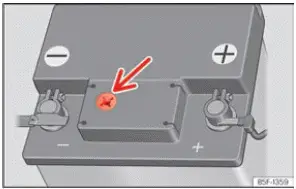
Fig. 177 Sight glass on the top of the 12 volt
battery (schematic representation).
The battery electrolyte level should receive particular attention in vehicles that cover high annual mileages, operate regularly in hot climates or have an older battery installed. These operating conditions can place additional demands on the battery and may influence its condition over time. Where the fitted battery is equipped with an inspection sight glass, the indicator provides a visual means of assessing the electrolyte condition without opening the battery casing. The battery itself must remain sealed, and no attempt should be made to remove its covers or replenish the electrolyte.
- Examine the colour visible through the inspection sight glass on the upper surface of the 12-volt battery, as illustrated in Fig. 177. Make sure there is enough light to distinguish the indicator colour accurately. The sight glass is designed to provide a quick visual indication of battery condition, but it does not replace a complete electrical inspection when a fault is suspected.
- If air bubbles are visible inside the inspection window and make the colour difficult to identify, gently tap the area around the sight glass until the bubbles move away and the indicator can be read clearly. Do not strike the battery forcefully, apply excessive pressure to the window or attempt to remove the sight glass. If the indication remains unclear, have the battery checked by a qualified specialist.
The inspection indicator, commonly referred to as the "magic eye", is incorporated into the upper part of the battery. Its visible colour changes according to the battery's condition, providing information associated with the electrolyte level and state of charge. The indicator should be interpreted according to the colour indications specified for the battery installed in the Seat Ibiza. Although it is useful for a preliminary assessment, the sight glass cannot identify every possible battery fault, and a satisfactory colour indication does not necessarily guarantee that the battery will perform correctly under all operating conditions.
Two principal colour indications are used to assess the electrolyte level:
Yellow or colourless: A yellow or colourless appearance in the sight glass indicates that the battery electrolyte level is too low. This condition requires professional attention because insufficient electrolyte can affect the battery's operation and may indicate that it is no longer suitable for continued use. Do not attempt to open the battery or add water or electrolyte to correct the indication. Take the Seat Ibiza to a qualified specialist workshop and have the battery inspected. If the battery is found to be defective or its condition cannot be restored safely, it must be replaced with a suitable unit that meets the manufacturer's requirements.
Black: A black indication means that the electrolyte level is correct according to the battery's inspection system. No action to replenish the electrolyte is required. However, this indication relates to the condition monitored by the sight glass and should not be treated as a comprehensive assessment of battery performance. If the engine is difficult to start, electrical equipment behaves abnormally or the battery shows other signs of deterioration, have it tested by a qualified technician even when the indicator remains black.
Charging, replacing, disconnecting and connecting the 12-volt battery
If you suspect that the 12-volt battery in your Seat Ibiza is damaged, defective or no longer operating reliably, arrange for it to be inspected by a qualified specialist workshop. Symptoms such as repeated starting difficulties, unusual electrical behaviour, visible casing damage or an abnormal battery condition may require professional diagnosis. Charging, replacement and electrical disconnection procedures must be performed with the correct equipment and an understanding of the vehicle's electrical system. Incorrect handling can damage electronic components, compromise battery safety or create a risk of injury.
Charging the 12-volt battery
Have the 12-volt battery charged by a qualified specialist workshop. The battery technology installed in the Seat Ibiza at the factory requires charging with controlled voltage limits, and unsuitable charging equipment or incorrect settings may damage the battery or affect its service life. The charging procedure must be appropriate for the specific battery type and its condition. A technician can assess whether charging is necessary, select compatible equipment and monitor the process in accordance with the applicable safety requirements.
SEAT recommends contacting an authorised SEAT dealership or SEAT Service centre for battery charging. These facilities can identify the battery technology fitted to the vehicle and apply the appropriate charging procedure. Professional assistance is particularly advisable if the battery has been deeply discharged, the vehicle has remained unused for an extended period or there is uncertainty about the battery's condition. Never attempt to charge a battery that is frozen, visibly damaged or otherwise suspected of being unsafe.
Replacing the 12-volt battery
The original 12-volt battery has been selected specifically for the Seat Ibiza and is designed to meet the requirements of its installation location and electrical system. In addition to supplying the necessary electrical power, the battery incorporates safety characteristics appropriate to the vehicle. Its physical dimensions, mounting arrangement, electrical capacity and ventilation provisions must be compatible with the space and connections provided by the manufacturer. A replacement battery should therefore be selected according to the vehicle's technical requirements rather than solely on the basis of whether it physically fits inside the engine compartment.
Whenever the 12-volt battery requires replacement, the work must be performed by a qualified technician. SEAT recommends using an authorised SEAT dealership or Service centre. The replacement battery must meet the prescribed requirements for dimensions, maintenance characteristics, electrical performance and safety. These specifications can be identified using the appropriate vehicle documentation and technical information. A qualified technician has access to the necessary reference data and equipment to select a compatible battery and install it correctly.
Choosing the correct replacement is important because batteries that appear similar externally may differ in their internal construction, electrical characteristics or safety provisions. The technician must ensure that the selected battery satisfies the requirements established for the particular Seat Ibiza configuration. Correct installation also involves securing the battery properly, making the electrical connections safely and ensuring that the protective components and ventilation arrangements are fitted as intended.
SEAT specifically recommends having battery replacement carried out by an authorised SEAT dealership. In addition to supplying a battery that meets the required specifications, an authorised service facility can perform the electronic adjustments associated with the replacement procedure. This helps ensure that the newly installed battery is correctly recognised by the vehicle's electrical management system and operates in accordance with its intended parameters.
The ventilation arrangement of the replacement 12-volt battery must be configured correctly. The degassing opening must always be located on the side of the negative battery terminal, while the corresponding opening on the positive terminal side must remain securely sealed. This arrangement is an important part of the battery installation requirements and must not be altered or overlooked. Incorrect positioning or sealing of the degassing openings may interfere with the intended release of battery gases and create a safety hazard. The ventilation configuration should be checked by the technician carrying out the replacement.
Only maintenance-free 12-volt batteries complying with the TL 825 06 and VW 7 50 73 standards may be used. The applicable versions of these standards must be dated October 2014 or later. These requirements establish the battery characteristics necessary for compatibility with the vehicle and its electrical system. Before installation, the replacement battery must be verified against the prescribed specifications. A battery that does not satisfy these standards should not be installed, even if its dimensions or nominal voltage appear suitable.
Replacement of the 12-volt battery must always be entrusted to a qualified technician because the procedure also requires adjustments to the vehicle's electronic systems. The battery management functions depend on information relating to the installed battery, and the appropriate parameters must be established when a new unit is fitted. Certain operating and safety characteristics can only be determined correctly from the specifications of the original battery and the corresponding vehicle documentation.
A qualified technician has the necessary diagnostic equipment, technical information and access to compatible replacement batteries to complete these adjustments correctly. Simply disconnecting the old battery and installing another unit without performing the required electronic procedures may leave the vehicle operating with incorrect battery information. This can affect the management of electrical energy and the operation of systems that depend on the battery's characteristics. Professional replacement ensures that both the physical installation and the necessary electronic configuration are addressed.
NOTICE Using a replacement battery that does not comply with SEAT's prescribed quality requirements, or installing a battery with a lower capacity than the original equipment, may have consequences beyond reduced electrical performance. Depending on the legislation applicable in the country where the vehicle is registered or operated, such a modification could affect the vehicle's approval status or the validity of associated administrative permits. A battery that does not meet the manufacturer's specifications may also create a serious safety risk, particularly if its electrical characteristics, construction or protective features are unsuitable for the vehicle. Always use a replacement battery that satisfies the applicable SEAT requirements and have its compatibility confirmed by a qualified technician before installation.
Seat Ibiza models equipped with the Start-Stop system use a special type of 12-volt battery designed to meet the additional demands associated with this function. The replacement must be suitable for the vehicle's Start-Stop equipment and must comply with the prescribed battery specifications. A conventional battery should not be substituted merely because it has the same nominal voltage or similar external dimensions. The correct battery technology and electrical characteristics are essential for reliable operation of the Start-Stop system and the vehicle's electrical management functions.
For this reason, the 12-volt battery in a Seat Ibiza equipped with the Start-Stop system must only be replaced with a battery that matches the specifications of the original unit. The replacement must have the appropriate electrical characteristics, capacity, dimensions and battery technology required by the vehicle. Installing a battery that is not designed for the same operating conditions may affect the Start-Stop function, battery charging management and the reliability of the electrical system. Have a qualified technician confirm the correct replacement specification before installation.
Disconnecting the 12-volt battery
If the 12-volt battery needs to be disconnected from the Seat Ibiza electrical system, the procedure must be carried out carefully and in the correct sequence. Disconnecting the battery interrupts the electrical supply to various vehicle systems and may affect stored settings or electronic functions. Battery disconnection should therefore only be performed when necessary and by someone familiar with the required safety precautions.
Before beginning, switch off the ignition and all electrical consumers. Make sure that the lights, ventilation system, audio equipment and other electrically operated accessories are switched off. The engine must not be running, and no electrical equipment should be drawing unnecessary power while the battery connections are being removed. This reduces the likelihood of electrical disturbances or accidental sparking during the procedure.
- Unlock the vehicle before disconnecting the battery. If the Seat Ibiza remains locked when the electrical supply is interrupted, the anti-theft alarm may be triggered. Make sure the vehicle is unlocked and that you can access the necessary areas safely before proceeding with the battery disconnection.
- Always disconnect the negative battery cable first, followed by the positive cable. This sequence reduces the risk of an accidental short circuit while working around the battery terminals. Carefully release the negative terminal connection and move the cable away so that it cannot accidentally touch the terminal again. Only then disconnect the positive cable. Avoid allowing metal tools or other conductive objects to bridge the battery terminals or make unintended contact with surrounding components.
Connecting the 12-volt battery
When reconnecting the battery, the terminal connections must be restored in the correct order. Before beginning, check that the battery is properly positioned and secured, that the terminals and cables are in suitable condition and that no conductive objects are resting near the connections. The battery must comply with the specifications prescribed for the Seat Ibiza, and the vehicle's electrical consumers must remain switched off throughout the reconnection procedure.
- Switch off the ignition and all electrical consumers before reconnecting the 12-volt battery. Make sure that lights, accessories and other electrical equipment are not operating. This helps minimise the risk of unwanted electrical loads or sparks when the battery supply is restored.
- Reconnect the positive battery cable first and then the negative cable. Make sure each cable is attached to its corresponding terminal and that the connections are properly secured. Never reverse the polarity or allow the positive terminal to come into contact with the vehicle body through a tool or other conductive object. Incorrect connections can cause serious damage to the electrical system.
After the 12-volt battery has been reconnected and the ignition is switched on, several warning or control lamps may illuminate in the instrument cluster. This can occur because certain electronic systems need to restore their operating information after the electrical supply has been interrupted. Under normal circumstances, these warning lamps should go out after the vehicle has travelled a short distance at approximately 15 to 20 km/h (10 to 12 mph). If one or more warning lamps remain illuminated after this procedure, have the Seat Ibiza inspected by a qualified specialist workshop. Persistent warnings may indicate that a system requires further adjustment, diagnosis or repair.
If the 12-volt battery has remained disconnected for an extended period, the vehicle may no longer display or calculate the next scheduled service correctly. Some maintenance-related information can be affected by a prolonged interruption of the electrical supply, potentially making the displayed service indication unreliable. In this situation, observe the maximum permitted maintenance intervals specified for the vehicle rather than relying exclusively on the instrument cluster display. If necessary, consult an authorised SEAT Service centre to verify the maintenance schedule and restore the appropriate service information.
Vehicles equipped with Keyless Access: If the ignition cannot be switched on after reconnecting the 12-volt battery, lock the Seat Ibiza from outside the vehicle and then unlock it again. This procedure may allow the Keyless Access system to resume normal operation after the interruption of electrical power. Once the vehicle has been unlocked, attempt to switch on the ignition again. If the ignition still does not respond, do not repeatedly disconnect and reconnect the battery in an attempt to resolve the problem. Seek assistance from a qualified specialist workshop so that the cause can be identified and corrected.
WARNING Incorrect installation or connection of the 12-volt battery, or the use of a battery that does not meet the vehicle manufacturer's requirements, can result in dangerous short circuits, electrical overheating, fire and serious injuries. The battery must be compatible with the Seat Ibiza electrical system and installed using the prescribed procedures. Incorrect polarity, unsuitable battery characteristics or improperly secured connections may create hazards even if the vehicle initially appears to operate normally.
- Use only maintenance-free 12-volt batteries equipped with an appropriate anti-spill system and having the same relevant properties, technical specifications and physical dimensions as the factory-installed battery. The replacement must satisfy the requirements for electrical capacity, construction and safety established for the vehicle. Do not install a battery simply because it fits into the battery compartment or has the same nominal voltage. If there is any uncertainty about compatibility, have the replacement selected and installed by a qualified technician.
WARNING Charging a 12-volt battery can produce a highly explosive mixture of gases. If these gases come into contact with a flame, spark or another ignition source, they may ignite and cause the battery to explode. Such an explosion can release corrosive electrolyte and battery fragments, resulting in severe burns, eye injuries and other serious harm. Battery charging must therefore be carried out with suitable equipment, adequate ventilation and strict observance of the applicable safety precautions.
- Only charge the 12-volt battery in a well-ventilated location where gases released during the charging process cannot accumulate. Keep cigarettes, naked flames, sparks and other ignition sources away from the battery. The charging equipment must be suitable for the battery technology installed in the Seat Ibiza, and the charging procedure must follow the relevant manufacturer's instructions. SEAT recommends having the battery charged by a qualified specialist workshop.
- Never attempt to charge a 12-volt battery that is frozen or has previously frozen and subsequently thawed. A discharged battery can freeze at temperatures close to 0°C (+32°F), and freezing may damage its internal components or casing. Even after the battery has thawed, internal damage may remain and charging could create a serious risk of electrolyte leakage or explosion. Do not assume that a thawed battery is safe to reuse.
- If the 12-volt battery has frozen, it must be replaced without exception. Do not attempt to restore it by charging, heating or reconnecting it to the vehicle. Have the affected battery removed and replaced by qualified personnel who can assess its condition and handle it safely. A frozen battery must not be returned to service, even if no external damage is immediately visible.
- Connecting the battery cables to the wrong terminals can cause a short circuit and serious damage to the vehicle's electrical system. Always observe the correct polarity and connection sequence: attach the positive cable first, followed by the negative cable. Make sure the terminal connections are correctly positioned and securely fastened. Never reverse the cables or allow conductive tools to create an electrical connection between the terminals.
NOTICE
- Never connect or disconnect the 12-volt battery while the ignition is switched on or the engine is running. Interrupting or restoring the battery connection under these conditions can cause electrical disturbances that may damage sensitive electronic components or interfere with the operation of vehicle systems. Likewise, never install or use a battery that does not comply with the specifications prescribed for the Seat Ibiza. Incorrect battery characteristics may affect electrical power management, charging performance and the operation of electronic control units. These conditions can lead to electrical malfunctions or permanent damage to components within the vehicle's electrical system.
- Never connect equipment designed to supply electrical power, such as solar charging panels or external battery chargers, to the vehicle's 12-volt accessory socket for the purpose of charging the main battery. The accessory socket is not intended to serve as a battery charging connection, and feeding electrical power into the vehicle through this outlet may damage the wiring, electrical protection devices or associated electronic components. Battery charging must be performed using an appropriate procedure and equipment suitable for the installed battery. If charging is required, consult a qualified specialist workshop.
For the sake of the environment
- The 12-volt battery contains materials that can be harmful to human health and the environment, including substances such as lead and sulphuric acid. Used or defective batteries must not be disposed of with ordinary household waste. They must be collected, transported and processed in accordance with the applicable environmental and waste management regulations. When replacing the battery in your Seat Ibiza, arrange for the old unit to be handed over to an authorised collection or recycling facility. Proper recycling allows valuable materials to be recovered while preventing hazardous substances from entering the environment.
- Battery electrolyte is a corrosive substance that can contaminate soil, water and surrounding surfaces
if it escapes from the battery. A damaged or leaking battery must be handled carefully to prevent
further release of electrolyte and exposure to hazardous materials.
If electrolyte or another operating fluid leaks from the battery, take appropriate precautions to prevent it from spreading and ensure that the spilled material is collected safely. Do not wash the electrolyte into drains, allow it to soak into the ground or dispose of contaminated materials with ordinary household rubbish. Because battery acid presents a chemical hazard, collection and cleanup should be performed by personnel with suitable protective equipment and knowledge of the correct procedures.
Any recovered electrolyte, contaminated absorbent materials or other hazardous waste must be disposed of through an authorised waste management service. Correct handling and disposal reduce the risk of environmental contamination and protect people who may otherwise come into contact with the spilled substance.
 Introduction
The 12-volt battery in the Seat Ibiza is installed in the engine compartment and supplies electrical power to the
vehicle's systems, including the energy required for starting the engine. Its condit ...
 Troubleshooting
Alternator
fault
The alternator warning lamp illuminates RED in the instrument cluster when a serious problem is
detected in the vehicle's electrical charging system. The following message ma ...
See also:
Honda Civic Owners Manual. Models with Display Audio
How to customize
While the vehicle is at a complete stop with the ignition switch in ON
*1, select
, and Settings, then select a
setting item.
*1: Models with the smart entry system have an ENGINE START/STOP button
instead of an
ignition switch.
Customized Features
...
