
Seat Ibiza (6F) 2017-2026 Owner's Manual: Behaviour in the event of an accident or fire
Actions to take in the event of a fire or accident
If your Seat Ibiza is involved in an accident or a fire breaks out, acting promptly and carefully can help protect you, your passengers and other people nearby. The immediate priority is to avoid further danger while ensuring that emergency assistance can reach the scene. For your own safety and that of everyone travelling in the vehicle, follow the precautions below in the order indicated, provided that the circumstances allow you to do so safely. Do not attempt any action that would expose you or another person to unnecessary risk.
- Switch off the engine. Once the Seat Ibiza has come to a stop, turn off the engine as soon as it is safe to do so. This is an important precaution following a collision or when there are signs of fire, smoke or another potentially dangerous condition. Do not attempt to restart the engine if you suspect that the vehicle has been damaged in a way that could create an additional hazard.
- Activate the hazard warning lights if possible. Switch on the hazard warning lights to make the stationary vehicle more visible to approaching traffic. The flashing direction indicators can alert other drivers to the presence of an accident or obstruction. If the controls are damaged or cannot be reached safely, do not remain inside the vehicle merely to activate the warning lights.
- Observe the applicable roadside safety regulations. Follow the legal requirements of the country in which the accident has occurred. Depending on local legislation, these may include wearing a reflective safety vest, using a warning triangle or activating an approved emergency warning beacon. Only position warning equipment when it is safe to do so. Never walk into moving traffic or expose yourself to further danger in an attempt to place a warning device.
- Move people away from immediate danger and provide first aid where necessary. If the situation requires evacuation, help passengers and other affected people reach a safer location away from traffic, flames, smoke or other hazards, provided that moving them is safe. Give appropriate first aid within your knowledge and abilities. Avoid moving a seriously injured person unless remaining in their current position presents an immediate danger, and follow any instructions provided by the emergency services.
- Contact the emergency services. Report the accident or fire as soon as possible, giving the location of the incident and explaining what has happened. Inform the operator about any injuries, visible fire, smoke or other hazards that may require a specialised response. Follow the instructions provided by the emergency operator and supply any additional information requested.
- Wait for emergency personnel at a safe distance. After contacting the emergency services, remain away from the accident scene and any potentially dangerous areas while waiting for assistance to arrive. Keep other people at a safe distance where possible, particularly if there is smoke, leaking fluid, damaged electrical equipment or a risk from passing traffic. Do not return to the vehicle unless emergency personnel indicate that it is safe to do so.
- Do not attempt to extinguish a vehicle fire yourself. If the Seat Ibiza catches fire, move away from the vehicle immediately and warn other people to keep their distance. A vehicle fire can develop rapidly and may involve hazardous fumes, intense heat or the possibility of an explosion. Do not remain near the burning vehicle to recover belongings or investigate the source of the flames. Leave firefighting and assessment of the scene to the emergency services.
WARNING Failure to follow the recommended emergency procedures can increase the risk of further accidents, serious injuries or fatalities. The conditions following a collision or fire may change quickly, and actions that appear harmless can expose vehicle occupants or bystanders to additional hazards. Always give priority to personal safety and follow the emergency checklist whenever the circumstances permit.
- Carry out the actions described in the checklist in the recommended order, as far as it is safe and practical to do so. Remain aware of the surrounding traffic, the condition of the vehicle and any developing hazards. Observe general safety precautions throughout the incident, and do not attempt to complete a procedure if doing so would place you or another person in immediate danger. Follow the instructions of emergency personnel once they arrive.
WARNING A vehicle fire can create a risk of explosion and release substances that are harmful to health. Burning vehicle components and materials may produce toxic smoke and gases, while the heat generated by the fire can cause severe injuries. The danger is not limited to direct contact with flames, and approaching a burning vehicle can expose you to rapidly changing conditions. Keep away from the affected area and allow trained emergency personnel to deal with the incident.
- Never remain close to a burning vehicle. Move to a safe distance immediately and prevent other people from approaching the Seat Ibiza if it is on fire. Do not attempt to retrieve personal belongings from the passenger compartment or luggage compartment, and do not return to the vehicle while flames, smoke or other signs of danger are present. Wait for the emergency services to secure the area before approaching the vehicle again.
Information call, Assistance call and Emergency call service
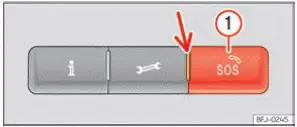
Fig. 42 On the roof console: controls for voice
services
Depending on the equipment and specification of the Seat Ibiza, the vehicle may be fitted with an emergency call system integrated into the overhead roof console. This system provides access to several voice communication services through dedicated controls, allowing the driver or passengers to request information, obtain assistance following a breakdown or contact an emergency call service. The availability and operation of individual services depend on the equipment installed in the vehicle and the conditions required for the communication system to function.
The following voice services can be activated by pressing the corresponding buttons  ,
 and
 , as illustrated in Fig. 42.
Each button is assigned to a particular service, so it is important to select the function appropriate to the
situation. The controls allow the relevant call to be initiated directly from the vehicle without first having
to operate a separate telephone.
- Information call. This service provides a voice connection to SEAT customer care for enquiries and information relating to the vehicle or available customer services. It is intended for situations in which information is required rather than immediate roadside or emergency assistance.
- Assistance call. This function allows the occupants to request specialised support if the Seat Ibiza breaks down or develops a problem that prevents the journey from continuing normally. The service establishes contact with an assistance provider so that the situation can be explained and the appropriate help requested.
- Emergency call service. This function is intended for situations requiring urgent assistance following an accident or another serious emergency. Depending on the system configuration and the available service, the call may be directed to the relevant public emergency services or to a designated SEAT emergency call centre.
A control unit integrated into the vehicle manages the communication process and establishes the connection when one of the available voice services is activated. The control unit forms part of the Seat Ibiza's communication equipment and is responsible for initiating the selected call through the system provided for that purpose. The connection can be established only when the necessary technical and service conditions are available.
When a voice service is activated, the system establishes a telephone connection with the corresponding service provider. This allows the vehicle occupants to speak directly with the person handling the call and explain the circumstances. Depending on the type of service, additional vehicle information may also be transmitted to assist the recipient. The connection status can be indicated by the system's control lamp, which provides information about availability, operation and certain faults.
Control lamp.
A control lamp is integrated into the roof console control assembly at the position indicated by the arrow in Fig. 42. This indicator communicates the operating status of the eCall system through different colours and flashing patterns. The displayed status helps the driver determine whether the emergency call function is available, whether a communication session is active or whether the system has detected a condition that restricts its operation. The following indications apply:
- Off: The eCall service is not available. When the control lamp is not illuminated, the system does not indicate that the emergency call function is ready for use. Do not assume that an emergency call can be established through the vehicle system while this status is displayed. If urgent assistance is required, use another available means of contacting the emergency services.
- Flashes red approximately 20 seconds after the ignition is switched on: The eCall service is deactivated. This indication appears shortly after the ignition has been activated and identifies the system's deactivated condition. The emergency call function should not be relied upon while it remains deactivated.
- Lights up red continuously: A system fault has been detected. The eCall service may still be available, but its operation is subject to certain restrictions. The nature of the fault may affect the system's ability to provide the full intended service. SEAT recommends having the system inspected by a specialised workshop so that the cause of the malfunction can be identified and the necessary corrective work carried out.
- Lights up green continuously: The eCall service is available, and the system is ready for
operation in the vehicle.
A steady green indication means that the system is in its normal ready state and can provide the emergency call function under the applicable operating conditions. This is the status expected when the service is available and no relevant malfunction or deactivation is being indicated.
- Flashes green: A voice connection is currently in progress. The flashing green indicator shows that the system has established an active communication session. During this time, the vehicle occupants can communicate with the connected service through the available voice equipment.
 Assistance call
The assistance call function allows the driver or passengers to request specialised help directly when the Seat Ibiza experiences a breakdown. This service is intended for situations in which the vehicle requires technical assistance or support to continue the journey. By activating the appropriate control, the occupants can establish a voice connection with the assistance service and describe the problem. The person receiving the call can then use the information provided to help determine the assistance required.
Alongside the voice connection, the system may transmit certain vehicle data to the assistance provider. This information can include the vehicle's current location, helping the service identify where assistance is needed without relying entirely on a verbal description of the surroundings. The transmission of relevant data is intended to support the handling of the breakdown request and facilitate the organisation of suitable assistance. The information sent depends on the vehicle system and the service being used.
 Information call
The information call function establishes a voice connection with the customer care service of SEAT S.A. It provides a convenient way to contact the manufacturer's customer support service directly from the vehicle when information or assistance with an enquiry is required. Unlike the emergency call function, this service is intended for customer information rather than urgent incidents involving immediate danger. The availability of the service and the conditions under which it operates may depend on the vehicle's equipment and the relevant service arrangements.
Note Assistance calls relating to vehicle breakdowns and calls to the information service may result in additional charges on your telephone bill. Any applicable costs depend on the communication service and the conditions associated with its use. These services should not automatically be assumed to be free of charge simply because they can be activated through the Seat Ibiza's built-in controls.
 Types of emergency call
- Public emergency call (mandatory by law): This type of emergency call is directed to the public emergency services of the country in which the Seat Ibiza is being driven. The call is handled through the emergency service arrangements applicable in that country, and communication normally takes place in the language used by the local emergency services. This function provides a means of requesting urgent assistance following an accident or another serious incident. Because the call is handled by the public emergency services, the language of communication may differ from the language selected in the vehicle's infotainment system.
- Private emergency call: This type of emergency call is connected to a designated SEAT call centre rather than being routed directly to the country's public emergency services. The private service can provide additional customer support features, including communication in the language selected in the vehicle's infotainment system, where supported. This arrangement is intended to make the emergency assistance process more convenient for the vehicle occupants by providing access to a SEAT-operated call handling service. The user may cancel the private emergency call at any time in order to receive assistance directly from the public emergency services of the country in which the vehicle is located. The availability and characteristics of the private service depend on the vehicle's equipment and the applicable service conditions.
Private emergency call
If the private emergency call service is included in the service package available for your Seat Ibiza, it is activated by default for a limited period. This service provides a direct connection to a SEAT emergency call centre when urgent assistance is required. Its availability depends on the vehicle's equipment and the services supported in the country concerned. The private emergency call function is intended to help occupants obtain assistance following a serious accident or another emergency, while providing the call centre with information that may be useful in coordinating an appropriate response.
- Rapid organisation of emergency assistance. The emergency call service is designed to help arrange assistance as quickly as possible when an emergency occurs. By establishing direct communication with a dedicated call centre, the system allows the vehicle occupants to report the situation and provide any additional information needed to assess the incident. This can be particularly useful following a collision when the driver or passengers may be injured, disoriented or unable to describe their exact location.
- Connection to the SEAT emergency call centre. When the private emergency call service is activated, the vehicle establishes a communication connection with the SEAT emergency call centre. The operator can communicate with the occupants, assess the information received and help coordinate the necessary response. The connection is established through the vehicle's integrated emergency communication equipment, provided that the required technical and service conditions are available.
- Automatic transmission of relevant vehicle data. When an emergency call is initiated manually, or when a collision causes an airbag or seat belt pretensioner to activate, information relevant to the emergency is transmitted automatically. This can include the current location of the Seat Ibiza, allowing the call centre to identify where assistance is required. The transmitted information supports the handling of the emergency call and can help the operator determine the circumstances of the incident without relying entirely on a verbal explanation from the occupants.
- Communication in the selected language. The person handling the emergency call normally communicates in the language selected in the vehicle's Infotainment system. This allows occupants to receive assistance in a familiar language when the corresponding service is supported. If the selected language is unavailable at the location where the emergency call is being made, communication will take place in English. The language setting therefore influences the language used by the private emergency call service, although the available options depend on the call centre serving the relevant location.
- Additional emergency communication equipment. To help maintain the operation of the emergency call system following a serious accident, the Seat Ibiza is equipped, where this service is provided, with dedicated components such as an emergency call microphone, an emergency loudspeaker and an integrated backup battery. The backup battery is separate from the vehicle's normal electrical power supply and is intended to support emergency communication if the main supply is interrupted. These components improve the system's ability to remain operational after a collision, although their effectiveness still depends on the condition of the equipment and the availability of the communication service.
- Permanent deactivation by a specialist. The private emergency call service can be permanently deactivated by a suitably qualified specialist. Because this function forms part of the vehicle's emergency communication equipment, SEAT recommends having the procedure carried out at an authorised SEAT dealership. Before requesting deactivation, consider that the private service will no longer be available to provide its intended assistance. Any changes to the emergency call configuration should be performed using the approved procedures for the vehicle.
- Deactivation through connected services or privacy settings. If the Seat Ibiza is equipped with the public emergency call system, the private emergency call service may also be deactivated through the relevant website or application. Alternatively, the private service can be disabled by preventing the transmission of data through the privacy mode settings in the Infotainment system. The available options depend on the vehicle's equipment and service configuration. These settings concern the private emergency call function and should not be confused with permanent deactivation of the vehicle's emergency communication equipment by a qualified specialist.
Starting an emergency call manually
1. Press and hold the emergency call button for several seconds, as indicated in Fig. 42, position 1. The button is located in the roof console on vehicles equipped with the emergency call system. Hold it for the required period to initiate the call rather than pressing it briefly. Manual activation is intended for situations in which urgent assistance is needed and the system has not already initiated an emergency call automatically.
Once the emergency call has been activated, the system establishes a voice connection with the emergency coordination centre. The vehicle occupants can then communicate with the operator and explain the nature of the emergency. Depending on the service and system configuration, relevant vehicle information may also be transmitted to assist the call centre in identifying the vehicle and its location. Follow the operator's instructions and provide any additional details requested about the incident or the condition of the occupants.
An emergency call can also be initiated manually through the Seat Ibiza Infotainment system, where this function is available. This provides an alternative method of activating the emergency communication service without using the roof console button. The resulting call serves the same purpose: establishing contact with the appropriate emergency coordination centre so that the situation can be reported and assistance arranged.
If the emergency call button is pressed unintentionally, cancel the call immediately using the prescribed procedure. An accidental activation should not be left connected unnecessarily, as the service is intended for genuine emergency situations. If communication with an operator has already been established, explain that the call was made by mistake.
1. Press the emergency call button again until the control lamp remains steadily illuminated in green. This indicates that the unintended call has been ended and the system has returned to its normal ready condition. Make sure the call has been cancelled successfully before continuing to use the vehicle normally.
Note The emergency call button should only be operated when an actual emergency requires assistance. Avoid pressing it to test the system or for routine enquiries. The Seat Ibiza provides separate information and assistance call functions, where equipped, for situations that do not require an emergency response.
Automatic activation of an emergency call
The automatic emergency call function operates only when the ignition is switched on. Under this condition, the system can initiate an emergency call without requiring the driver or passengers to press the emergency call button. This function is intended to provide assistance following certain serious incidents, including situations in which the occupants may be unable to activate the system manually. Automatic activation depends on the triggering conditions specified for the vehicle's safety equipment.
A connection to the SEAT emergency call centre is established automatically when either of the following events occurs while the system is operating:
- Airbag deployment. An emergency call is initiated immediately after the vehicle's airbags are triggered. Airbag activation indicates that the vehicle has experienced an impact meeting the deployment conditions of the relevant restraint system. The automatic call allows the emergency centre to receive information about the incident even if the occupants are unable to operate the emergency call controls themselves.
- Activation of a seat belt pretensioner. The system also initiates an emergency call immediately when a seat belt pretensioner is triggered. Pretensioners form part of the vehicle's occupant restraint equipment and may activate during a collision. Their activation is one of the specified events that causes the Seat Ibiza emergency call system to establish contact with the SEAT emergency centre automatically.
An automatically initiated emergency call cannot be cancelled by pressing the emergency call button. This restriction helps ensure that the call is not interrupted following a serious incident, particularly when the vehicle occupants may be injured or unable to respond appropriately. If an automatic call is established, communicate with the emergency operator whenever possible and explain the circumstances of the event.
If the SEAT emergency call centre attempts to contact the vehicle occupants but receives no response, rescue measures are arranged automatically. The system is designed to support emergency assistance even when nobody inside the vehicle can speak to the operator. The information transmitted during the emergency call can help the centre assess the incident and coordinate the response without waiting for verbal confirmation from the occupants.
Integrated battery
The emergency call system includes an integrated backup battery that allows the communication equipment to remain available for a limited period if the Seat Ibiza's 12-volt vehicle battery becomes disconnected or fails. This additional power source is particularly important following a serious collision, when damage to the vehicle's electrical system may interrupt the normal power supply. The backup battery is intended to maintain the emergency call function temporarily under these circumstances, helping the system establish or continue communication when the main battery can no longer provide power.
If the integrated backup battery becomes discharged or develops a fault, a corresponding warning message appears in the instrument cluster display. This message indicates that the emergency call system's backup power supply requires attention and may no longer provide the intended support if the vehicle's main electrical supply is interrupted. Have the battery inspected and replaced by a specialised workshop. SEAT recommends addressing the warning promptly so that the emergency call equipment can operate as intended.
EDR data transmission
When an emergency call is activated, the available information relevant to the incident is transmitted to the SEAT emergency call centre. This data helps the operator identify the vehicle, determine its location and assess the circumstances in which assistance is required. The information may be particularly valuable if the driver or passengers are unable to communicate after an accident. By receiving the relevant vehicle and incident details, the call centre can determine which rescue measures may be necessary and assist in coordinating an appropriate response.
The vehicle's location information used by the emergency call system is continuously overwritten during normal operation. Rather than retaining a permanent record of every position travelled through, the system updates the location data available for an emergency call. This allows the relevant position information to be provided when the service is activated without requiring the emergency call function to maintain a complete history of the vehicle's movements.
Consequently, the emergency call system does not continuously monitor the Seat Ibiza's location as part of its normal operation. The location information is maintained for the purpose of supporting an emergency call when one is required. The system's data handling is intended to make relevant information available during an incident rather than to provide permanent tracking of the vehicle through the emergency call service.
Information associated with an emergency call is processed only for purposes connected with the correct operation of the emergency call system, known as eCall. The data is used to support the communication process and the handling of the emergency situation. According to the system's described operation, information relating to the call is deleted automatically a few hours after the emergency call has been activated. This data handling arrangement is intended to limit the retention of information associated with the emergency call function.
The information transmitted to the SEAT emergency call centre can include the following vehicle and incident details. The data provided depends on what is available to the system at the time the emergency call is initiated:
- Current vehicle location. The position of the Seat Ibiza at the moment the emergency call is activated. This information helps the emergency call centre identify where the incident has occurred and where assistance may need to be sent. It is particularly useful when the occupants cannot describe their location accurately.
- Vehicle identification number (VIN). The unique identification number assigned to the vehicle. This allows the emergency call centre to identify the particular Seat Ibiza involved in the incident and distinguish it from other vehicles.
- Vehicle type and drive type. Information identifying the category of vehicle and its drive configuration. These details provide the emergency call centre with additional information about the vehicle involved in the emergency and can assist in assessing the situation.
- Activation method. An indication of whether the emergency call was started manually by a vehicle occupant or triggered automatically by the vehicle's safety systems. This distinction helps the call centre understand how the emergency communication was initiated.
- Type of call. Information identifying the category of emergency call being made. This allows the receiving service to recognise the nature of the communication and handle it according to the applicable emergency call arrangements.
- Direction of travel. The direction in which the Seat Ibiza was travelling when the emergency call was activated. This information may help the emergency services locate the vehicle, particularly on roads where the direction of travel is relevant to reaching the incident.
- Time of the collision. Information indicating when the collision occurred. This provides the emergency call centre with a reference point for the incident and may help establish the sequence of events associated with the emergency call.
- Estimated number of occupants. An estimate of how many people were travelling in the vehicle at the time of the incident. This information can help the emergency services assess the potential number of people requiring assistance, although the actual number and condition of the occupants must be confirmed at the scene.
- Selected Infotainment language. The language configured in the Seat Ibiza Infotainment system. This information allows the private emergency call service to identify the occupant's preferred language for communication, where that language is supported by the receiving call centre.
WARNING Under certain circumstances, the public or private emergency call system in the Seat Ibiza may be unable to establish a connection, whether the call is initiated manually or triggered automatically. In other situations, the service may remain available but operate with significant limitations. The ability to contact an emergency coordination centre depends on mobile network coverage, satellite positioning reception, the condition of the vehicle's communication equipment and the availability of the relevant service. The following conditions can prevent an emergency call from being completed or restrict its operation:
- Insufficient mobile network or GPS coverage. An emergency call may fail if the Seat Ibiza is located in an area where mobile reception is weak or unavailable, or where GPS positioning signals cannot be received reliably. Such conditions can occur in remote locations, underground areas or places where surrounding structures interfere with signal reception. Poor mobile coverage may prevent the voice connection from being established, while inadequate GPS reception may restrict the availability or accuracy of the vehicle's location information. The emergency call system cannot guarantee a successful connection in areas without the necessary communication coverage.
- Mobile network unavailable despite adequate signal reception. Even when the vehicle is in an area with sufficient mobile and GPS signal reception, the telecommunications provider's network may be unavailable for establishing the private emergency call. This can occur because of network operating conditions or a temporary interruption of the relevant service. In such circumstances, the Seat Ibiza will use the legally required public emergency call system, provided that this function is installed and available in the vehicle. The public service is intended to provide an alternative route for emergency communication when the private connection cannot be established.
- Unavailability of a compatible 2G or 3G network. In some areas, mobile and satellite signal reception may be sufficient, but the 2G or 3G telecommunications network required by the vehicle's emergency communication equipment may no longer be available. The withdrawal of these network technologies can affect the ability of certain emergency call systems to connect to their intended service providers. As a result, establishing a call may be delayed, restricted or impossible, depending on the vehicle's equipment and the telecommunications infrastructure available at its location. Adequate general mobile coverage does not necessarily mean that the network technology required by the emergency call system is supported.
- Country-specific service availability and operation. The emergency call service may not be offered in every country. Its availability can also vary according to the vehicle's current location and the emergency communication arrangements supported in that region. Depending on these conditions, the control lamp LEDs may display different operating indications, and the individual call functions may behave differently from those described for other markets. The availability of information calls, breakdown assistance calls and emergency calls should therefore not be assumed to be identical in every country through which the Seat Ibiza is driven.
- Missing or invalid service licence. The private emergency call service may be unavailable if there is no valid licence or service authorisation permitting its use. A vehicle equipped with the necessary communication hardware may still be unable to access a particular service if the required entitlement is absent, invalid or no longer active. The availability of the legally required public emergency call function, where fitted, must be considered separately from the conditions governing the private service.
- Damaged components or insufficient electrical power. An emergency call may be restricted or impossible if components required for the communication system have been damaged or are not receiving sufficient power. This is particularly relevant following a serious collision, when the vehicle's electrical system, communication control unit, microphone, loudspeaker or associated connections may have been affected. Although the emergency call system may include an integrated backup battery, its presence cannot guarantee operation if essential components are damaged or the available power is insufficient. A malfunction affecting the emergency call equipment should be inspected by a specialised workshop.
- Private emergency call deactivated through the website or application. If the private emergency call service has been disabled using the relevant online service or application, the private connection will no longer be used in its normal configuration. When an emergency call is initiated, the system automatically directs the call to the public emergency call service, provided that the legally required system is installed and available in the Seat Ibiza. This arrangement allows the public emergency call function to be used instead of the deactivated private service, subject to the applicable technical and network conditions.
- Private emergency call disabled through privacy mode. The private emergency call service
can also be deactivated by preventing the transmission of data through the privacy settings in the
Infotainment system. When this restriction is active, an emergency call is directed to the public
emergency call system, if the vehicle is equipped with that function and the service is available. The
privacy setting affects the private service's data transmission and consequently the way in which the
emergency call is handled.
If the private emergency call system cannot establish or complete a call because of technical difficulties, the system automatically forwards the call to the public emergency call service, provided that this alternative is available. This fallback arrangement is intended to preserve access to emergency assistance when the private service cannot operate normally. However, successful communication still depends on the availability of a compatible mobile network and the correct functioning of the necessary vehicle equipment. The automatic transfer should not be interpreted as a guarantee that an emergency call can be completed under all circumstances.
- Ignition switched off. The ignition status can affect the availability and operation of the emergency call system. If the Seat Ibiza's ignition is not switched on, certain emergency call functions, particularly automatic activation following the triggering of vehicle safety equipment, may not operate as described. The conditions governing manual and automatic emergency calls should be observed, and the system should not be relied upon to provide every function when the vehicle is switched off.
Note Retrofitting or replacing the vehicle's original Infotainment system may restrict the operation of the legally required emergency call function. The emergency communication equipment is designed to work with the vehicle's installed electronic systems, and changes to this equipment may interfere with functions needed for correct eCall operation. Any modifications should therefore take account of their possible effect on the emergency call system. The emergency call, roadside assistance call and information call services are also available only in certain countries. Their availability depends on the equipment fitted to the Seat Ibiza and the services supported in the relevant market.
Note Depending on the version of the emergency communication system, the progressive shutdown of 2G and 3G mobile networks may cause a delay when connecting an emergency call to the emergency coordination centre. The effect depends on the telecommunications networks available in the area and the communication technology supported by the vehicle. In some circumstances, the system may require additional time to establish the connection. Network availability and compatibility can therefore influence how quickly the emergency call reaches the receiving centre.
eCall emergency call service, required by law
Depending on its equipment specification and the country in which it is supplied or operated, the Seat Ibiza may be fitted with an emergency call system designed to contact public emergency services when urgent assistance is required. In certain countries, the legally required public eCall service is activated by default and is provided free of charge. This system is intended to help vehicle occupants obtain assistance following a serious accident or another emergency by establishing communication with the appropriate public rescue coordination centre. The availability of the function and the way in which it operates are determined by the vehicle's installed equipment and the applicable national requirements.
The control used to activate the emergency call service is located in the overhead roof console, as illustrated in Fig. 42. Its position allows the driver or a passenger to initiate an emergency call manually when the vehicle is equipped with the corresponding system. The control forms part of the Seat Ibiza's integrated emergency communication equipment and is intended for situations in which assistance from the emergency services is necessary. Where automatic activation is supported, the system can also initiate a call when the specified vehicle safety equipment is triggered.
The purpose of the eCall emergency call service is to help organise assistance as quickly as possible in an emergency situation. By providing a direct communication channel between the vehicle and the public emergency services, the system can reduce the need for occupants to establish contact using a separate telephone. This can be especially valuable after a collision, when the people inside the vehicle may be injured, disoriented or unable to provide complete information about their location. The service supports the coordination of emergency assistance but does not eliminate the need to follow the appropriate safety procedures at the scene of an accident.
When a public emergency call is activated, the system establishes a voice connection with a public rescue coordination centre. The person handling the call communicates in the language of the country in which the Seat Ibiza is located, rather than necessarily using the language selected in the vehicle's Infotainment system. Occupants who are able to speak should explain the nature of the emergency, describe any injuries and follow the instructions given by the operator. At the same time, the system automatically transmits the information required by law for handling the emergency call. This includes relevant vehicle and incident data, such as the current location of the vehicle, which can help the rescue coordination centre identify the accident scene and determine the assistance required. Automatic transmission of this information is particularly useful when the occupants cannot communicate clearly or are unable to respond to the operator.
The connection to the public emergency call service is established through a control unit installed in the vehicle at the factory. This unit manages the communication process and works with the additional components required for the eCall function. The equipment includes a dedicated emergency call microphone and loudspeaker, allowing occupants to communicate with the rescue coordination centre through the vehicle's integrated system. An independent backup battery is also provided to support the emergency call equipment if the normal vehicle power supply is interrupted. These components are intended to help maintain emergency communication following a serious accident, including situations in which damage to the Seat Ibiza affects its main electrical supply. The ability to establish and maintain a connection nevertheless depends on the condition of the equipment, the available battery power and the telecommunications network at the vehicle's location.
 Hazard warning lights
Fig. 41 Dashboard: hazard warning lights
button.
The hazard warning lights are designed to alert other road users when your Seat Ibiza is stopped in an emergency,
has broken down or prese ...

See also:
Honda Civic Service Manual. Manual Transmission Removal and Installation (K24Z7)
2131K5
1.
Steering Joint Cover
1.
Remove the steering joint cover (A).
2.
Steering Column Lower Slide Shaft - Hold
...
