
Honda Civic Owners Manual: Adjusting the Seat-Backs
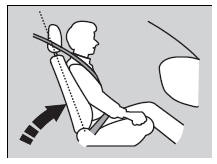
Adjust the driver's seat-back to a comfortable, upright position, leaving ample space between your chest and the airbag cover in the center of the steering wheel.
The front seat passenger should also adjust their seat-back to a comfortable, upright position.
Reclining a seat-back so that the shoulder part of the belt no longer rests against the occupant's chest reduces the protective capability of the belt. It also increases the chance of sliding under the belt in a crash and being seriously injured. The farther a seat-back is reclined, the greater the risk of injury.
WARNING
Reclining the seat-back too far can result in serious injury or death in a crash.
Adjust the seat-back to an upright position, and sit well back in the seat.
Do not put a cushion, or other object, between the seat-back and your back.
Doing so may interfere with proper seat belt or airbag operation.
If you cannot get far enough away from the steering wheel and still reach the controls, we recommend that you investigate whether some type of adaptive equipment may help.
 Adjusting the Seat Positions
Adjusting the front power seat*
* Not available on all models
Adjusting the Seats
WARNING
Sitting too close to a front airbag can result
in serious injury or death if the front
airbags infla ...
 Head Restraints
Your vehicle is equipped with head restraints in all seating positions. ...
See also:
Honda Civic Owners Manual. Using the Trunk Release Button
Models with smart entry system
Push up the release button on the trunk lid
after the doors are unlocked.
When You Cannot Open the Trunk
Even if the trunk is locked, you can open the
trunk if you carry the smart entry remote.
Some exterior lights flash and the beeper
sounds.
Using t ...
