



- Precautions on SRS
- NISSAN Advanced Air Bag System (front seats)
- Other supplemental front-impact air bag precautions
- Supplemental air bag warning labels
Precautions on SRS Nissan Kicks 2026
The Nissan Kicks Supplemental Restraint System (SRS) includes a range of advanced safety technologies designed to work together with the vehicle's seat belts. This section contains important information regarding the following protection systems:
- Driver and front passenger supplemental front-impact air bags (NISSAN Advanced Air Bag System)
- Front seat-mounted side-impact supplemental air bags
- Rear outboard seat-mounted side-impact supplemental air bags
- Front central seat-mounted side-impact supplemental air bag (if so equipped)
- Roof-mounted curtain side-impact and rollover supplemental air bags
- Driver and front passenger supplemental knee air bags
- Seat belts with pretensioners for the front seats and rear outboard seating positions
Supplemental front-impact air bag system
The Nissan Kicks NISSAN Advanced Air Bag System is engineered to help reduce the force of impact to the driver's and front passenger's head and chest during certain frontal collisions. These air bags are designed to work in conjunction with properly worn seat belts and are an important part of the overall occupant protection strategy.
Front seat-mounted side-impact supplemental air bag system
This system is designed to help reduce impact forces to the chest area of the driver and front passenger during specific side-impact collisions. The side air bags deploy on the side of the Nissan Kicks where the impact occurs.
Rear outboard seat-mounted side-impact supplemental air bag system
The rear outboard side air bags help provide additional protection for rear passengers by helping reduce chest injuries during certain side-impact events. These air bags deploy on the impacted side of the Nissan Kicks.
Front central seat-mounted side-impact supplemental air bag (if so equipped)
This advanced Nissan Kicks safety feature is designed to help protect the head area of the driver and front passenger during certain side impacts and rollover situations. Unlike traditional side air bags, this air bag may deploy in impacts from either side of the vehicle.
Roof-mounted curtain side-impact and rollover supplemental air bag system
The curtain air bags help provide head protection for occupants seated in the front and rear outboard positions during qualifying side-impact collisions. In rollover situations, the curtain air bags are designed to deploy and remain inflated briefly to provide additional protection.
Driver and front passenger supplemental knee air bags
The knee air bag system in the Nissan Kicks is intended to help reduce forces applied to the driver's and front passenger's knees and lower body during certain collision events.
The Nissan Kicks SRS is designed to supplement the protection provided by properly worn seat belts. It is not intended to replace seat belts. All occupants should wear their seat belts correctly and remain seated upright at an appropriate distance from the steering wheel, instrument panel, and interior trim surfaces.
The supplemental air bags operate only when the ignition switch is placed in the ON position.
When the ignition is switched ON, the supplemental air bag warning light illuminates as part of a system check. Under normal operating conditions, the warning light turns off after approximately seven seconds.
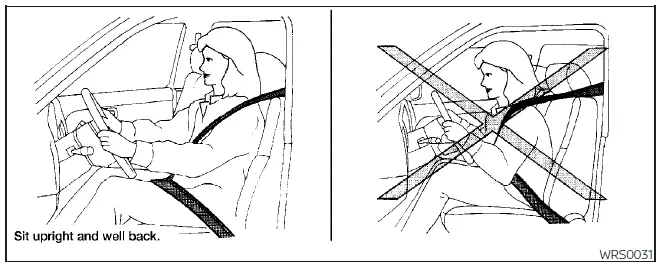
WARNING
- Front air bags generally do not deploy during rear impacts, many side impacts, rollover events, or lower-severity frontal collisions. Always wear seat belts properly to help reduce the risk of injury in all types of accidents.
- The front passenger air bag and front passenger knee air bag will not deploy when the passenger air bag status light indicates the system is deactivated.
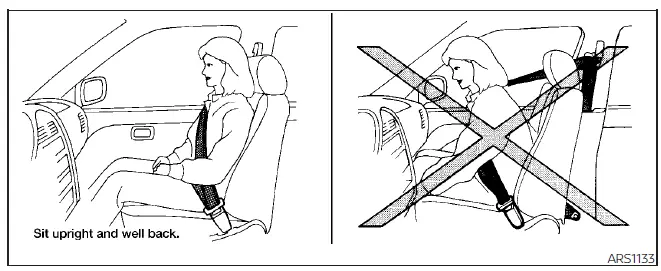
- The seat belts and front air bags provide the highest level of protection when occupants sit upright and
as far back as practical from the steering wheel and dashboard.
Because front air bags deploy with considerable force, sitting too close to them, leaning forward, sitting sideways, or riding in an improper position can significantly increase the risk of serious injury or death. Always remain properly seated and wear the seat belt correctly when driving or riding in the Nissan Kicks.
- The driver and front passenger seat belt buckles include sensors that detect seat belt usage. The Nissan Kicks Advanced Air Bag System continuously monitors collision severity and occupant restraint conditions to determine appropriate air bag deployment. Failure to wear a seat belt properly can increase injury risk.
- The front passenger seat includes an occupant classification sensor (weight sensor) that may deactivate the front passenger air bag and knee air bag under certain conditions. Improper seating position or failure to use the seat belt correctly can increase the severity of injuries during a collision.
- Always keep your hands on the outside of the steering wheel rim. Placing hands or arms inside the steering wheel can increase the likelihood of injury if the front air bag deploys.
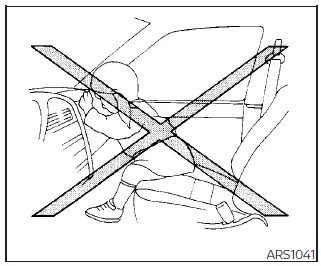
WARNING
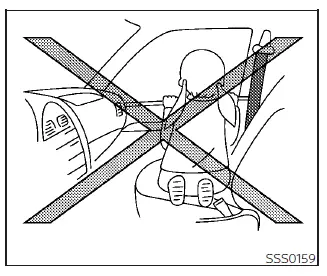
- Never allow children to ride without proper restraints or place their hands, arms, or faces outside the windows. Never attempt to hold a child on your lap while driving. The illustrations show examples of unsafe seating positions that can result in severe injury if an air bag deploys.
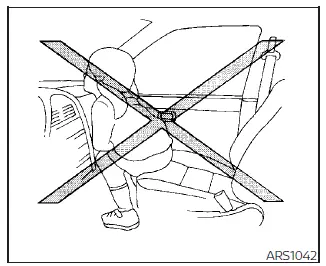
WARNING
- Children who are not properly restrained can suffer severe or fatal injuries if front air bags, side air bags, or curtain air bags deploy. Whenever possible, children and pre-teens should be properly restrained in the rear seat of the Nissan Kicks.
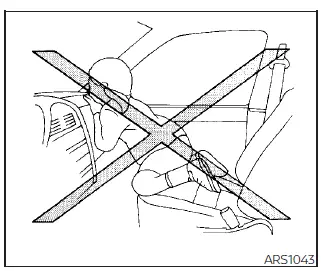
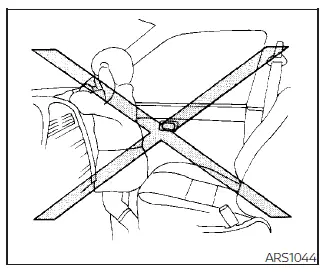
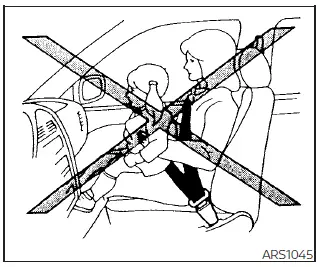
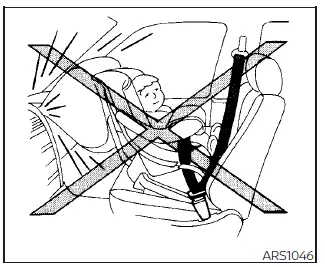
WARNING
- Even with the advanced safety technologies available in the Nissan Kicks, a rear-facing child restraint
must never be installed in the front passenger seat.
An inflating front air bag can strike the child restraint with tremendous force and may cause severe injury or death to the child.
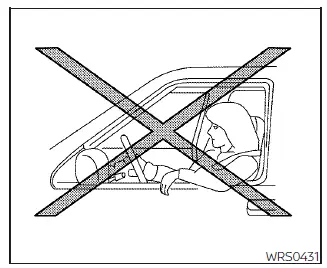
WARNING
Front, front central and rear outboard seat-mounted side-impact supplemental air bags and roof-mounted curtain side-impact and rollover supplemental air bags:
- Side air bags and curtain air bags typically do not deploy during frontal impacts, rear impacts, or lower-severity side collisions. Seat belts must always be worn correctly to help reduce injury risk in all crash situations.
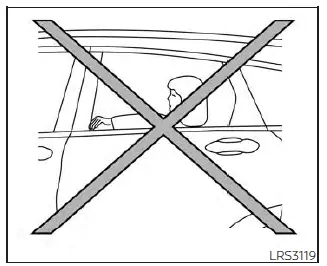
WARNING
- The seat belts, side air bags, and curtain air bags are most effective when occupants are seated upright
with both feet on the floor. Side air bags and curtain air bags deploy with significant force. Do not
place hands, legs, or faces near the side of the seatback or roof rail areas.
Occupants seated in the front or rear outboard positions should never lean against the doors, extend arms outside the windows, or sit in unsafe positions. The illustrations show examples of positions that could increase the risk of injury during air bag deployment.
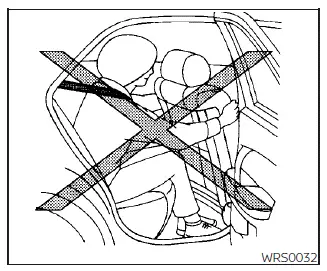
WARNING
- Passengers seated in the rear should never hold onto the front seatback. If a side air bag deploys,
serious injury may occur. Children should always be properly restrained and supervised while riding in
the Nissan Kicks.
The illustrations demonstrate examples of unsafe seating positions that should always be avoided.
- Do not install seat covers on front or rear seatbacks unless specifically approved for use with side air bags. Seat covers may interfere with proper side air bag deployment.
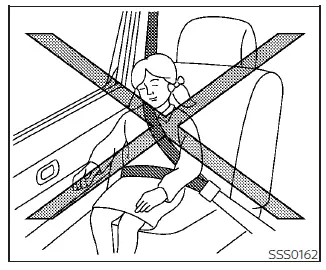
For maximum protection in the Nissan Kicks, always combine proper seat belt use, correct seating position, and appropriate child restraint installation. The Supplemental Restraint System is designed to enhance occupant protection, but its effectiveness depends on all safety systems being used correctly together. Regularly reviewing safety information and ensuring every passenger is properly restrained helps create a safer driving environment for everyone.
NISSAN Advanced Air Bag System (front seats) Nissan Kicks 2025
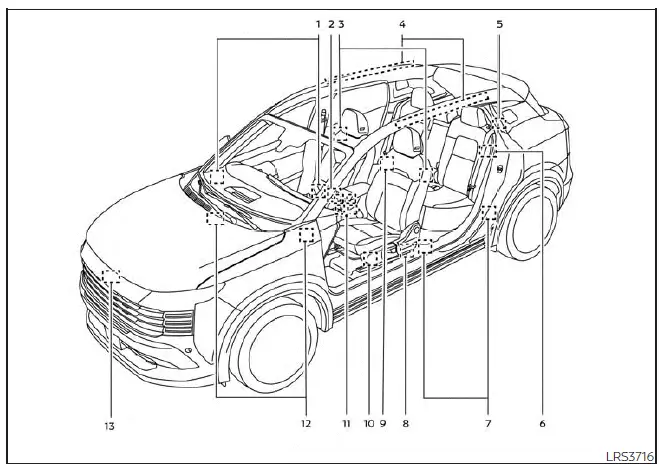
- Supplemental front-impact air bag modules
- Air Bag Control Unit (ACU)
- Front seat-mounted side-impact supplemental air bags
- Roof-mounted curtain side-impact and rollover supplemental air bags
- Seat belts with pretensioners (rear outboard seating positions; driver's side shown, passenger side similar)
- Rear outboard seat-mounted side-impact supplemental air bags (driver's side shown, passenger side similar)
- Side satellite sensors (driver's side shown, passenger side similar)
- Seat belts with pretensioners (front seating positions; driver's side shown, passenger side similar)
- Front central seat-mounted side-impact supplemental air bag (if equipped)
- Front door satellite sensor (driver's side shown, passenger side similar)
- Occupant classification sensors (weight sensors)
- Driver and front passenger supplemental knee air bags
- Crash zone sensor
WARNING
To help ensure proper operation of the Nissan Kicks passenger-side NISSAN Advanced Air Bag System, carefully follow the precautions listed below.
- Do not allow rear seat occupants to push, pull, or place excessive pressure on the front passenger seatback pocket.
- Avoid placing heavy items weighing more than 9.1 lbs. (4 kg) on the front passenger seatback, head restraint/headrest, or inside the seatback storage pocket.
- Make certain that no object is pressing against the rear of the front passenger seatback, including child restraints installed behind the seat or cargo placed on the floor.
- Never store objects beneath the front passenger seat. Items under the seat may interfere with proper operation of the occupant classification system.
- Do not place objects between the front passenger seat cushion and the center console or between the seat cushion and the door trim.
- If a forward-facing child restraint is installed in the front passenger seat of the Nissan Kicks, ensure that it does not contact the instrument panel. Contact with the dashboard may cause the system to interpret the seat as occupied and could affect air bag deployment logic during a collision. In addition, the front passenger air bag status light may not operate as expected.
- Always verify system operation by checking the front passenger air bag status light before driving.
- If the front passenger air bag status light does not behave as described in this section, have the occupant classification system inspected as soon as possible. It is recommended that you visit a NISSAN dealer for diagnosis and service.
- Until proper system operation has been confirmed, place passengers in the rear seating positions of the Nissan Kicks whenever possible.
- Do not adjust the front passenger seat so far rearward that it contacts the rear seat. If contact occurs, the system may detect an abnormal condition, causing the front passenger air bag status light to illuminate and the supplemental air bag warning light to flash.
This Nissan Kicks is equipped with the advanced NISSAN Advanced Air Bag System for both front seating positions. The system has been engineered to comply with applicable U.S. safety certification requirements and is also approved for use in Canada.
The Nissan Kicks Advanced Air Bag System uses multiple sensors and control modules to evaluate crash severity, occupant position, seat belt usage, and passenger weight. Based on information received from these sensors, the system determines the appropriate supplemental restraint response during certain collision events.
The occupant classification system is a key component of the Nissan Kicks safety architecture. Through weight-sensing technology located in the front passenger seat, the system can determine whether the passenger air bag should remain active or be deactivated under specific conditions. Proper seating posture and correct seat belt usage are essential for accurate system operation.
It is important to understand that supplemental air bags are designed to work together with the vehicle's seat belts, not replace them. For maximum protection in the Nissan Kicks, all occupants should sit upright, remain properly positioned in their seats, and wear seat belts correctly at all times.
Regular inspection of seat tracks, seat cushions, and surrounding areas can help prevent interference with the occupant classification sensors. Keeping the front passenger area free of unnecessary objects supports accurate system performance and contributes to overall Nissan Kicks safety.
Additional Safety Note: The Nissan Kicks Supplemental Restraint System is designed to provide enhanced protection during specific types of collisions. However, the effectiveness of the system depends on proper occupant positioning, correct seat belt use, and adherence to all safety recommendations contained in this manual.
In the Nissan Kicks, the driver's supplemental front-impact air bag is integrated into the center of the steering wheel, while the front passenger supplemental front-impact air bag is positioned within the dashboard above the glove compartment. These front air bags are engineered to deploy during certain moderate-to-severe frontal collisions. Depending on crash dynamics, they may also activate in other impact scenarios if the forces involved are comparable to those generated during a significant frontal collision. Conversely, some frontal impacts may not trigger deployment. The amount of visible vehicle damage is not always an accurate indicator of whether the Nissan Kicks air bag system should or should not have activated.
The NISSAN Advanced Air Bag System in the Nissan Kicks continuously receives and evaluates information from multiple sensors and control modules, including the crash zone sensor, Air Bag Control Unit (ACU), seat belt buckle sensors, and occupant classification sensors (weight sensors). Air bag deployment decisions are determined by several factors, including collision severity and seat belt usage.
For the driver, the system primarily evaluates crash forces and seat belt status. For the front passenger, the occupant classification system also plays a critical role. Based on data received from these systems, the Nissan Kicks may deploy only one front air bag during a collision if conditions require it. This behavior is normal and does not indicate a malfunction.
In addition, the front passenger supplemental front-impact air bag and front passenger supplemental knee air bag may automatically deactivate under specific circumstances. The system evaluates the weight detected on the front passenger seat as well as seat belt usage to determine whether deployment is appropriate. Whenever the front passenger air bag and knee air bag are disabled, the front passenger air bag status light will illuminate. For more details, refer to the section titled "Front passenger air bag and status light".
The deployment of only one front air bag does not indicate improper operation of the Nissan Kicks Supplemental Restraint System. The system is specifically designed to respond according to real-time occupant and collision conditions.
If you have questions regarding the Nissan Kicks air bag system, it is recommended that you contact or visit an authorized NISSAN dealer. Owners who are considering vehicle modifications due to a disability should also consult NISSAN before making any changes that could affect the operation of the Supplemental Restraint System. Contact information can be found at the beginning of this Owner's Manual.
When a front air bag deploys, occupants may hear a loud sound followed by the release of a small amount of smoke-like particulate matter. This is a normal characteristic of air bag deployment and does not indicate a fire. Although generally harmless, the released particles may cause temporary irritation to the eyes, nose, throat, or skin. Individuals with respiratory sensitivities should move to fresh air as soon as possible.
In the Nissan Kicks, front air bags work together with seat belts to help reduce impact forces applied to the head, face, and chest areas of front occupants during certain collisions. These systems are designed to complement one another and provide enhanced occupant protection.
While front air bags can significantly reduce the likelihood of serious injury and may help save lives, air bag deployment itself can sometimes result in minor injuries such as abrasions, bruises, or skin irritation. Except for the driver's and front passenger's supplemental knee air bags, front air bags do not provide direct restraint for the lower body.
Even with the advanced protection offered by the Nissan Kicks NISSAN Advanced Air Bag System, seat belts must always be worn correctly. Both the driver and front passenger should remain seated upright and positioned as far away from the steering wheel and dashboard as practical while maintaining proper vehicle control and comfort.
Because front air bags deploy extremely quickly, occupants who are sitting too close to the air bag module, leaning forward, or positioned improperly may face an increased risk of injury when deployment occurs. Proper seating posture is essential for maximizing the effectiveness of the Nissan Kicks Supplemental Restraint System.
After deployment, the front air bags rapidly deflate. This quick deflation helps reduce the possibility of secondary injury and improves occupant visibility and mobility immediately after a collision.
The front air bags operate only when the ignition switch is placed in the ON position.
After the ignition switch of the Nissan Kicks is turned to the ON position, the supplemental air bag warning light will illuminate briefly as part of a self-diagnostic system check. Under normal operating conditions, the supplemental air bag warning light turns off after approximately 7 seconds, confirming that the system is functioning correctly.
Additional Safety Note: The Nissan Kicks Supplemental Restraint System is designed to enhance occupant protection, but no air bag system can eliminate all injury risks. Proper seat belt use, correct seating position, and routine attention to vehicle safety recommendations remain essential for achieving the highest level of occupant protection.
Front passenger air bag and status light
WARNING
The front passenger air bag and front passenger supplemental knee air bag in the Nissan Kicks are designed to turn OFF automatically under certain conditions. Read this section carefully so you understand how the system operates and what the status light means.
Correct use of the seat, seat belt, and child restraint systems is essential for the best possible protection. Failure to follow the instructions in this manual regarding seats, seat belts, and child restraints can increase the risk or severity of injury in a collision.
Status light
The front passenger seat in the Nissan Kicks is equipped with an occupant classification sensor, also known as a weight sensor. This sensor helps determine whether the front passenger air bag and front passenger supplemental knee air bag should be ON or OFF, based on the weight applied to the front passenger seat.
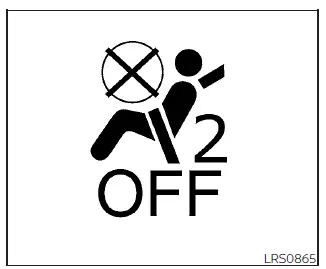
The operating status of the front passenger air bag and front passenger supplemental knee air bag is shown by
the front passenger air bag status light
 located on the instrument panel.
After the ignition switch is placed in the ON position, the front passenger air bag status light on the Nissan Kicks instrument panel illuminates for approximately 7 seconds. After this self-check, the light either turns off or remains illuminated depending on the front passenger seat occupancy condition.
The light operates as follows:

In addition to the conditions shown above, certain objects placed on the front passenger seat may also cause the status light to operate in the same way, depending on their weight and position.
For additional details about normal operation and diagnosis of the Nissan Kicks occupant classification sensor system, see "Normal operation" and "Troubleshooting".
Front passenger air bag
The front passenger air bag and front passenger supplemental knee air bag are designed to turn OFF automatically in certain operating conditions, as required by U.S. safety regulations.
If the front passenger air bag and front passenger supplemental knee air bag are OFF, they will not inflate during a crash. The driver air bag and other air bags in the Nissan Kicks are not controlled by this front passenger occupant classification function.
The purpose of this system is to help reduce the risk of injury or death from an inflating air bag to certain front passenger seat occupants, especially children and smaller occupants. To meet these requirements, the Nissan Kicks uses specific sensors to evaluate the front passenger seat condition.
The occupant classification sensor in the Nissan Kicks is a weight sensor. It is designed to detect an occupant or objects on the front passenger seat by measuring applied weight. For example, if a child is seated in the front passenger seat, the NISSAN Advanced Air Bag System is designed to turn OFF the front passenger air bag and front passenger supplemental knee air bag in accordance with regulations.
Similarly, if a child restraint of a regulated type is placed on the front passenger seat, the combined weight of the child restraint and child may be detected, causing the front passenger air bag and knee air bag to turn OFF.
For best safety performance in the Nissan Kicks, children should be properly restrained in the rear seat whenever possible. The front passenger air bag status light should always be checked when a passenger or object is placed on the front passenger seat.
Adult occupants seated in the front passenger seat of the Nissan Kicks and properly using the seat belt according to the instructions in this manual should not normally cause the front passenger air bag or the front passenger supplemental knee air bag to switch OFF automatically. In certain situations, however, a smaller adult may be detected differently by the occupant classification system. If the passenger shifts weight away from the seat cushion, sits on the edge of the seat, leans excessively, or remains out of the proper seating position, the system may determine that the front passenger air bag and front passenger supplemental knee air bag should be deactivated. For maximum protection in the Nissan Kicks, always sit upright, remain fully supported by the seat, and wear the seat belt correctly. Proper seating posture helps the supplemental restraint system perform as intended during a collision.
NISSAN strongly recommends that children and pre-teens travel in the rear seats of the Nissan Kicks while using an appropriate child restraint or booster seat suitable for their size and age. Child restraints should always be installed according to both the manufacturer's instructions and the recommendations provided in this manual. If placement in the front passenger seat becomes unavoidable, the occupant classification sensor is engineered to help automatically turn OFF the front passenger air bag and front passenger supplemental knee air bag for certain child restraint systems, as required by safety regulations. Failure to properly secure a child restraint or correctly engage the ALR mode may allow the restraint to shift, tilt, or move during emergency braking or a collision. Such movement could result in unintended air bag deployment when the system should otherwise remain OFF. For additional details, refer to the "Child restraints" section of this Nissan Kicks owner's manual.
When the front passenger seat is unoccupied, the front passenger air bag and front passenger supplemental knee air bag in the Nissan Kicks are designed to remain inactive during a crash. However, placing heavy luggage, equipment, or other substantial objects on the seat may cause the occupant classification sensor to register weight and potentially influence air bag operation. Other unusual situations may also affect system behavior, including a child standing on the seat or multiple children sharing the front passenger seat, which is contrary to the safety instructions provided in this manual. Always ensure that every occupant in the Nissan Kicks is seated properly and secured with the appropriate restraint system before driving.
The front passenger air bag status light provides a convenient way to monitor when the front passenger air bag and front passenger supplemental knee air bag have been automatically turned OFF by the occupant classification system.
If an adult occupant is seated in the front passenger seat but the front passenger air bag status light remains illuminated, indicating that the front passenger air bag and front passenger supplemental knee air bag are OFF, the system may be identifying the occupant as a smaller adult. It may also indicate that the passenger is not seated correctly or that the seat belt is not being worn as intended. Adjusting the seating position and ensuring proper seat belt use in the Nissan Kicks may help the system correctly classify the occupant.
If a child restraint must be installed in the front passenger seat, the front passenger air bag status light may or may not illuminate depending on the size of the child and the specific restraint system being used. When the status light is not illuminated, it may indicate that the front passenger air bag and front passenger supplemental knee air bag could deploy in the event of a collision. In such cases, carefully verify that the child restraint is securely installed, the seat belt is routed and locked correctly, and the occupant is positioned according to the restraint manufacturer's recommendations. If the status light still does not illuminate, move the child restraint or child occupant to a rear seating position whenever possible for enhanced safety in the Nissan Kicks.
If the front passenger air bag status light does not illuminate even though the child restraint, seat belt, and occupant appear to be positioned correctly, NISSAN recommends having the Nissan Kicks inspected by an authorized NISSAN dealer. Using specialized diagnostic equipment, a dealer can verify the operating condition of the occupant classification and air bag systems. Until the system has been checked and confirmed to be functioning properly, relocate the occupant or child restraint to a rear seat. This precaution helps ensure the highest possible level of protection for all passengers.
Additional safety reminder: The advanced occupant classification technology used in the Nissan Kicks is designed to enhance passenger protection, but its effectiveness depends on proper seating habits and correct use of restraint systems. Regularly checking passenger positioning and seat belt usage can help ensure optimal operation of the vehicle's supplemental restraint features.
The NISSAN Advanced Air Bag System in the Nissan Kicks may require several seconds to recognize and confirm a change in the front passenger seat condition. This brief delay is part of normal system operation and should not be considered a malfunction. The front passenger air bag status light may update only after the occupant classification system has processed the seating position, weight distribution, and seat belt information.
If a malfunction is detected in the front passenger air bag system, the supplemental air bag warning light
 , located in the meter and
gauges area of the instrument panel, will illuminate either by blinking or staying steadily lit. If this warning
appears, the system should be inspected as soon as possible. It is recommended that you visit a NISSAN dealer
for this service, where the Nissan Kicks air bag system can be checked with the proper diagnostic equipment.
, located in the meter and
gauges area of the instrument panel, will illuminate either by blinking or staying steadily lit. If this warning
appears, the system should be inspected as soon as possible. It is recommended that you visit a NISSAN dealer
for this service, where the Nissan Kicks air bag system can be checked with the proper diagnostic equipment.
Normal operation
For the occupant classification sensor system in the Nissan Kicks to correctly classify the front passenger by weight and seating position, the precautions and steps below should be followed carefully. Correct passenger posture and a clear seat area help the system determine whether the front passenger air bag and front passenger supplemental knee air bag should remain active or be suppressed.
Precautions
- Make sure that no objects weighing more than 9.1 lbs. (4 kg) are hanging from the seat, resting on the seat, or stored in the seatback pocket.
- Make sure that a child restraint, bag, accessory, or any other object is not pressing against the rear of the front passenger seatback.
- Make sure that a rear passenger is not pushing, pulling, kicking, or leaning against the back of the front passenger seat.
- Make sure that the front passenger seat or seatback is not being forced backward against an object placed on the floor or on the seat behind it.
- Make sure that no object is placed under the front passenger seat, as this may interfere with accurate occupant classification.
Steps
1. Adjust the front passenger seat as described in the "Seats" section of this manual. The occupant should sit upright, with the back resting against the seatback, centered on the seat cushion, and with both feet comfortably extended toward the floor.
2. Make sure there are no objects on the occupant's lap, including bags, electronic devices, packages, or other items that may affect the weight reading.
3. Fasten the seat belt as described in the "Seat belts" section of this Nissan Kicks manual.
The front passenger seat belt buckle status is monitored by the occupant classification system and is used as part of the information needed to determine occupancy status. For this reason, it is strongly recommended that the front passenger always fasten the seat belt properly before the Nissan Kicks is driven.
4. Remain seated in this correct position for at least 30 seconds, allowing the system enough time to classify the front passenger before the vehicle begins moving.
5. Confirm that the classification is appropriate by checking the front passenger air bag status light before driving.
NOTE:
The occupant classification sensor system in the Nissan Kicks generally keeps the classification locked while driving, so it is important to confirm proper front passenger classification before the vehicle is put into motion. However, under certain conditions, whether the vehicle is moving or stopped, the system may recalculate the occupant's weight and seating status. Front passenger seat occupants should therefore continue to sit upright, remain centered on the seat cushion, and keep the seat belt properly fastened throughout the trip.
Troubleshooting
If you believe the front passenger air bag status light is showing an incorrect condition, review the situation carefully before driving the Nissan Kicks.
1. If the light is ON while an adult is occupying the front passenger seat:
- The occupant may be a smaller adult. In this case, the air bag status light may be operating as intended, and the front passenger air bag and front passenger supplemental knee air bag are suppressed.
Additional reminder: For the Nissan Kicks occupant classification system to work as designed, the front passenger area should remain free of unnecessary objects, and the occupant should maintain a natural seated position. Small changes in posture, added weight on the lap, or pressure from the rear of the seat can affect how the system interprets the passenger seat condition.
However, if the occupant is not a small adult, the illuminated status light may indicate that one or more conditions are interfering with the Nissan Kicks occupant classification weight sensors. In this situation, the system may not be reading the front passenger seat correctly, and the seating area should be checked carefully.
- The occupant is not sitting upright, is not leaning naturally against the seatback, or is not centered on the seat cushion with both feet comfortably extended toward the floor.
- A child restraint, bag, accessory, or another object is pressing against the rear of the front passenger seatback.
- A rear passenger is pushing, pulling, kicking, or leaning against the back of the front passenger seat.
- The front passenger seat or seatback is being forced against an object located on the seat or floor behind it.
- An object has been placed under the front passenger seat.
- An object is positioned between the seat cushion and the center console or between the seat cushion and the door.
If the Nissan Kicks is moving, bring the vehicle to a complete stop as soon as it is safe to do so. Check the front passenger area and correct any of the conditions listed above. After the area has been cleared and the occupant is seated correctly, restart the vehicle and wait approximately 1 minute.
NOTE:
During this time, the system will perform a check, and the front passenger air bag status light will initially remain illuminated for about 7 seconds. This is a normal part of the Nissan Kicks air bag system verification process.
If the light remains ON after these steps, the person should not continue riding in the front passenger seat. The Nissan Kicks should be inspected as soon as possible. It is recommended that you visit a NISSAN dealer for this service, where the system can be checked with the appropriate diagnostic equipment.
2. If the light is OFF while a small adult, child, or child restraint is occupying the front passenger seat:
This condition may also be caused by factors that interfere with the weight sensors or prevent the occupant classification system from identifying the seat status correctly:
- The small adult or child is not sitting upright, is not leaning against the seatback, or is not centered on the seat cushion with both feet comfortably extended toward the floor.
- The child restraint is not installed correctly as described in the "Child restraints" section.
- An object weighing more than 9.1 lbs. (4 kg) is hanging on the seat or has been placed in the seatback pocket.
- A child restraint, bag, or other object is pressing against the rear of the front passenger seatback.
- A rear passenger is pushing, pulling, or leaning against the back of the front passenger seat.
- The front passenger seat or seatback is being forced against an object on the rear seat or on the floor behind it.
- An object has been placed under the front passenger seat.
- An object is positioned between the seat cushion and the center console.
If the Nissan Kicks is in motion, stop the vehicle when it is safe. Inspect the passenger seat area, remove any objects that may affect the sensors, correct the seating or child restraint position, restart the vehicle, and wait approximately 1 minute.
NOTE:
A system check will be performed, and the front passenger air bag status light will remain lit for about 7 seconds at first. This short illumination period is normal and helps confirm that the Nissan Kicks occupant classification system is checking the front passenger seat condition.
If the light is still OFF after this procedure, the small adult, child, or child restraint should be moved to a rear seat. The vehicle should then be checked as soon as possible. It is recommended that you visit a NISSAN dealer for this service to confirm proper operation of the air bag and occupant classification systems.
3. If the light is OFF when there is no front passenger and no objects are placed on the front passenger seat, the Nissan Kicks should be inspected. It is recommended that you visit a NISSAN dealer as soon as possible, because the status light or occupant classification system may require professional diagnosis.
Additional reminder: The front passenger air bag status light is an important safety indicator in the Nissan Kicks. Before driving, make sure the seat area is clear, passengers are seated correctly, and child restraints are installed only as directed in this manual.
Other supplemental front-impact air bag precautions Nissan Kicks 2026
WARNING
- Do not place objects on the steering wheel pad or on the instrument panel of the Nissan Kicks. Also, never position any item between an occupant and the steering wheel or instrument panel. If the front air bags inflate, these objects can be thrown with great force and may cause serious injury.
- Do not place sharp-edged items on the seat. Heavy objects should also not be left on the seat if they can create lasting dents or impressions in the cushion. Such damage may affect the seat structure or the occupant classification sensor, also known as the weight sensor. If the sensor is damaged, the Nissan Kicks air bag system may not operate as intended, increasing the risk of serious personal injury.
- Do not clean the seat with water, acidic cleaning products, or hot steam cleaners. Moisture, harsh chemicals, or excessive heat can damage the seat material, internal wiring, or occupant classification sensor. This may interfere with proper air bag operation and could result in serious personal injury.
- Immediately after inflation, several front air bag system components will be extremely hot. Do not touch these parts after deployment, as direct contact may cause severe burns.
- No unauthorized changes should be made to any components, connectors, or wiring of the supplemental air
bag system.
These restrictions are necessary to help prevent accidental deployment of the supplemental air bags or damage to the Supplemental Restraint System in the Nissan Kicks.
- Do not make unauthorized modifications to the electrical system, suspension system, or front-end body structure of the Nissan Kicks. Changes in these areas may affect crash sensing, deployment timing, and the proper operation of the front air bag system.
- Tampering with the front air bag system may result in serious personal injury. This includes altering the steering wheel or instrument panel assembly, covering the steering wheel pad, placing material above the instrument panel, or adding trim pieces around any air bag location.
- Removing, replacing, or modifying the front passenger seat may affect the operation of the air bag system and can result in serious personal injury.
- Modifying or tampering with the front passenger seat of the Nissan Kicks may result in serious personal injury. For example, do not change the front seats by adding padding to the seat cushion or installing seat covers or trim materials that are not specifically designed to allow proper air bag and occupant classification system operation. In addition, do not store objects under the front passenger seat or between the seat cushion and seatback. These objects may interfere with the occupant classification sensor and prevent accurate weight detection.
- No unauthorized changes should be made to any part of the seat belt system or its wiring. The seat belt system works together with the front air bag system, and tampering with it may affect air bag performance and result in serious personal injury.
- It is recommended that service work on or near the front air bag system be performed by a NISSAN dealer. It is also recommended that installation of electrical equipment in the Nissan Kicks be handled by a NISSAN dealer. The Supplemental Restraint System (SRS) wiring harnesses* must not be modified or disconnected. Unauthorized electrical test equipment, probing tools, or diagnostic devices should not be used on the air bag system.
- A cracked windshield should be replaced immediately by a qualified repair facility. A damaged windshield may affect the performance of the supplemental air bag system and could reduce the protection provided during a collision.
*The SRS wiring harness connectors are yellow and orange for easy identification.
When selling your Nissan Kicks, inform the new owner about the front air bag system and direct the buyer to the appropriate safety sections in this Owner's Manual. This helps ensure that future occupants understand how the Supplemental Restraint System is designed to work and what precautions must be followed.
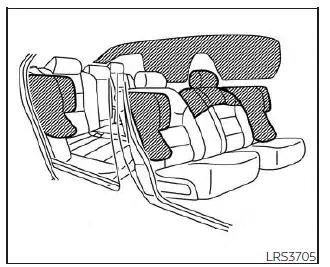
Front, rear outboard, and front central (if so equipped) seat-mounted side-impact supplemental air bag and roof-mounted curtain side-impact and rollover supplemental air bag systems
The side-impact supplemental air bags in the Nissan Kicks are positioned on the outer side of the seatbacks for the front seats and rear outboard seats. The front central air bag, if equipped, is installed on the inner side of the driver's seatback. The roof-mounted curtain air bags are built into the side roof rails. All cautions, warnings, and operating information in this Nissan Kicks manual should be followed carefully. The side air bags and curtain air bags are designed to deploy in more severe side-impact collisions, although they may also deploy in another type of crash if the impact forces are similar to those produced by a serious side collision. These air bags are intended to inflate on the side of the Nissan Kicks that receives the impact. In some side collisions, depending on angle, force, and crash conditions, they may not inflate.
The curtain air bags are also designed to deploy during certain rollover or near-rollover events. Because of this design, some extreme vehicle movements, such as those that may occur during severe off-road driving or abrupt body roll, could cause the curtain air bags in the Nissan Kicks to inflate.
Visible vehicle damage, or the absence of visible damage, is not always a reliable indication of whether the side air bags and curtain air bags should have operated. Air bag deployment depends on the type, direction, and severity of the forces detected by the system.
When the side air bags and curtain air bags deploy, occupants may hear a fairly loud noise followed by the release of smoke or powder. This smoke is not harmful and does not mean that the Nissan Kicks is on fire. However, avoid breathing it in, because it may cause throat irritation, coughing, or a choking sensation. Anyone with asthma or another breathing condition should get fresh air immediately.
Side air bags, together with properly worn seat belts, help reduce impact forces to the chest and pelvic areas of front and rear outboard occupants. The front central side air bag, when equipped, works with the seat belts to help cushion impact forces to the head area of the front occupants. Curtain air bags help reduce impact forces to the head of occupants seated in the front and rear outboard positions. These systems can help save lives and reduce the risk of serious injury. However, because they inflate with great speed and force, side air bags and curtain air bags may still cause abrasions, bruising, or other injuries during deployment.
Side air bags and curtain air bags are not designed to restrain or protect the lower body.
Seat belts must always be worn correctly. The driver, front passenger, and rear outboard passengers should sit upright and remain as far as practical from the side air bag locations while still maintaining proper seating posture and control of the Nissan Kicks.
Rear passengers should sit as far as practical from the door finishers and side roof rails. The side air bags and curtain air bags deploy very quickly to help protect occupants. If a passenger is leaning against or positioned too close to these air bag modules at the moment of deployment, the force of inflation may increase the chance of injury.
The side air bag will deflate quickly after the collision has ended. The front central side air bag and the curtain air bags will remain inflated for a short period of time to help provide continued protection immediately after the impact.
The curtain air bag will also remain inflated briefly after deployment.
The side air bags and curtain air bags operate only when the ignition switch is placed in the ON position.
After the ignition switch is placed in the ON position, the supplemental air bag warning light illuminates. If the Nissan Kicks Supplemental Restraint System is operating normally, the warning light will turn off after about 7 seconds.
WARNING
- Do not place objects near the seatbacks of the front or rear seats.
Also, do not place items such as umbrellas, bags, tools, bottles, accessories, or packages between the front or rear door finisher and the seat. If a side air bag inflates, these objects may become dangerous projectiles and can cause injury.
- Immediately after deployment, several side air bag and curtain air bag system components will be hot. Do not touch them, because you may suffer severe burns.
- No unauthorized changes should be made to any components, connectors, or wiring of the side air bag and curtain air bag systems. This helps prevent accidental deployment, system damage, or improper operation of the side air bags and curtain air bags in the Nissan Kicks.
- Do not make unauthorized modifications to the Nissan Kicks electrical system, suspension system, or side body panels. Such changes may affect crash detection, deployment timing, or the proper operation of the side air bag and curtain air bag systems.
Additional safety reminder: For the side-impact and curtain air bag systems in the Nissan Kicks to provide the best possible protection, occupants should remain properly seated, keep the seat belt fastened, and avoid leaning against the doors, seatbacks, or roof rails while the vehicle is moving.
Unauthorized modifications to the Nissan Kicks electrical system, body structure, or suspension components may interfere with the proper operation of the side-impact supplemental air bag and curtain air bag systems. Such changes can affect crash detection and deployment performance, reducing the level of protection provided to occupants.
* The SRS wiring harness connectors are yellow and orange for easy identification.
When selling or transferring ownership of your Nissan Kicks, be sure to inform the new owner about the vehicle's side air bag and curtain air bag systems. Directing the buyer to the appropriate sections of this Owner's Manual will help ensure continued safe operation and understanding of these important safety features.
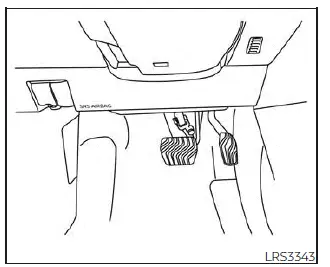
Driver's side
Driver and front passenger supplemental knee air bag
The supplemental knee air bags in the Nissan Kicks are positioned within the knee bolster areas on both the driver and front passenger sides. All information, cautions, and warnings provided in this manual should be carefully followed. These knee air bags are engineered to deploy during higher-severity frontal impacts. They may also deploy in other types of collisions if the forces involved are similar to those experienced during a serious frontal crash. However, depending on the nature, angle, and severity of the impact, knee air bag deployment may not occur in every collision.
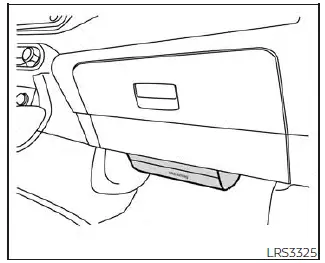
Passenger's side
Visible vehicle damage, or the absence of visible damage, is not always an indication that the Nissan Kicks knee air bag system has operated incorrectly. Air bag deployment is determined by crash forces and sensor data rather than by the amount of exterior damage.
When a knee air bag deploys, occupants may hear a loud noise followed by the release of smoke or powder. This smoke is a normal byproduct of deployment and does not indicate a fire. Although it is generally harmless, inhaling it may cause temporary throat irritation, coughing, or discomfort. Individuals with respiratory conditions should move to fresh air as soon as possible.
The knee air bag is designed to help reduce impact forces affecting the knees and lower body of the driver and front passenger. Working together with the seat belt system, it can help reduce the likelihood of serious lower-body injuries during a collision.
Although the Nissan Kicks knee air bag enhances occupant protection, the deployment process itself may cause minor abrasions, bruises, or other injuries. Unlike frontal or side air bags that primarily protect the upper body, the knee air bag is specifically intended to provide restraint and protection for the lower body region.
The knee air bag deploys extremely quickly to provide protection at the critical moment of impact. Because of this rapid inflation, occupants who are sitting too close to the knee bolster area or who have objects positioned against the module may be at increased risk of injury during deployment. After activation, the knee air bag will either deflate rapidly once the collision is over or remain inflated for a short period, depending on deployment conditions.
The knee air bag operates only when the ignition switch is placed in the ON position.
After the ignition switch is turned to the ON position, the supplemental air bag warning light illuminates. If the Nissan Kicks Supplemental Restraint System is functioning correctly, the warning light will switch off after approximately 7 seconds.
WARNING
- Do not place any objects between the knee bolster and the driver's or front passenger's seat. During deployment, such objects may become dangerous projectiles and could cause serious injury.
- Immediately after deployment, knee air bag system components may be extremely hot. Avoid touching any part of the system until it has cooled, as severe burns may occur.
- No unauthorized modifications should be made to any component, connector, or wiring associated with the Nissan Kicks knee air bag system. This precaution helps prevent accidental deployment and protects the integrity of the Supplemental Restraint System.
- Do not make unauthorized changes to the electrical system or suspension system of the Nissan Kicks. Such modifications could interfere with crash sensing and proper knee air bag operation.
- Tampering with the knee air bag system may result in serious personal injury. For example, do not alter the driver or passenger knee bolster areas or install additional trim materials, accessories, or aftermarket components around the knee air bag modules.
- It is recommended that all maintenance, repairs, or installations involving the knee air bag system be performed by a NISSAN dealer. Installation of electrical accessories should also be carried out by qualified personnel. The SRS wiring harnesses* should never be modified or disconnected, and unauthorized electrical testing equipment should not be used on the knee air bag system.
Additional safety note: The Nissan Kicks knee air bag system is designed to work together with the seat belts, front air bags, and other Supplemental Restraint System components. Proper seating position, correct seat belt use, and avoiding unauthorized modifications are essential for achieving the highest level of occupant protection.
For maximum safety, always ensure that all Nissan Kicks occupants are properly seated and restrained before driving. Advanced air bag technologies provide the best protection when used as part of a complete occupant safety system.
*The SRS wiring harness or connectors are yellow or orange for easy identification.
When selling your Nissan Kicks, inform the new owner about the supplemental knee air bag system and direct the buyer to the appropriate sections of this manual. This helps ensure that future owners understand how the system works and what safety precautions must be followed.
Seat belt with pretensioner(s) (front and rear outboard seats)
WARNING
- The seat belt pretensioner(s) in the Nissan Kicks cannot be reused after activation. Once deployed, they must be replaced together with the seat belt retractor and buckle as a complete unit.
- If the Nissan Kicks is involved in a collision but the pretensioner(s) do not activate, the pretensioner system should still be inspected and, if necessary, replaced. It is recommended that you visit a NISSAN dealer for this service.
- No unauthorized modifications should be made to any components, connectors, or wiring of the pretensioner system. This helps prevent system damage or accidental pretensioner activation. Tampering with the pretensioner system may result in serious personal injury.
- It is recommended that all work on or near the pretensioner system be performed by a NISSAN dealer. Installation of electrical equipment in the Nissan Kicks should also be handled by qualified service personnel. Unauthorized electrical testing equipment or probing devices must not be used on the pretensioner system.
- If the pretensioner(s) must be disposed of, or if the Nissan Kicks is being scrapped, it is recommended that you visit a NISSAN dealer for proper handling. Incorrect disposal procedures may cause accidental activation and personal injury.
The pretensioner system may activate together with the supplemental air bag system in certain types of collisions. Working with the seat belt retractor, the pretensioner(s) help tighten the seat belt when the Nissan Kicks is involved in specific crash conditions. This action helps secure front and rear outboard seat occupants more firmly in their seating positions and can improve restraint performance during the early moments of a collision.
The pretensioner(s) are built into the seat belt retractor assembly. Although the system includes advanced restraint technology, these seat belts are used in the same basic way as conventional seat belts. Always fasten and adjust the belt correctly before driving or riding in the Nissan Kicks.
When the pretensioner(s) activate, occupants may hear a loud noise and notice smoke or powder being released. This smoke is a normal byproduct of pretensioner operation and does not indicate a fire. Although it is generally not harmful, avoid inhaling it because it may cause irritation, coughing, or a choking sensation. Anyone with asthma or another breathing condition should get fresh air promptly.
After pretensioner activation, the load limiters may allow the seat belt webbing to release slightly when necessary. This controlled release helps reduce excessive force against the chest while still maintaining occupant restraint.
The supplemental air bag warning light
 is used to
indicate malfunctions in
the
pretensioner system. For additional information, see "Supplemental air bag warning
light". If the operation of the supplemental air bag warning light indicates a possible malfunction, have the
system inspected as soon as possible. It is recommended that you visit a NISSAN dealer for this service so the
Nissan Kicks pretensioner and Supplemental Restraint System can be checked with the proper diagnostic equipment.
is used to
indicate malfunctions in
the
pretensioner system. For additional information, see "Supplemental air bag warning
light". If the operation of the supplemental air bag warning light indicates a possible malfunction, have the
system inspected as soon as possible. It is recommended that you visit a NISSAN dealer for this service so the
Nissan Kicks pretensioner and Supplemental Restraint System can be checked with the proper diagnostic equipment.
When selling your Nissan Kicks, inform the buyer about the seat belt pretensioner system and guide the new owner to the appropriate sections in this Owner's Manual. Proper awareness of the pretensioner system helps maintain safe use of the vehicle's restraint features throughout its service life.
Additional safety reminder: Seat belt pretensioners are designed to support the protection provided by properly worn seat belts and air bags. For the Nissan Kicks safety systems to work effectively, every occupant should sit upright, use the correct seating position, and fasten the seat belt before the vehicle is driven.
Supplemental air bag warning labels Nissan Kicks 2026
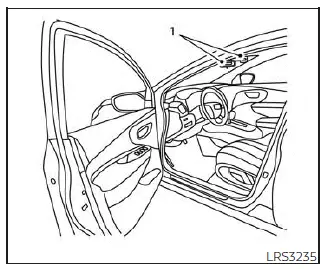
- SRS Air Bag Warning Labels (located on the sun visors)
Important Supplemental Restraint System (SRS) warning labels are installed throughout the Nissan Kicks as illustrated above. These labels provide critical safety information regarding the operation of the front air bags and should be reviewed by all drivers and passengers. The labels are positioned where they can be easily seen and serve as a reminder of proper occupant protection practices.
WARNING
Never use a rear-facing child restraint in a seating position protected by a front air bag. If the air bag deploys during a collision, the force of deployment may cause severe injury or death to the child. Always follow the child restraint recommendations provided for the Nissan Kicks and use rear seating positions whenever possible.
Supplemental air bag warning light
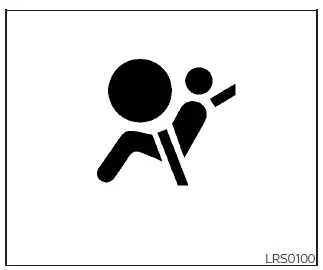
The supplemental air bag warning light,
displaying
 in the instrument panel, continuously monitors the operation of the Air Bag Control Unit (ACU), satellite
sensors, crash zone sensor, Occupant Classification Sensor (OCS), supplemental front-impact air bags,
seat-mounted side-impact supplemental air bags, knee air bags, roof-mounted curtain side-impact supplemental air
bags, and seat belt pretensioner systems. The monitored circuits also include all related wiring and electrical
connections associated with the Nissan Kicks Supplemental Restraint System.
in the instrument panel, continuously monitors the operation of the Air Bag Control Unit (ACU), satellite
sensors, crash zone sensor, Occupant Classification Sensor (OCS), supplemental front-impact air bags,
seat-mounted side-impact supplemental air bags, knee air bags, roof-mounted curtain side-impact supplemental air
bags, and seat belt pretensioner systems. The monitored circuits also include all related wiring and electrical
connections associated with the Nissan Kicks Supplemental Restraint System.
When the ignition switch of the Nissan Kicks is placed in the ON position, the supplemental air bag warning light will illuminate for approximately 7 seconds and then turn off. This indicates that the system has completed its self-check procedure and is operating normally.
If any of the following conditions occur, the front air bags, side air bags, curtain air bags, knee air bags, or pretensioner systems require immediate inspection and servicing:
- The supplemental air bag warning light remains illuminated longer than approximately 7 seconds.
- The supplemental air bag warning light flashes intermittently while driving or when the ignition is ON.
- The supplemental air bag warning light fails to illuminate during the normal system check.
Under any of these conditions, the Supplemental Restraint System in the Nissan Kicks may not operate correctly in the event of an accident. This could reduce occupant protection and increase the risk of injury. The system should be inspected and repaired without delay.
It is recommended that you visit a NISSAN dealer for this service.
WARNING
If the supplemental air bag warning light remains illuminated, flashes abnormally, or fails to illuminate during startup, it may indicate that the front air bag, side air bag, curtain air bag, knee air bag, and/or pretensioner systems are not functioning correctly. To help avoid injury to yourself and others, have your Nissan Kicks inspected as soon as possible. It is recommended that you visit a NISSAN dealer for diagnosis and repair.
Repair and replacement procedure
The front air bags, side air bags, curtain air bags, knee air bags, and pretensioner(s) installed in the Nissan Kicks are designed as one-time-use safety devices. After deployment, the affected components must be replaced. As a reminder that deployment has occurred, the supplemental air bag warning light may remain illuminated unless the system has been properly serviced.
These systems should be repaired and/or replaced as soon as possible following deployment or damage. It is recommended that you visit a NISSAN dealer for professional inspection and replacement procedures.
Whenever maintenance or repair work is performed on the Nissan Kicks, the technician should be informed about the presence and location of the front air bags, side air bags, curtain air bags, knee air bags, pretensioner(s), and related Supplemental Restraint System components.
The ignition switch should always be placed in the LOCK position before performing work under the hood or inside the vehicle. This helps reduce the possibility of accidental system activation.
WARNING
- Once a front air bag, side air bag, curtain air bag, or knee air bag has deployed, the corresponding air
bag module cannot be reused and must be replaced.
In addition, any activated pretensioner(s) must also be replaced. The air bag modules and pretensioners installed in the Nissan Kicks are not repairable components. Replacement should be performed by qualified personnel. It is recommended that you visit a NISSAN dealer for this service.
- The front air bag, side air bag, curtain air bag, knee air bag systems, and pretensioner system should be
thoroughly inspected whenever there is damage to the front end or side portion of the Nissan Kicks.
Even if deployment did not occur, damage to sensors, wiring, or structural components may affect future system performance. It is recommended that you visit a NISSAN dealer for a complete inspection.
- If you need to dispose of a supplemental air bag system, pretensioner system, or scrap the Nissan Kicks, proper disposal procedures must be followed. Incorrect handling or disposal may result in accidental deployment and personal injury. It is recommended that you visit a NISSAN dealer for assistance.
- If your Nissan Kicks experiences an impact from any direction, the Occupant Classification Sensor (OCS)
should be inspected to verify continued proper operation. It is recommended that you visit a NISSAN
dealer for this service.
The OCS should be checked even when no air bags deploy during the impact, as sensor calibration or operation may still be affected.
Failure to confirm correct Occupant Classification Sensor operation could result in improper air bag deployment during a future collision, increasing the risk of serious injury or death.
Additional safety note: The advanced Supplemental Restraint System used in the Nissan Kicks is designed to work together with seat belts, air bags, pretensioners, and occupant classification technologies. Regular inspections and proper maintenance help ensure that all safety systems continue to provide the highest level of protection.