


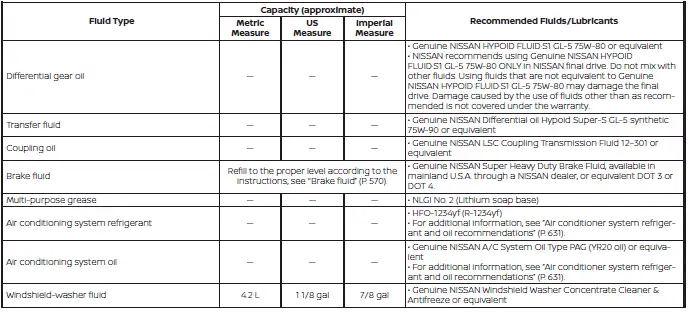
The capacities listed below are approximate values provided for reference. Actual refill amounts may vary slightly depending on operating conditions and service procedures. Whenever adding or replacing fluids in your Nissan Kicks, always follow the instructions outlined in the "Do-it-yourself" section of this manual to verify the correct fluid level and determine the proper refill quantity.
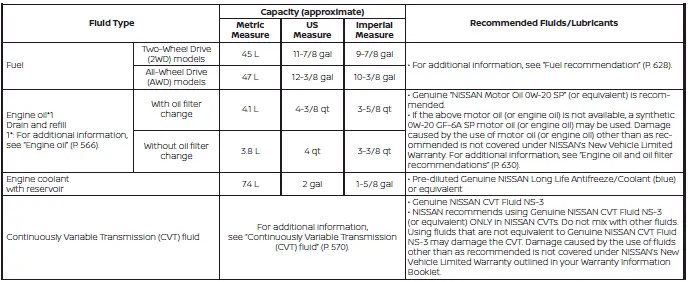
Fuel recommendation
For optimum performance and reliable operation of your Nissan Kicks, use unleaded regular gasoline with a minimum octane rating of 87 AKI (Anti-Knock Index), equivalent to a Research Octane Number (RON) of 91. Using the recommended fuel helps maintain engine efficiency, smooth operation, and proper emissions-system performance.
CAUTION
- Only vehicles equipped with an E-85 filler door label are designed to operate on E-85 fuel. Using E-85 in a vehicle not specifically engineered for it may result in fuel system damage or other vehicle-related issues.
- Using fuel that differs from the specified recommendation may negatively affect the vehicle's emission control system and could also impact warranty coverage.
- Under no circumstances should leaded gasoline be used. Leaded fuel can cause permanent damage to the three-way catalytic converter and other emissions-related components.
- Do not use E-15 or E-85 fuel in your Nissan Kicks unless the vehicle has been specifically designed for such fuel types. Operation with E-15 or E-85 in a non-compatible vehicle may adversely affect emission control devices and related systems. Damage resulting from the use of improper fuel is not covered by the NISSAN New Vehicle Limited Warranty.
- Do not use gasoline containing the octane-enhancing additive methylcyclopentadienyl manganese tricarbonyl
(MMT).
Fuel containing MMT may negatively affect vehicle performance, increase emissions, and potentially interfere with the proper operation of emissions-control systems. Because not all fuel dispensers identify MMT content, consult your fuel retailer if additional information is required. Federal and California regulations prohibit the use of MMT in reformulated gasoline.
- U.S. regulations require fuel pumps dispensing ethanol-blended gasoline to display a small orange-and-black label indicating the ethanol content or commonly recognized fuel designation for the region.
Gasoline specifications
NISSAN recommends using gasoline that complies with the World-Wide Fuel Charter (WWFC) specifications whenever such fuel is available. These standards were developed collaboratively by numerous automobile manufacturers worldwide to support improved engine performance, enhanced fuel quality, and reduced emissions.
Using fuel that meets WWFC standards can help your Nissan Kicks maintain optimal drivability and long-term reliability. If you are uncertain whether a particular fuel meets these specifications, consult the fuel station operator or retailer for additional information.
Reformulated gasoline
Many fuel suppliers offer reformulated gasoline that has been specifically engineered to reduce harmful vehicle emissions and improve air quality. These fuels are designed to meet environmental requirements while maintaining compatibility with modern vehicle engines.
NISSAN supports initiatives aimed at reducing air pollution and recommends the use of reformulated gasoline whenever it is available for your Nissan Kicks.
Gasoline containing oxygenates
Some gasoline blends contain oxygenates such as ethanol, Methyl Tert-Butyl Ether (MTBE), or methanol. These additives are used to help improve combustion efficiency and reduce certain exhaust emissions. Depending on the fuel supplier and local regulations, the presence of oxygenates may or may not be prominently advertised at the pump.
When selecting fuel for your Nissan Kicks, always ensure that the gasoline meets the recommended specifications outlined in this manual. Using fuel that complies with NISSAN requirements helps maintain engine performance, fuel economy, and proper operation of the vehicle's emissions-control systems.
NISSAN does not recommend using fuels when the oxygenate content or compatibility with your Nissan Kicks cannot be clearly verified. If you are uncertain about the composition of a particular fuel, consult the service station manager or fuel retailer before refueling.
When using gasoline blended with oxygenates, special attention should be given to fuel quality and composition. Improperly formulated fuels may negatively affect vehicle performance and, in some cases, cause damage to fuel system components or emissions-related equipment.
- The gasoline must be unleaded and meet or exceed the minimum octane rating specified for your Nissan Kicks.
- If an oxygenate blend other than methanol is used, the oxygenate content should not exceed
10%.
(MTBE may be used at concentrations of up to 15%.)
- E-15 fuel contains more than 10% oxygenate.
E-15 fuel may adversely affect the vehicle's emission control systems and related components and should not be used. Any damage resulting from the use of E-15 fuel is not covered by the NISSAN New Vehicle Limited Warranty.
- If a methanol blend is used, it should contain no more than 5% methanol (methyl alcohol or wood
alcohol). In addition, the fuel must contain appropriate corrosion inhibitors and cosolvents.
Improperly formulated methanol blends may cause fuel system damage, corrosion, or vehicle performance concerns. At present, sufficient testing data is not available to confirm that all methanol-blended fuels are suitable for use in Nissan vehicles.
If driveability issues such as engine stalling, hesitation, rough operation, or difficult hot restarting occur after refueling with an oxygenate-blended fuel, switch immediately to a non-oxygenated gasoline or a fuel containing a lower concentration of MTBE.
Take care not to spill gasoline during refueling.
Gasoline containing oxygenates may damage painted surfaces if fuel comes into contact with the vehicle's finish.
E-15 fuel
E-15 fuel consists of approximately 15% fuel ethanol blended with 85% unleaded gasoline.
E-15 should only be used in vehicles specifically engineered and certified for E-15 operation. The Nissan Kicks is not designed to operate on E-15 fuel. Using E-15 may adversely affect emissions-related components and overall vehicle performance.
Federal regulations in the United States require pumps dispensing ethanol-blended fuels to display a small orange-and-black label identifying the ethanol concentration or commonly recognized fuel designation for that region.
E-85 fuel
E-85 fuel is a blend consisting of approximately 85% ethanol and 15% unleaded gasoline.
E-85 may only be used in Flexible Fuel Vehicles (FFVs) specifically designed for this fuel type. Do not use E-85 in your Nissan Kicks unless the vehicle has been expressly certified for E-85 operation.
As with other ethanol blends, U.S. regulations require E-85 fuel pumps to display a clearly visible orange-and-black identification label indicating the fuel composition.
Fuel containing MMT
MMT (methylcyclopentadienyl manganese tricarbonyl) is an additive used to increase gasoline octane ratings.
NISSAN does not recommend the use of fuels containing MMT. Such fuels may negatively affect engine operation, emissions-system performance, and overall vehicle drivability. Long-term use may also contribute to increased deposits within emissions-control components.
Although some fuel retailers identify MMT content on fuel pump labels, this information is not always displayed. If you are unsure whether a gasoline blend contains MMT, contact the fuel supplier or retailer for clarification before filling your Nissan Kicks.
Aftermarket fuel additives
NISSAN does not recommend the use of aftermarket fuel additives, including products marketed as fuel injector cleaners, octane enhancers, intake valve deposit removers, or similar treatments that are commonly available through retail outlets.
Many of these products are formulated with strong solvents or chemical cleaning agents intended to dissolve deposits, varnish, or fuel-system contamination. While these additives are often promoted as performance enhancers, some may have adverse effects on fuel-system components and engine operation. To help maintain the reliability and durability of your Nissan Kicks, it is generally best to use quality fuel that meets the recommended specifications rather than relying on supplemental additives.
Octane rating tips
Using unleaded gasoline with an octane rating lower than the specified recommendation may result in persistent and pronounced spark knock. Spark knock is characterized by a metallic knocking or rattling sound during engine operation. If severe and prolonged, this condition can contribute to engine damage. If noticeable spark knock continues even when using fuel with the recommended octane rating, or if knocking persists while driving at a steady speed on level roads, have the condition inspected by a qualified technician. NISSAN recommends visiting a NISSAN dealer for diagnosis and repair. Failure to address persistent spark knock may constitute improper vehicle operation, for which NISSAN cannot accept responsibility.
Improper ignition timing can also contribute to spark knock, engine run-on after shutdown, overheating, excessive fuel consumption, and reduced overall performance. If any of these symptoms are observed, the Nissan Kicks should be inspected as soon as possible to prevent unnecessary wear or damage.
Occasional light spark knock during acceleration or while climbing grades is generally not a cause for concern. Brief and mild spark knock under heavy engine load can occur under certain operating conditions and is often associated with achieving optimal fuel efficiency and engine performance.
Engine oil and oil filter recommendations
Selecting the correct oil
Choosing the proper engine oil is essential for maintaining the performance, efficiency, and long-term durability of your Nissan Kicks. Engine oil plays a critical role in lubricating internal engine components, reducing wear, controlling temperatures, and helping keep the engine clean.
For additional details, refer to the "Recommended fluids/lubricants and capacities" section of this manual. NISSAN recommends using energy-conserving engine oils whenever appropriate, as they can help improve fuel economy while providing the required level of engine protection.
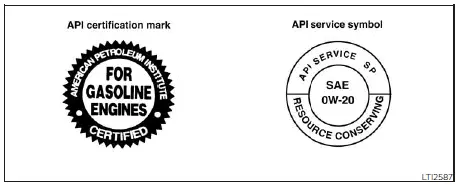
Only engine oils that meet the applicable American Petroleum Institute (API) certification requirements or International Lubricant Standardization and Approval Committee (ILSAC) standards, along with the specified SAE viscosity grade, should be used in the Nissan Kicks.
Approved engine oils will display the appropriate API certification mark on the container. Oils that do not carry the required quality certifications or specifications should not be used, as they may compromise engine performance and could contribute to premature engine wear or damage.
Oil additives
NISSAN does not recommend the use of aftermarket oil additives. When the correct engine oil is selected and routine maintenance intervals are followed, additional oil treatments are unnecessary for normal vehicle operation.
Engine oil that has been contaminated, contains foreign material, or has previously been used should never be added to the engine. Using only clean, properly specified oil helps maintain the reliability and longevity of the Nissan Kicks engine.
Oil viscosity
Engine oil viscosity, often referred to as oil thickness, changes as temperature conditions vary. Because of this characteristic, selecting the proper viscosity grade for the expected operating environment is extremely important.
The recommended viscosity should be chosen based on the ambient temperatures the Nissan Kicks is likely to encounter before the next scheduled oil change. Using oil with a viscosity different from the specified recommendation may negatively affect lubrication performance and, in severe cases, could lead to increased engine wear or serious engine damage.
Following the recommended oil specifications helps ensure reliable cold-weather starting, proper lubrication at operating temperatures, and consistent engine protection throughout the service life of your Nissan Kicks.
Selecting the correct oil filter
Your Nissan Kicks is equipped from the factory with a high-quality Genuine NISSAN oil filter designed to meet the engine's specific lubrication and filtration requirements. When it becomes necessary to replace the oil filter, Nissan recommends using a Genuine NISSAN oil filter or an equivalent filter that meets the same quality and performance standards. Using the proper filter helps ensure effective oil filtration and supports long-term engine reliability.
Selecting an oil filter that meets the manufacturer's specifications is just as important as choosing the correct engine oil. The filter plays a critical role in trapping contaminants and helping maintain clean oil circulation throughout the engine.
Change intervals
The recommended engine oil and oil filter replacement intervals for your Nissan Kicks are based on the use of the specified engine oils and oil filters. These service intervals have been established to provide proper lubrication, engine protection, and long-term durability under normal operating conditions.
Using oils or filters that do not meet the recommended specifications, or extending service intervals beyond the prescribed limits, may reduce engine life and overall performance. Engine damage resulting from improper maintenance practices, incorrect oil viscosity, unsuitable oil quality, or the use of non-approved filters is not covered by the NISSAN New Vehicle Limited Warranty.
Your Nissan Kicks was filled with premium-quality engine oil at the factory. Because of this, there is no need to replace the original oil before the first scheduled maintenance interval. Routine oil and filter replacement should be performed according to the maintenance schedule and based on the way the vehicle is operated.
Certain driving conditions place additional demands on the engine and may require more frequent oil and filter changes than those specified under normal operating conditions.
Operation under the following conditions may require more frequent oil and filter service:
- Repeated short-distance driving in cold weather conditions
- Frequent operation in dusty or sandy environments
- Extended periods of engine idling
- Heavy stop-and-go driving or urban commuting
These operating conditions can accelerate oil degradation and increase contaminant buildup, making timely maintenance especially important for preserving the performance and longevity of the Nissan Kicks engine.
For additional information regarding maintenance intervals and service requirements, refer to the "Maintenance and schedules" section of this manual.
Air conditioner system refrigerant and oil recommendations
The air conditioning system in your NISSAN vehicle is designed to operate exclusively with HFO-1234yf (R-1234yf) refrigerant and NISSAN A/C System Oil Type PAG (YR20 oil), or exact equivalent products that meet the same specifications.
CAUTION
The use of any refrigerant or compressor oil other than the specified products can cause severe damage to the air conditioning system and may require replacement of major A/C components.
The HFO-1234yf (R-1234yf) refrigerant used in the Nissan Kicks is designed to provide effective cooling performance while minimizing environmental impact. Unlike older refrigerants, it does not contribute to depletion of the Earth's ozone layer.
Although this refrigerant is considered environmentally friendly, government regulations in many regions require proper recovery, recycling, and handling of refrigerants during service procedures. For this reason, air conditioning service should only be performed by properly trained and certified technicians using approved equipment and procedures in accordance with SAE J2845 standards.
A NISSAN dealer has the specialized tools, recovery equipment, and trained personnel required to service the air conditioning system safely and correctly. When replacement of an evaporator is necessary, only new evaporator units certified to SAE J2842 standards should be installed.
A damaged or leaking air conditioning evaporator should never be repaired, reused, or replaced with a component removed from a salvaged or previously used vehicle. Using recycled or uncertified evaporators may compromise system performance, reliability, and safety.
If replacement is required, install only new SAE J2842-certified evaporators that meet the specifications designed for the Nissan Kicks. To help ensure proper operation, cooling efficiency, and long-term system reliability, Nissan recommends having all air conditioning system service performed by a NISSAN dealer or other qualified service facility.