



If a malfunction occurs within the Intelligent AWD system while the engine is running, warning messages will appear in the instrument display to inform the driver of the condition. These messages are designed to help protect the drivetrain and alert the driver when service or corrective action may be required.
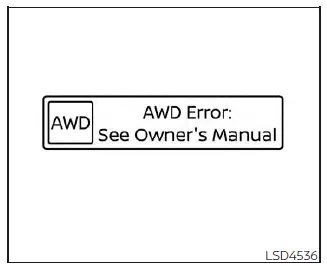
If the "AWD Error" warning appears, the Intelligent AWD system may not be operating correctly. To help prevent potential drivetrain damage, reduce vehicle speed and avoid demanding driving conditions. Have the Nissan Kicks inspected as soon as possible. It is recommended that you visit a NISSAN dealer for diagnosis and service.
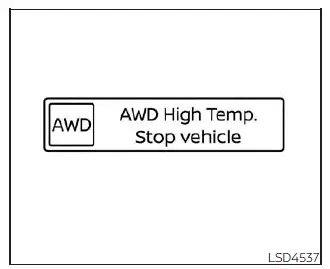
The "AWD High Temp. Stop Vehicle" warning indicates that the temperature of AWD powertrain components has increased beyond the normal operating range. This condition may occur when there is a significant difference in rotational speed between the front and rear wheels, such as during prolonged wheel slip while driving through deep sand, mud, rough terrain, snow-covered surfaces, or while attempting to free a stuck vehicle.
If this warning is displayed, stop the Nissan Kicks as soon as it is safe to do so and allow the engine to idle. To protect the drivetrain, the AWD system may temporarily switch to 2WD operation while component temperatures decrease. Once the warning message disappears, normal AWD operation can resume.
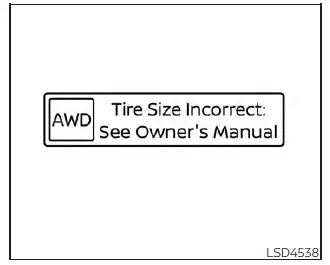
The "Tire Size Incorrect" warning may appear when there is a significant difference between the front and rear tire or wheel diameters. Because the Intelligent AWD system relies on accurate wheel-speed information, differences in tire size, tread depth, construction, or inflation pressure can affect system performance.
When this warning appears, safely pull off the road and leave the engine idling. Inspect all tires to confirm that they are the same size, brand, construction type, and tread pattern. Verify that tire pressures are adjusted correctly and that no tire is excessively worn compared with the others.
If necessary, replace mismatched tires or correct the tire pressures before continuing to drive. Avoid selecting SNOW mode with the Drive Mode Selector and avoid high-speed driving until the issue has been corrected.
If any AWD-related warning message remains displayed after the appropriate checks have been completed, have the Nissan Kicks inspected as soon as possible. It is recommended that you visit a NISSAN dealer for professional service.
WARNING
- For AWD-equipped vehicles, never attempt to raise only two wheels off the ground and then shift the transmission into a drive or reverse position while the engine is running. Doing so may result in drivetrain damage or unexpected vehicle movement, which could cause serious personal injury or extensive vehicle damage.
- Do not attempt to test an AWD-equipped Nissan Kicks on a two-wheel dynamometer or similar equipment, even if the remaining wheels are raised off the ground. Always inform testing facility personnel that the vehicle is equipped with an Intelligent AWD system before any testing procedure is performed. Using improper testing equipment may result in drivetrain damage, loss of vehicle control, or unexpected vehicle movement.
CAUTION
- Do not operate the engine while the vehicle is positioned on a free roller with any wheels raised from the ground.
- Continuing to drive while the "AWD Error" warning is displayed may result in damage to AWD system components and related drivetrain parts.
- If a warning message remains displayed after performing the recommended actions, have the vehicle
inspected as soon as possible.
It is recommended that you visit a NISSAN dealer for diagnosis and repair of the AWD system.
- If the "AWD Error" warning appears while driving, a malfunction may be present within the Intelligent AWD system and immediate attention may be required.
Reduce vehicle speed, avoid aggressive driving, and have the Nissan Kicks inspected as soon as possible.
It is recommended that you visit a NISSAN dealer for this service.
When the Nissan Kicks is shifted into the P (Park) position, operating sounds may occasionally be heard from underneath the vehicle. These sounds are a normal characteristic of the AWD system and do not indicate a malfunction or mechanical problem.